
Wedding photography or videography: how to choose
Wedding photography or videography: what if you can only choose one?
A practical comparison of photographs, voices, movement and memories
If you can only choose one for your wedding, choose photography when you most want portraits, family pictures and images you can print or display. Choose videography when hearing voices, watching people move and revisiting the actual sequence of events matter more to you. Neither is a complete replacement for the other. A photograph holds a moment still; a film can show how it unfolded, with its sound, gestures and changing expressions.
Your budget, the people you most want to remember, and the way you expect to revisit the wedding are more useful criteria than anyone else’s preference. There are also compromises worth considering, such as professional photographs paired with a simple ceremony recording. Below is a practical way to decide without assuming everyone needs both.
What wedding photography preserves best
Photography gives you individual images that can stand on their own. You can place a portrait on your wall, include a grandparent in a family album, send a photograph to a guest who lives abroad or return to a single expression without pressing play. A well-timed photograph also lets you notice details that can pass almost unnoticed in real life: a hand resting on a shoulder, someone looking across the ceremony, or the arrangement of everyone in a family portrait.
A photograph is a fixed instant, but that does not make it emotionally limited. Composition, light and timing can communicate movement, relationships and atmosphere without reproducing the action itself. If formal family groups and printed photographs are high on your list, a professional photographer is particularly useful. My own wedding photography work is offered independently of filmmaking, and the Provence photography page shows how I approach both candid moments and portraits.
One limitation is straightforward: even a sequence of photographs cannot preserve the sound of a person speaking, the way a toast was delivered or what happened between two frames.
What wedding videography adds: voices, movement and time
A film preserves information that a photograph cannot contain: the sound of your partner saying their vows, a parent’s particular laugh, the pace of a dance, the pause before a speech. You can see a person turn towards you, hear the room react and follow a moment as it changes. Those ordinary movements and sounds may become especially meaningful with the passage of time.
This is one reason I pay particular attention to spoken words when making story-driven wedding films. In the case study of Sam and Zarah’s wedding film, conversations, vows and experiences filmed around their celebration helped build a more personal account of the couple. The important distinction is that these elements take place over time: a still image could show one part of the scene but not its beginning, development and sound.
There is an important limit, however. A three- or four-minute highlight is a selection, not a continuous record of the entire wedding. If keeping every word of the ceremony or speeches is essential, ask for those recordings as separate deliverables before booking.
The wedding film of Val & Lyle in Chiang Mai
How the same wedding moments look in photos and film
Imagine reviewing the very same event in two different formats. Neither version is necessarily better, but you would notice and remember different things. The examples below can help you identify which differences matter most to you.
| Wedding moment | Photography | Videography |
|---|---|---|
| Walking down the aisle | A clear expression or embrace at one instant | The walk, pace, reactions and ambient sound |
| Exchanging vows | Faces, tears and gestures | The actual words, delivery and pauses, if properly recorded |
| Family portraits | Individual images suited to albums and prints | Interaction around the group, but not a substitute for a portrait gallery |
| Speeches | Reactions and a speaker’s expression | The jokes, tone of voice and audience response |
| First dance | The strongest isolated gestures | Movement and musical rhythm across the dance |
The comparison also depends on the final work. A carefully made photograph may say more than a poorly edited video, and a well-recorded ceremony may hold more personal value than a polished but silent montage. If you want to assess a film’s visual approach, compare the examples of editorial wedding films with the spoken moments and finished edits described in the wedding filmmaking process.
Which choice fits your wedding priorities?
The most useful question is not “Which service is more important?” but “What would we be most disappointed not to have?” Consider these situations as starting points, not universal rules:
- You want portraits for your home and albums for your family: prioritise photography. It creates individual images that are easy to display, share and revisit.
- You want to hear a parent’s speech or your own vows again: prioritise recording sound, through a film or a dedicated ceremony and speech recording.
- You care about the movement of the day: a film can preserve entrances, dancing, spontaneous laughter and the shifts in energy between moments.
- Your wedding is a small elopement: decide whether portraits of the two of you or the voices and movement of the ceremony carry more meaning. The answer may be different for each couple.
- Guests are gathering over several days: decide whether you would prefer a wider collection of photographs, or a moving record of the reunions, conversations and shared activities.
For a very intimate celebration, the elopement filmmaking examples offer one way to imagine the film option. If your celebration extends beyond the wedding day, the multi-day wedding films show how different days can connect through people and sound. That does not make video compulsory for either format; it helps you judge what you would actually value.
How to make a limited budget work
If you cannot afford both complete services, try protecting the things that cannot be reconstructed after the day. For some couples that means professional photographs and a carefully planned audio or fixed-camera recording of the vows. For others it means a professionally made film, with a clear plan for a few essential family photographs taken separately. Both are compromises, and neither should be presented as equivalent to two complete professional services.
A friend with a phone may capture useful memories, but a phone recording can be interrupted, poorly framed or difficult to hear. If you rely on one, appoint someone in advance, test the sound, check storage and battery life, and ask the venue about where the device may be placed. Do not leave this to chance in the middle of the ceremony.
Compare the scope of coverage and final files rather than assuming the shorter quote is better value. My guide to wedding videography pricing in France explains what can affect a video proposal. For film proposals in particular, the videographer selection guide includes a checklist of coverage, sound, edits and delivery terms. A reduced package is only useful if it still protects your highest-priority moments.
The wedding film of Adele & James, Krabi, a unique experience
What changes when you book both photography and videography?
If the budget allows, booking both gives you two different kinds of record: photographs you can hold and display, and a film you can see and hear. They do not need to capture every scene in the same way. During a ceremony, a photographer may focus on a fraction of a second while a filmmaker follows the spoken exchange and the reactions around it.
At Gordon Wedding Films, I offer photography and videography, but I personally take on one role per wedding. I am either the photographer or the filmmaker. If you would like both, I can work alongside a trusted professional who covers the other medium. This is a coordinated photo-and-video option, not a promise that I will shoot both simultaneously. The roles and the people involved are agreed for your particular wedding.
Coordination matters most when timings are tight. During a destination wedding weekend, for example, we can agree in advance who leads family portraits, where sound recording needs to be prepared and which events do not need constant coverage by both teams. You can discuss a combined photo-and-video proposal if both formats appeal to you.
When I work alongside a photographer, I always take time to get to know them before the wedding. We talk through the schedule together, discuss where each of us will be positioned during key moments and find practical solutions if our needs overlap. That preparation allows us to work smoothly, without getting in each other’s way or disrupting the day. I also genuinely enjoy meeting new photographers and discovering how they work.
What to check before you make the decision
Before paying a deposit, ask to see a complete wedding gallery rather than only a few favourite photographs, or a complete wedding film rather than only a short social clip. Look at ordinary moments as carefully as the most dramatic ones. The material should help you understand what you will receive, not simply how the best images look in a portfolio.
Next, compare the promises in writing: which hours and events are covered, who will attend, which photographs or films will be delivered, whether full ceremony and speech recordings are included, when the files arrive, and how you will be able to download and store them. An edited highlight, raw footage and a full ceremony recording are different products.
You can read about how I prepare and deliver wedding films and browse couples’ accounts of working with me to understand the process beyond a few portfolio images. Then make your decision together: would you rather be able to open a photograph whenever you walk past it, or press play and hear the people who were there? If the answer is both, it is reasonable to explore both. If it is only one, choose it deliberately and give that service enough room in your budget to be done well.
A filmmaker may be able to export some frames, but they are not an equivalent replacement for a professional gallery. A frame was composed and exposed for movement, often with different framing and resolution from a photograph. It may work as a small digital image, but do not expect consistent portraits or large prints. Ask to see real exported frames before relying on this solution.
Usually not. A highlight film selects a small portion of the day and may use extracts from the vows or speeches to build its story. Recording a ceremony does not automatically mean that the full recording is included in the final delivery. If every word matters, request a separate complete ceremony film and speech edits, and confirm what will be recorded and delivered.
They can preserve useful personal footage, especially when the budget is very limited, but the result is less predictable. Speech may be hard to hear, the view can be blocked, and guests may forget to start recording. Ask the venue about recording rules, nominate one person, check battery and storage, and test sound in the actual space whenever possible.
Often they are easier to display or give as physical prints, but that depends on your family. A printed album needs no screen, while a film requires a compatible device and an accessible file or player. Both formats can be shared digitally. Ask what your relatives actually enjoy, rather than deciding from their age alone.
Possibly, if the relevant professional is still available and the schedule allows it. Additional coverage should be confirmed well before the wedding, particularly when a second person must be booked and travel arranged. Ask for an updated written proposal listing the roles, hours, deliverables and any change in price. An extra camera appearing on the day is not a reliable substitute for planning.
Download the original delivered files rather than relying only on a temporary gallery link. Keep more than one copy, ideally on different storage devices or in separate locations, and check periodically that the files still open. Retain any high-resolution photographs and the final video exports in the formats provided. Confirm how long your photographer or filmmaker retains the files; long-term storage should not be assumed.
Frequently asked questions: how to choose between wedding photography & videography

Planning a wedding in France from abroad: video checklist
Planning your wedding in France from abroad
A practical briefing checklist for couples and wedding planners in Provence and the French Riviera
If you are planning a wedding in France from abroad, your videographer needs more than a date, venue and list of suppliers. The most useful preparation is a single, shared briefing document containing your local-time schedule, exact addresses, ceremony format, important people, spoken moments and the person authorised to make decisions on the day.
I am Meryll de Gordon, the destination wedding filmmaker behind Gordon Wedding Films, based in Provence. For weddings in Provence and on the French Riviera, I also ask about the orientation of the ceremony space, access between locations, outdoor sound and the evening light. These details matter whether you are organising everything from London, New York, Singapore or somewhere else. You can prepare nearly all of them remotely, as long as the couple, planner and film team are working from the same information.
Start with one shared brief, not a long email thread
Make one document the reference for everyone, rather than sending changes through separate email and WhatsApp conversations. The wedding planner can own the master schedule, while the couple supplies the personal information that only they know. Label every time as France local time, and identify who will update the document when something changes.
For my own pre-wedding preparation process, I review the schedule with the couple and, when involved, their planner and photographer. A remote call is useful for decisions; a written brief is better for preserving those decisions. Keep the date and version number at the top. The final document should give the filming team enough information to work even if your phone is switched off during the wedding. This is relevant to real celebrations: the client experiences page includes a wedding planned from abroad in Gordes, Provence, and a French Riviera wedding organised by a London-based couple. Both are examples of why clear communication matters without requiring the couple to manage production on the day.
The wedding film of a US couple getting married at Grand-Hôtel du Cap-Ferrat
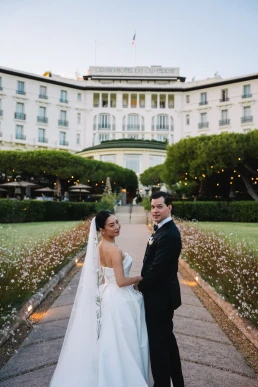
Show the venue as it will actually be used
A château website or hotel gallery rarely shows exactly where the celebrant will stand, which suite is used for preparations, or how guests move between the ceremony and dinner. Ask the venue or planner for a short phone walkthrough, current photographs and a floor plan with the planned setup marked. Even a simple annotated screenshot can answer questions that polished promotional pictures cannot. For a wedding in Provence, I want to know whether preparations take place in separate buildings, whether the ceremony is under trees or in an open courtyard, and how far the reception area is from the entrance. At a French Riviera wedding, I would also check terraces, steps, service lifts, coastal wind exposure and the route between the hotel and an off-site ceremony.
Be specific. A private estate near Aix-en-Provence might look compact on a map yet have several distant spaces. A hotel such as the Grand-Hôtel du Cap-Ferrat can involve gardens, interiors and separate event areas. These are reasons to confirm access routes with the venue, not assumptions about your chosen setup.
- Send the exact addresses and a marked plan of each space used by the wedding.
- Confirm where the film team can park, unload equipment, access power and store bags.
- Identify any restrictions on tripods, microphones, filming positions or arrival times.
- Share the indoor ceremony and reception options if weather changes.
Plan around light at the actual ceremony location
The sunset time for Nice or Avignon is only a starting point. The useful light depends on your wedding date, the direction the ceremony faces, nearby buildings, trees and hills. A courtyard may fall into shadow long before the official sunset. A sea-facing terrace may stay intensely bright for longer. Ask the planner to mark the ceremony start, expected finish and portrait window on the same schedule. In summer, an exposed afternoon ceremony can mean hard shadows and guests facing direct sun. Moving it slightly later, adjusting the seating orientation or finding shade may be more helpful than adding a long portrait session. In the Luberon, stone walls and sheltered gardens can change the available light within the same venue. On the Riviera, reflections from pale terraces and the sea bring a different set of conditions.
For international calls and final timings, use the wedding date and local French time, not a fixed time difference from home. Mainland France changes between standard and summer time; the official French clock-change calendar confirms the seasonal changes. Agree on the portrait window with both photo and video teams, then make it flexible enough to protect the guest experience.
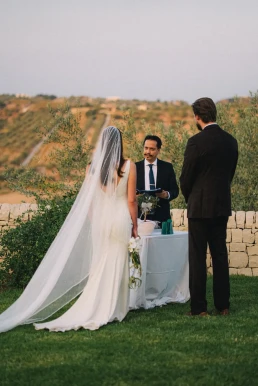
Explain languages, rituals and the people involved
Do not assume your filmmaker will recognise every meaningful moment by watching it happen. Send the ceremony order, the names of speakers and a short explanation of any religious, cultural or family traditions. For a bilingual or multilingual ceremony, specify who speaks which language, when interpretation takes place, and whether the officiant or reader will use a microphone.
A multicultural wedding does not follow one standard format. The useful question is not where a family comes from, but what this particular couple has chosen to include. For example, a tea ceremony, a family blessing or a reading in Mandarin can have very different timing and filming needs. If a relative is translating the vows, let the filming and sound teams know whether the translation is consecutive or simultaneous.
If your film will include spoken memories as part of a narrative, background about the people and relationships helps. I explain the difference between recording an event and shaping a story in my guide to story-driven wedding films. You do not need to script emotional moments. A simple note saying who will speak and why that person matters is often sufficient.
The wedding film of a UK couple getting married in Château Martinay, Provence
Prepare spoken moments for clear sound
For vows and speeches, the number of speakers matters less than where their voices can be recorded cleanly. Confirm whether the ceremony and dinner use a PA system, who operates it, whether a separate audio feed can be arranged and where wind or music might interfere. If speeches happen without amplification, give the filmmaker advance notice so a suitable recording arrangement can be discussed.
Send scripts or notes only if you are comfortable doing so. They help with unfamiliar names and languages, but they are not a requirement. Most importantly, tell the film team about any planned speech, performance or surprise through the planner so the couple does not have to manage it.
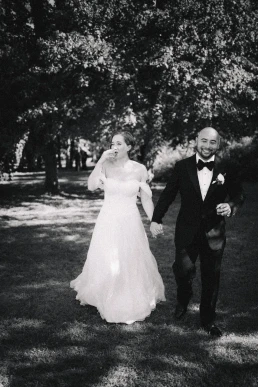
Give the planner, photographer and filmmaker clear roles
The planner controls the overall running order; the photographer and filmmaker advise on the practical conditions needed for their work. Neither team should be discovering the other’s plan during the ceremony. Agree in advance who leads any short portrait session, where each operator can stand and who will tell the suppliers if the schedule has slipped.
Ask the planner to send a vendor-facing version of the timeline. It should include access times, ceremony cues, speaker order, transport departures, room transitions, dinner announcements and the correct contact for the sound engineer or DJ. A guest-facing schedule does not provide enough detail for production.
The aim is to avoid small but consequential surprises: a second camera blocked by a floral installation, a microphone unavailable for a speech, or the film team still travelling when guests arrive at the next venue.
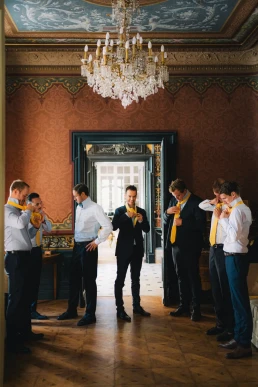
Agree on one person for last-minute decisions
Choose one person, usually the lead wedding planner or coordinator, who can confirm a location switch, delayed entrance or revised speech order. That person should be able to reach the filmmaker directly and know which moments cannot simply be repeated. If someone wants to keep a surprise secret from the couple, the coordinator can pass the technical information privately.
Account for travel and events outside the ceremony
A destination wedding can involve a preparation villa, a church, a reception estate and a welcome dinner somewhere else. Put each address into the schedule, along with realistic transfer allowances, guest transport and access details. On the French Riviera, summer traffic can affect short coastal journeys; in Provence, private estates may have long access roads or several entrances.
Tell your filmmaker which events are actually part of the contracted coverage. A welcome dinner and a brunch should not appear as vague notes at the edge of the wedding-day timeline. If you are hosting several events, the destination wedding weekend guide helps with the overall rhythm, while the multi-day wedding videography page explains which moments can be filmed across them. This article is about the operational handover.
For an intimate elopement with only a few guests, the same principle applies on a smaller scale: confirm where you will meet, who carries the rings and letters, and what happens if the planned outdoor location becomes unusable.
Use this wedding videography briefing checklist
You can send the following list to your planner and film team. The couple should complete the personal details; the planner should confirm venues, suppliers and logistics. Keep one current version and mark anything not yet decided instead of leaving it ambiguous.
- Event details: wedding date, each event name, exact address and venue contact.
- Time: complete running order in France local time, with version date and decision-maker.
- Spaces: floor plans or walkthroughs showing preparations, ceremony, portraits, dinner and backup areas.
- Light: ceremony orientation, shaded option, expected end of ceremony and portrait window.
- People: correct names and pronunciation, close family, key friends, speakers and any sensitivities to respect.
- Ceremony: running order, languages, interpretation, rituals, restrictions and officiant contact.
- Audio: microphones, DJ or sound engineer contact, spoken segments and unannounced performances.
- Coordination: planner, photo team, venue and on-the-day lead, with mobile numbers including country codes.
- Access: parking, loading, permitted filming areas, setup time and travel between addresses.
- Coverage: which welcome, wedding-day, brunch or other activities are included, with start and finish times.
- Weather and changes: indoor alternative and who communicates a revised plan.
- Final confirmation: circulate the updated master brief to all relevant suppliers before the event.
My role is to turn this information into a practical filming plan, not give the couple another production job. When the details are shared early, you can arrive in France knowing your filmmaker understands the people, places and moments that matter to you.
No. I work in English and French, so planning conversations can take place in English. The important point is to identify where another language will be spoken during the ceremony or speeches, and who can explain the meaning of any tradition or unfamiliar terms. This also helps with names, captions and possible translations during editing.
Most of the video briefing can be handled remotely using a call, venue floor plans, a short live walkthrough and the planner’s photographs. What cannot be fully confirmed from overseas is the exact lighting and sound on the wedding date. The local team should therefore check access, the ceremony setup and backup locations before the event.
A legal marriage and a symbolic ceremony are different arrangements. French civil marriage requires formalities with the relevant town hall, and eligibility depends on your circumstances, including residence or other legal connections. Verify the requirements directly with the town hall and the official French administration. For the film, share which ceremony is taking place, where and whether recording is permitted.
Ask the planner to tell the filmmaker privately. The team needs to know the approximate time, location, number of speakers and microphone setup, but the couple does not need to know the surprise itself. Without that information, an important moment could begin before the cameras and sound recorders are ready.
Yes. Name the indoor alternative, show how the ceremony furniture and guests will be arranged, and identify who decides when the plan changes. An indoor ceremony can require a different camera position, sound setup and lighting approach. The videographer should receive the decision at the same time as the planner, photographer and officiant.
You can ask, but an aerial film cannot be guaranteed. Flight permission depends on the location, airspace restrictions, conditions, pilot qualifications and the proposed operation. In the EU open category, flights over assemblies of people are prohibited. Have the operator verify feasibility with the venue and applicable aviation rules before adding drone shots to the plan.
Frequently asked questions: Planning a wedding in France from abroad
Do you have to pose for your wedding video?
Do you have to pose for your wedding video?
When filming blends into the day, and when you may want a little direction
A professional wedding videographer does not need to interrupt your day to make a good film. Some moments require quiet observation, others benefit from a little guidance, and any more deliberate scene should be something you actually want to do. You can agree to being directed of course, decline it, or change your mind on the day itself: none of those choices should turn your wedding into a film set.
I’m Meryll de Gordon, a destination wedding filmmaker based in Provence, France. Before filming, I try to understand how comfortable each of you feels around a camera, which moments matter most and where you would prefer privacy. During the wedding, I stay available to suggest an idea when it makes sense, but I can also drop it immediately. Here is what that means in practice, from the morning preparations to the evening reception.
Before the wedding: understanding your comfort with the camera
The conversations we have before your wedding are not simply about the schedule. I want to understand how you are together: Are you naturally expressive? Do you enjoy having photographs taken, or does the thought of a camera nearby make you tense? Perhaps one of you likes being filmed and the other would rather forget I’m there. Those details change how I work.
I also ask about sensitive moments, family dynamics and personal requests. Maybe you want your vows recorded but would prefer the morning to remain private. Maybe you love the idea of a carefully framed scene but dislike formal poses. There is no correct answer to any of this. My role is to understand where you feel comfortable, not to persuade you to be someone else for the film.
If I have a particular scene or activity in mind, we can discuss it in advance. We might decide to include it, keep it as an option or forget it entirely. That way, any creative suggestion has a place in the conversation before it has a place in your wedding. For the wider planning process, you can also see how I prepare a wedding film with my couples.
Getting ready: filming around the morning, not rearranging it
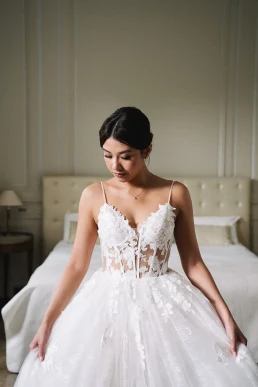
Preparations are often a mixture of small routines, people coming in and out, and moments that cannot be planned. I look for these without asking everyone to stop what they are doing. If someone helps with a dress, adjusts a tie or shares a joke, it can be filmed as it happens. I do not need them to repeat the gesture for a better angle.
There may be times when I notice a calmer space or better light and can suggest moving for a short shot, if you have said you are open to that kind of direction. It is a possibility, not an instruction. If you would rather stay with your friends, continue getting ready or have a few minutes alone, that takes priority. If there is too much happening in a room, I can change my position or focus on something else. If you say “not now,” I can step back. That is one reason getting to know you beforehand matters: it helps me recognise when a suggestion would be welcome and when it would be unnecessary.
The ceremony: moments I would never ask you to repeat
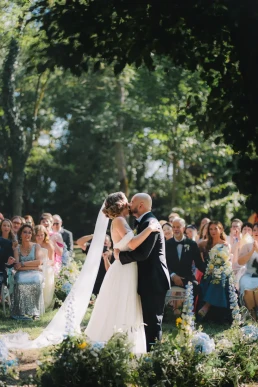
A ceremony has its own timing. The walk down the aisle, the exchange of vows, the rings and the first kiss are not performances for the camera. I will not ask you to repeat them if I want another shot. It is my responsibility to be prepared, choose my position and anticipate what is about to happen.
That preparation sometimes means placing a second camera or arranging a discreet microphone, with the relevant people informed beforehand. Cameras and audio equipment do not disappear completely, and they must never obstruct guests or interfere with the ceremony. In a small space, a good angle may need to be sacrificed so that everyone can see and the moment can unfold properly.
There is also a difference between recording a public ceremony and filming something that you have chosen to keep private. If you want certain vows or conversations to remain off camera, tell me in advance. I can plan the coverage around that boundary rather than expecting you to make the decision while everyone is watching.
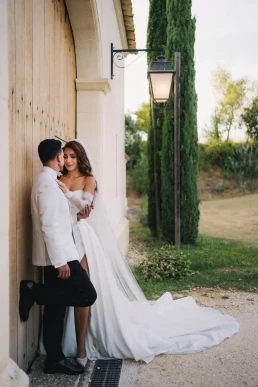
Couple portraits: you can choose to pose, or not
This is the part of the day where some couples actively want my input. I might propose a short walk, a particular location or a simple movement that works well on film. If you enjoy being guided, I can help you feel less self-conscious and suggest a few carefully composed scenes. Posing is available to you, but never required.
For other couples, being alone together for a few minutes matters more than creating a sequence of images. In that case, I can keep my distance, film what naturally happens or leave you in peace. I work with the photographer so that you are not asked to repeat the same actions for two different cameras, or pulled away from your guests twice for essentially the same session. A more deliberate approach can also belong outside the wedding day. For Sam and Zarah in Phuket, we discussed and chose experiences to film before their wedding, including a Muay Thai session and time out exploring the island. Those were agreed parts of their story, not unexpected directions during the celebration. You can see how that film was developed.
Cocktail hour and dinner: filming while you are with your guests
At the cocktail hour, your attention should be on the people you have invited, not on finding the next camera angle. I can move between conversations, expressions, details and the atmosphere of the reception without asking you to leave a group so I can collect another shot. A brief exchange with a guest often tells me more than a posed interaction would.
Dinner and speeches have different requirements. When audio or a fixed camera is needed, I try to arrange those practical details with the planner and the people speaking before the moment begins. That reduces last-minute requests and allows the reception to follow its planned rhythm. If additional lighting is needed, its effect on the room and the guests has to be considered, not just the image it produces.
Being discreet does not mean pretending that no equipment is involved. It means making decisions that respect the celebration. There are moments when I need to be close enough to record what matters, and others when the best choice is to stand further away or simply stop filming.
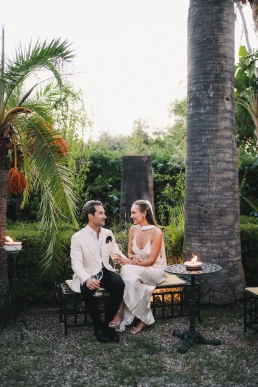
What if you change your mind at the last minute?
Imagine that we discussed filming a short couple sequence at sunset. On the day, you are having a wonderful time with your guests and have no desire to leave them. You tell me you’d rather skip it. Then we skip it. I may explain that we will have fewer portraits in that light, but there is no pressure to continue simply because the idea appeared in our original plan. The opposite can happen too. You may feel unexpectedly relaxed and ask for a more directed scene that we had never planned. If there is enough time and it does not disrupt something important, we can explore it. I can offer ideas, react to an opportunity or adjust the filming when the schedule changes.
This flexibility does have a practical limit: a scene that was never filmed cannot be recreated in the edit. Some choices will change which images are available for the final film. I prefer to make that clear, then let you decide. A wedding moves quickly, and being able to adapt calmly is part of the job. There should never be a forced shoot.
How to decide how much direction you want
You do not need to choose between a film that feels completely observational and one in which every moment is staged. There is a middle ground, and it can change throughout the day. Some couples want no guidance until their portrait session. Others welcome a few suggestions in the morning but prefer complete freedom once the ceremony begins. Before booking a wedding videographer, ask questions that reveal what filming will actually feel like:
- Which parts of the day do you typically film without speaking to the couple?
- When might you suggest a pose or a scene, and can we decline?
- How do you coordinate the portrait session with our photographer and planner?
- What happens if we cancel a planned shot or need privacy on the day?
The answers should be specific, not simply promises to be “unobtrusive.” For me, a good filming experience is a human one. I can be present, offer help or suggest something creative when you want it, while accepting that the best choice at another moment is to leave you alone. Your wedding stays yours, even when a camera is there. If you would like to hear how that has felt for other couples, you can read their first-hand experiences with Gordon Wedding Films.
Tell me that before the wedding. I can propose a few directed shots only if you both want them, and keep the rest observational. You do not have to share the same level of comfort in front of a camera. We can also decide during the day whether a short portrait sequence still feels right.
No. I prepare my positions and camera coverage for moments that happen once, especially during the ceremony. I will not interrupt the exchange of vows, ask you to repeat your first kiss or try to manufacture a second reaction. Those moments belong to you and your guests, not to the filming schedule.
Yes. Let me know which moments you want to keep private, ideally before the wedding, so I can organise filming accordingly. You can also ask me to stop recording on the day. I can control my own cameras, though I cannot control what other guests may record on their phones.
Sometimes, yes. Certain parts of the day, especially ceremonies and speeches, may require fixed cameras or microphones. A professional setup should be planned to minimise disruption, but it is not literally invisible. If the room is small or the atmosphere especially intimate, we can discuss those constraints before the wedding.
Yes. A request for space should be respected immediately. If you already know that part of the day will be private, tell me beforehand. If you only realise it in the moment, you can simply say so. I can return later or focus on other parts of the celebration.
Not necessarily. The ceremony, guests, preparations and reception can provide meaningful footage without a dedicated portrait session. A separate session can offer more time for carefully composed images, but it remains a creative choice. We can discuss how much, if any, directed footage you would like in your film.
Frequently asked questions: Do you have to pose for your wedding video?
Wedding footage after delivery: Storage and backups
What happens to your wedding footage after delivery?
Raw files, six-month retention and options for future edits
What happens to your wedding footage after delivery? The finished films and the original camera recordings follow different paths. At Gordon Wedding Films, I keep the original footage for six months; it is not stored indefinitely. During that time, you can ask about a new edit, adjustments to an existing film or access to unedited material, with additional work considered on a separate quote.
The files are backed up as part of the production process, but that does not make my archive a permanent backup service for couples. Once your films arrive, download them and keep your own copies. If you might want something else from the recordings, ask early. The specific date on which your six-month period ends should be confirmed for your project.
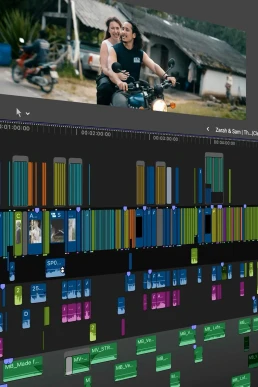
What happens to the original footage after the wedding?
The wedding ends, but the camera files still have a lot of work to do. They are transferred into the editing workflow, organised and backed up before I begin selecting images and sound. The original clips are the material from which the finished film is created. They are not the same thing as the video you eventually watch. A ten-hour wedding does not mean ten hours of continuous video. A camera may be stopped between moments, several cameras may record the same scene, and important audio may be captured separately. That is why a folder of raw footage is often more complicated to navigate than couples expect.
I handle the editing of Gordon Wedding Films projects myself, including the selection, sound and final structure. You can find more about the process on the wedding film experience page. This article addresses a different question: what happens to the files once that work is complete.
What is delivered, and what remains in the archive?
Your delivered film and the original recordings are different files. The delivered film is an edited, finished video with its selected images, sound and colour work. The original footage consists of the camera recordings used to make it, including takes that never appeared in the finished version.
RAW footage is not automatically included simply because a wedding was filmed. If it forms part of your collection, or you decide to add it as an option, the contents and delivery method should be agreed separately. A complete ceremony edit or a speeches film is also different from a folder of unedited camera clips. You can read about these optional deliverables in my guide to wedding videography collections and costs.
Do not assume that a viewing link is a permanent archive. Download the files you have been given and check that they open properly. The availability of the link, the original footage and any editing project files can be subject to different arrangements.
The highlight film is 3 to 4 minutes long, while the complete RAW footage amounts to approximately 2 hours and 30 minutes.
How long does Gordon Wedding Films keep raw footage?
I keep the original wedding footage for 6 months. This is a limited retention period, not an indefinite storage service. If you are considering another film, a revised edit or the purchase of raw footage, I recommend contacting me as early as possible rather than waiting until the end of that period.
The exact start date of the six months should be confirmed for your wedding in writing. Once the applicable period has ended, the files may be removed from the working archive, and I cannot promise that they will still be available for retrieval.
Here is the file lifecycle in simple terms:
Camera clips and separate audio recordings are created.
↓
Working copies help protect the production while the film is assembled.
↓
You download the agreed edits and make your own backups.
↓
Additional changes or a new edit can be requested on quotation. Confirm your own project’s retention deadline.
↓
Original files may be removed; subsequent recovery is not guaranteed.
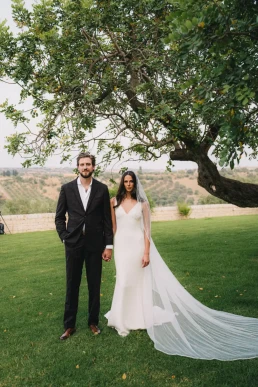
How are the recordings protected while the film is being made?
A backup is a second copy kept so that a technical problem with one device does not automatically mean the loss of the source material. During production, I work with immediate backups and redundant storage, as described in my filming and editing process. For example, a corrupted working drive should not be treated as the only place where a wedding exists.
Backups during editing and long-term archiving have different purposes. The first protects an active production. The second would mean a commitment to preserve and recover material for a defined number of years. My six-month policy concerns the retention of original footage; it should not be understood as a promise to provide a permanent cloud archive or an unlimited restoration service.
No storage method is entirely risk-free. The practical questions to ask any wedding videographer are where copies are held, when the material is first backed up, how long the originals are retained and what happens when the agreed period finishes. I do not publish the exact number, locations or technical specifications of my storage devices, so I will not invent those details here.
Can you request a new edit or changes after delivery?
Sure! You can ask me to change an existing film or create another edit, and I can prepare a separate quote. This might mean a different version for family viewing, an additional sequence focused on speeches, or a revised selection of moments. What is possible depends on the material recorded and whether the required source files are still available.
For example, imagine that you realise several months later that you would like a longer version of a family speech. If the relevant audio and camera recordings were captured and are still retained, I can examine the request and explain what can be made from them. An unrecorded moment cannot be reconstructed, and material that exists does not always provide continuous coverage.
To make a request useful, tell me which film you are referring to, the moment or person you would like included, and the result you have in mind. I can then assess the footage before proposing a price. Any corrections or revisions already covered by your agreement remain subject to those agreed terms; this paragraph concerns additional work.
Can original footage be recovered after six months?
It may not be possible. When the six-month retention period has ended, original footage may already have been deleted from the working archive. An old film being available to watch does not mean that every original camera file still exists. The same is true of a previous social-media clip or a screenshot taken from a film.
If you contact me after the period, I can only check what is actually still available. There is no guaranteed recovery procedure for material that has already been removed. This is one reason to request raw files or additional edits while they remain within the retention window.
Some couples decide that the finished film is all they need. Others place value on the unused recordings, even though those files are not polished or arranged for easy viewing. Neither choice is automatically better. The important part is deciding while a choice is still possible.
How should you back up your wedding film for the future?
Once your film is delivered, save a copy yourself. A private link is convenient for watching and sharing, but it should not be the only place your wedding film exists. The same goes for a single laptop or a single USB drive.
A simple routine is enough for most couples:
- Download your full-quality finished films and check the files open.
- Keep a local copy on a computer or home storage device.
- Make another copy on an external drive.
- Keep an additional copy in a separate secure location or cloud service.
- Recheck your files occasionally and when changing devices.
Give the files clear names, such as Wedding_Film_Final and Wedding_Ceremony, rather than relying on download dates. If you share your film with relatives, keep your own master file instead of saving a compressed social-media version. The version that you download and protect is the one you control.
You can ask me to check whether that person appears in the original recordings. Being present at the wedding does not guarantee that every guest was filmed, or that a usable shot exists. If the footage is still available, I can explain the options for a separate edit or file delivery and provide a quote.
No. Raw footage is generally a collection of camera clips, sometimes recorded from different angles, rather than a single uninterrupted film. There may be pauses between shots, repeated takes and material that has not been colour-graded or edited. If you need a continuous ceremony or speech film, discuss that as a separate deliverable.
Not necessarily. Original footage can look flatter, have uneven sound levels or include camera starts, stops and ambient noise. The finished film benefits from selection, colour grading, audio mixing and editing. Receiving raw footage gives you access to the recorded material, not another finished version of the film.
Yes. A request for a modified film is different from purchasing the entire folder of source material. Explain what you would like changed, and I can review its feasibility and provide a quote for additional editing. The terms of any adjustments already included in your original agreement continue to apply.
Do not assume that it does. If a new edit has been agreed, ask me to confirm in writing which files will be needed and how long they will remain available. This avoids confusion between the delivery date of an additional film and the retention period for the original wedding recordings.
Contact me with your names, wedding date and the film you are missing. I can check whether a copy is still available, but I cannot guarantee recovery or permanent access to an old delivery link. Keeping several copies of your finished film on different storage services is the safest way to avoid depending on a later restoration.
Frequently asked questions: Wedding footage after delivery
Wedding film deliverables explained: what each video includes
Wedding film deliverables explained
Highlight, long edit, full ceremony and raw footage
A wedding highlight film, a long edit, a full ceremony video and raw footage are not different lengths of the same film. They preserve different things. A highlight selects a few minutes to tell a story. A long edit gives more of the celebration room to unfold, but still leaves moments out. A full ceremony film keeps the ceremony in sequence, while a separate speeches film preserves the toasts. Raw footage consists of the original recordings, not another finished video. The right choice depends on whether you want an easy-to-rewatch film, complete words from loved ones, or access to the underlying material. Coverage hours and delivered videos are separate decisions, so check both before agreeing to a collection.
Wedding film formats compared: what you actually receive
Start with the intended viewing experience, not the file length. These are different outputs, even when they come from the same wedding and the same cameras.
| Deliverable | Typical length or form | What it preserves | What it does not promise |
|---|---|---|---|
| Highlight film | About 3-5 minutes at Gordon Wedding Films | Selected images, voices, atmosphere and key moments | Complete vows, speeches or every guest |
| Long edit | 15 or 20 minutes in current collections; extended duration can be requested | More scenes, context and time spent with people | A continuous recording of the whole day, even when extended |
| Full ceremony film (optional) | Often around 20 minutes; actual duration follows the ceremony | Recorded proceedings in sequence, including vows and readings | Preparations, dinner or reception coverage |
| Complete speeches film | Depends on the speeches actually recorded | Individual toasts in full, where captured successfully | The rest of the reception |
| Raw footage and audio | Separate original files, with quantity varying by coverage | The source clips and recordings included in the agreed handover | Colour grading, sound mixing or a continuous film |
| Wedding Reels (optional) | Short vertical edits; number and duration agreed in advance | Selected moments framed and edited for social sharing | The complete celebration or a replacement for the main film |
| Super 8 wedding film (optional) | About 3 minutes, with a longer 6-minute version available | Selected scenes recorded on real analogue film, developed and edited | Continuous recording or synchronised sound captured on the film |
These are different deliverables, not a promise that every collection contains them. The current Gordon Wedding Films collections vary by the number of days and the edits selected. The ceremony film, extra-long edits, Reels, Super 8 and raw files can be discussed as additional options.
What a highlight film includes, and what it leaves out
A highlight is a short, carefully edited film designed to be watched in one sitting. When I build one, I can move between preparations, the ceremony, portraits, dinner and dancing. A few words from a vow or a toast might connect scenes that happened hours apart. Other highlights rely more on images and music. The format does not dictate one particular style. Imagine that a parent gives a seven-minute speech. The highlight might use just one sentence because that sentence belongs in the film’s rhythm. The other six minutes are not automatically preserved in the highlight, even if the full speech was recorded.
A highlight cannot replace an uninterrupted ceremony or guarantee a shot of every guest. For a real example of the short, editorial approach, watch Val and Lyle’s wedding film from Chiang Mai in the Classic portfolio. For a contrasting short film built around a couple’s wider story, the Narrative films portfolio includes Sam and Zarah in Phuket. These are published creative films, not examples of full ceremony delivery or raw files.
The wedding highlight film of Marie & Giovanni
What changes in a 15- or 20-minute wedding edit
A longer edit creates space for moments that a highlight has to compress. An arrival can lead into a conversation. A ceremony may have more of its atmosphere. Speeches can be heard in longer passages, and the transition from dinner to the dance floor has time to develop. It remains selective, not an uninterrupted recording.
At Gordon Wedding Films, the current two-day Classic collection includes a 15-minute wedding-weekend film, while the three-day collection includes a 20-minute film. A longer edit can also be added to a Narrative experience. You can also request an extension to the length of the long edit if you would like more scenes or more time with particular moments. The additional duration and its content need to be agreed, rather than assuming that simply making a film longer will include everything.
Don’t assume that a film described as “documentary” contains every minute of the ceremony. Some studios use that word for an extended creative edit; others mean near-continuous event coverage. Ask to see a complete delivered example, rather than a trailer, and ask whether it includes any event from beginning to end. If you particularly want more of the guests and the different stages of a weekend, a long edit may matter more than another very short social-media cut.
The Long version wedding film of Mimi & Greg in Costa Rica
What a full ceremony film preserves
A full ceremony film is organised around continuity. When I prepare this type of edit, the aim is to retain the procession, introductions, readings, vows, ring exchange and other parts of the ceremony that were recorded. In a multicamera edit, the view can switch between a wide shot and closer angles without interrupting the words.
Sound is particularly important here. Depending on the ceremony, voices may be recorded through microphones on the people speaking or from an audio feed supplied by the venue. A finished ceremony edit may combine those recordings with the camera images. Multiple cameras alone do not guarantee clear sound.
This is an optional, separately edited film that may be around 20 minutes for a shorter ceremony. It is not capped at 20 minutes: the final length follows the service that was actually recorded. Venue or officiant restrictions, technical issues and the agreed filming period can affect what exists to edit.
If the promises, readings or religious rituals are what you want to hear years later, request a full ceremony film explicitly. Ask whether it starts before the processional and ends after the recessional, and confirm the expected sound coverage.
The full ceremony film of Nicole & Jack in Thailand
Why complete reception speeches are a separate film
A toast can be moving in the highlight without being complete. A separate speeches film is for hearing what each person actually said, including the stories that did not fit the main edit. F.e, a best friend’s speech might begin with a humorous story, turn into a personal tribute and end with a toast. The highlight might use the tribute; the speeches film can preserve the entire sequence, provided the whole speech and its sound were recorded.
Clarify which speakers and which events are covered. A rehearsal-dinner toast, a welcome-party speech and the wedding reception may occur on different days. Booking the wedding day alone does not automatically include speeches made the night before. Ask whether each speech will be delivered individually or in one combined video. These are presentation choices, not the same as raw footage. If family speeches matter to you, treat them as a specific deliverable.
What raw wedding footage actually looks and sounds like
Raw footage means source material before it has been shaped into a finished wedding film. Here, “raw” means unedited, not necessarily recorded in a cinema RAW format. It is typically a collection of camera files: a short clip of somebody arriving, a longer take during the ceremony, several attempts at a particular composition, and sometimes separate sound recordings.
It is not usually a single video that plays from morning until night. Two cameras may record the same event from different positions, with sound stored in a separate file. The images may look flat before colour grading, and some clips may have awkward beginnings or camera movement.
Before choosing this format, picture a folder of separate clips rather than a continuous home movie. That is the practical difference between a source archive and a watchable edit.
I can also offer raw footage and audio recordings as an option. Before confirming, ask precisely which files are included: all recorded clips or selected usable clips, separate audio, footage from additional operators, file formats and the method of transfer. Also ask how long the originals will be retained. No universal retention period should be assumed.
Raw files are useful if you want to archive more material or potentially commission another edit. If your priority is simply to sit down with family and watch the ceremony, a finished ceremony film is usually easier to use.
How to choose the right combination for your wedding
I suggest starting with a future viewing moment. Who will be watching, and what will they hope to see or hear?
- You want one film to revisit and share: start with a highlight. You may not need an extended edit if a concise film is what you actually enjoy watching.
- You want more of the guests and the day’s progression: consider a 15- or 20-minute edit, or request a longer version with the extra content agreed in advance.
- Family words and rituals matter most: consider the optional full ceremony film, often around 20 minutes for a shorter service, and complete speeches.
- You want access to the source material: consider raw footage as an archive, not as a replacement for edited videos.
- You want to share short videos on social media: discuss dedicated Reels rather than assuming the horizontal highlight will work perfectly in vertical format.
- You enjoy the look of real analogue film: consider a separate 3- or 6-minute Super 8 film alongside your digital videos.
When dedicated wedding Reels make sense
A Reel is a separate, short video intended for a phone screen. It may focus on the atmosphere of the weekend, the party or a single moment, rather than summarising the entire wedding. Gordon Wedding Films can create optional vertical Reels using professionally recorded images. Agree on the number, duration and purpose beforehand. Some horizontal shots crop well to 9:16; others lose essential details, so planning ahead helps. Reels are different from a content creator posting live during the event.
What changes with a 3- or 6-minute Super 8 film
A Super 8 wedding film uses real motion-picture film, not a digital filter. I capture selected scenes on film, which is then developed, scanned and edited. The standard film is about 3 minutes, with an option to extend it to 6 minutes. Super 8 does not record synchronised sound, so it is not a substitute for a ceremony edit or the original words from speeches. It can stand alone or complement the digital film, depending on your preference.
The Super 8 wedding Film of M&A in France
What to confirm before booking
For an international wedding, ask whether speeches in different languages are captured clearly, and whether translated subtitles would be needed for relatives. For a multi-day wedding, specify which day each recording covers. A welcome dinner is not part of the wedding-day footage unless that event is also filmed.
Finally, compare proposals line by line. Write down the filming dates and hours, the titles and approximate lengths of every finished video, whether full events are included, which original files will be delivered, and any separate delivery deadlines. The number of hours a filmmaker is present should never be mistaken for the number of hours you will receive on screen. For a broader booking checklist, see how to choose a destination wedding videographer.
No. Filming for ten hours does not mean the camera records ten uninterrupted hours. A filmmaker chooses when to record, changes positions and prepares for important events. If you need a complete record of a particular ceremony, performance or speech, identify it before the wedding and have that recording listed as a deliverable.
Yes, a longer version can be discussed if you want more of your guests, celebrations or speeches included in the edit. Agree on the intended duration and the scenes that matter to you before filming wherever possible. A longer film remains edited and selective; it does not automatically contain an entire ceremony or reception.
Describe both ceremonies, their locations, timings and languages before booking. They may require different camera positions, sound connections or coverage hours. If you want both ceremonies delivered in full, name them separately. Subtitles and translations are different work from recording the original voices, so ask whether they are included or available.
Yes, when a finished ceremony video is part of your agreed delivery. A single edited file is usually simpler for relatives to play than folders of camera clips. Ask how the finished film can be shared, whether there is a downloadable version, and whether access is private. These details depend on the filmmaker’s delivery arrangements.
Do not assume they are. Audio can be recorded independently from the cameras, and a raw video handover may not include every audio file unless the agreement says so. Ask for a written description of the video and audio material supplied, along with the file formats and whether any sound will be synchronised or processed.
The Super 8 camera itself does not record synchronised sound. However, words captured separately with digital audio equipment may be incorporated into an edited Super 8 film if this is planned and agreed. This is different from receiving the full original ceremony or speeches. If hearing every word matters, request those complete films as separate deliverables.
Frequently asked questions: Wedding film deliverables explained
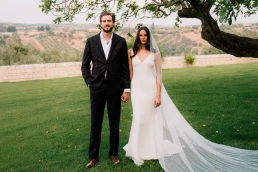
Elopement in Sicily
An elopement in Noto, Sicily
The Story of Ally & Parker
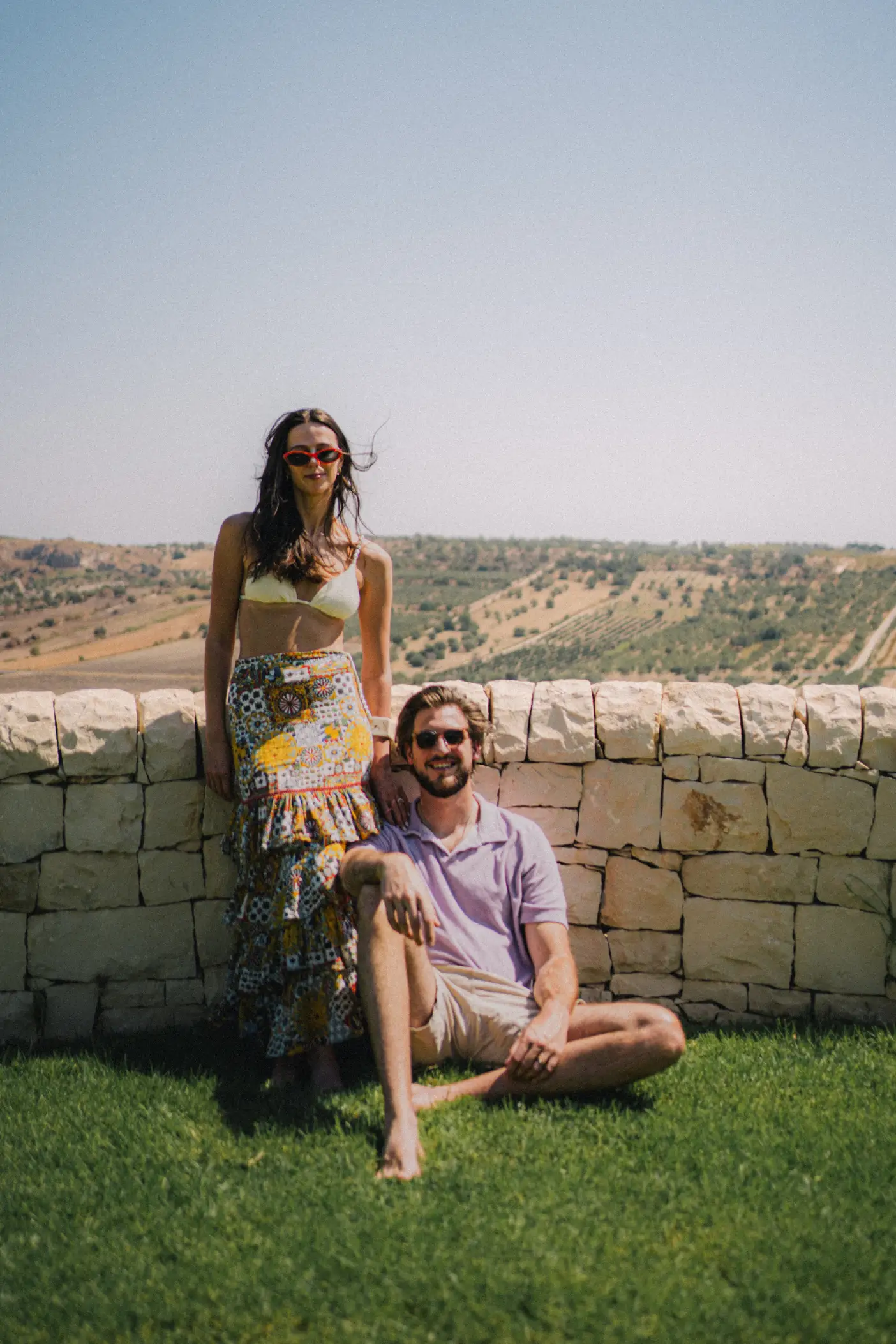
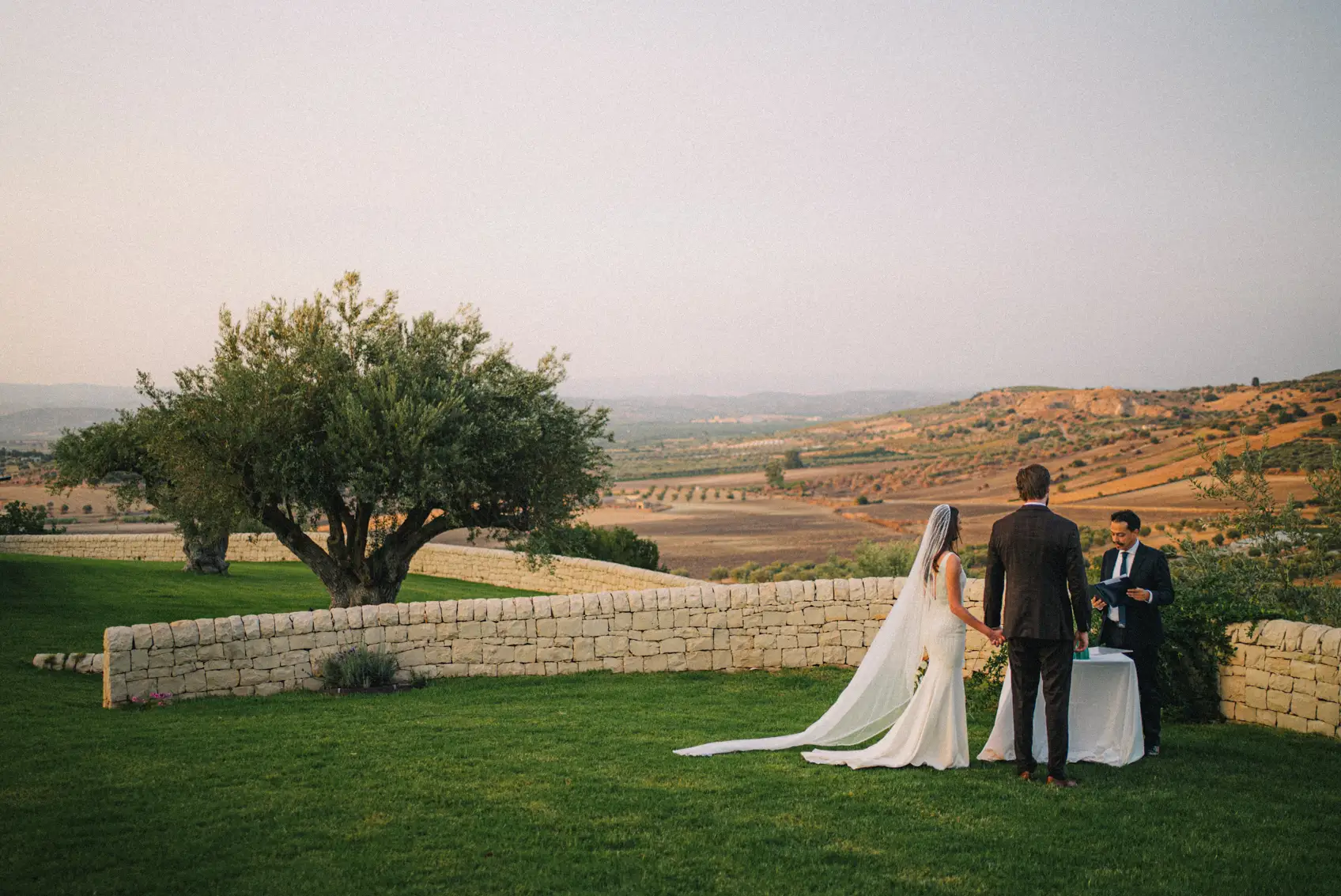
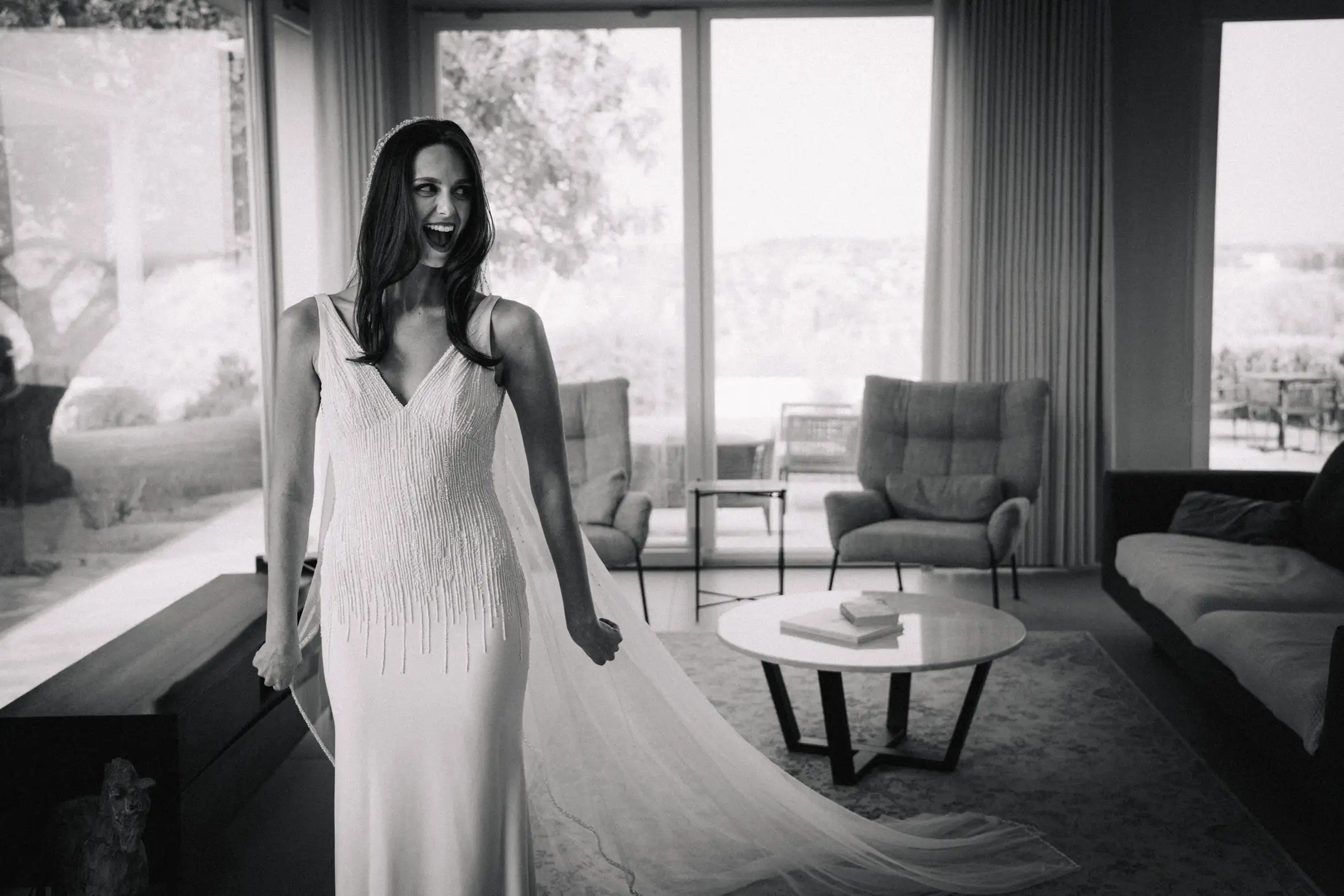
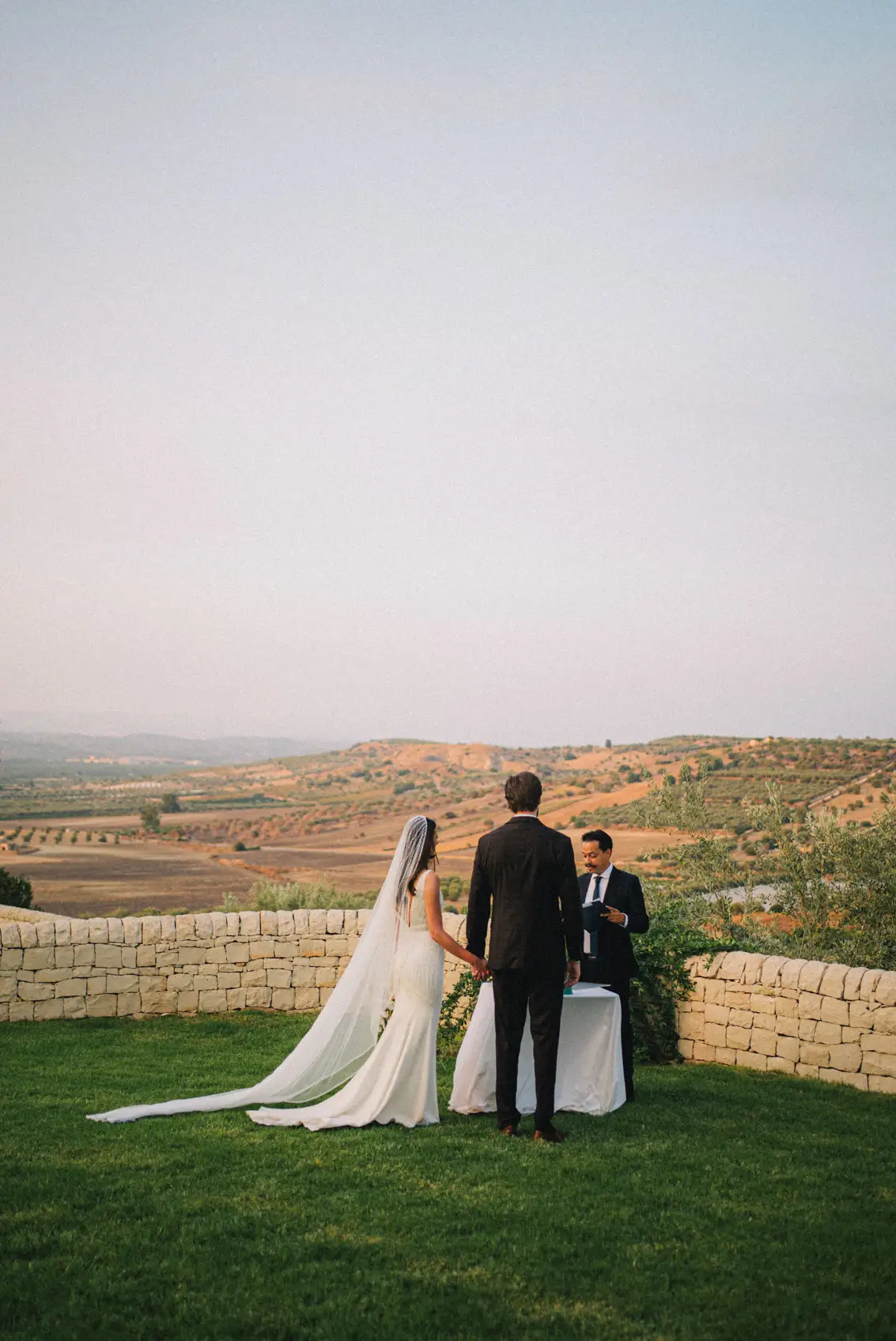
I’m Meryll de Gordon, a destination and elopement wedding videographer based in Provence, and I have been filming weddings across Europe and worldwide for the past ten years. In August 2026, I travelled to southeastern Sicily, Italy, to film Ally and Parker, a couple from Texas who had chosen a very different kind of wedding in Noto. There were only four of them: Ally, Parker and two close friends. What interested me immediately was that their Noto elopement was not designed around a single ceremony or a packed timeline. It was a few days spent together in Sicily, with enough space for ordinary moments to become part of the film.
Ally & Parker’s intimate wedding film
Elopement videographer Noto, Sicily
Read their testimonial
Meryll,
I’m sure you hear this often, but I genuinely don’t know that I will ever have the right words to convey just how special and beyond beautiful this film is.
You are wildly, unbelievably talented. Truly, the entire world deserves to see your work.
We immediately sent the film to our family and friends, and every single person was completely in awe. What struck me most was how beautifully the story was told and, more importantly, how beautifully it was received. Everyone could follow it. They understood the story, the emotion, the little moments, and who we are together without having been there. That is such an incredibly difficult thing to accomplish, and you did it so effortlessly. It was exactly what we hoped for, but somehow so far beyond anything I ever could have imagined.
You exceeded expectations I didn’t even know I had.
Parker and I have probably watched it 27 times at this point. We’ve cried, we’ve laughed, we’ve analyzed our facial expressions, we’ve noticed new little moments every time — and somehow, we’ve fallen in love with each other all over again through it. I don’t know how to explain what a gift it is to be able to see our relationship and that time in our lives through someone else’s eyes, but that is what you gave us. It took everything in me not to pick up the phone and call you last night to express my gratitude — but realized it was 3:00am your time, haha!
And the thought that we will have this for the rest of our lives is almost impossible for me to comprehend. Years from now, we will be able to press play and be right back there — hearing our voices, seeing the way we looked at each other, remembering the tiny moments we otherwise might have forgotten. There really isn’t a word big enough for what that means to us.
And then, as if the film weren’t enough, the photographs are absolutely unreal. They are so beautiful. You have such an extraordinary ability to capture people and moments in a way that feels artistic without ever losing what was real about them.
Thank you for giving us something that is so much more than a wedding video. You gave us our memories back in a way we could never have preserved ourselves. You told our story with so much care, beauty, and intention, and I will never be able to adequately thank you for that.
I hope you know how extraordinary your gift is. We certainly do now.
A day in Noto before the wedding
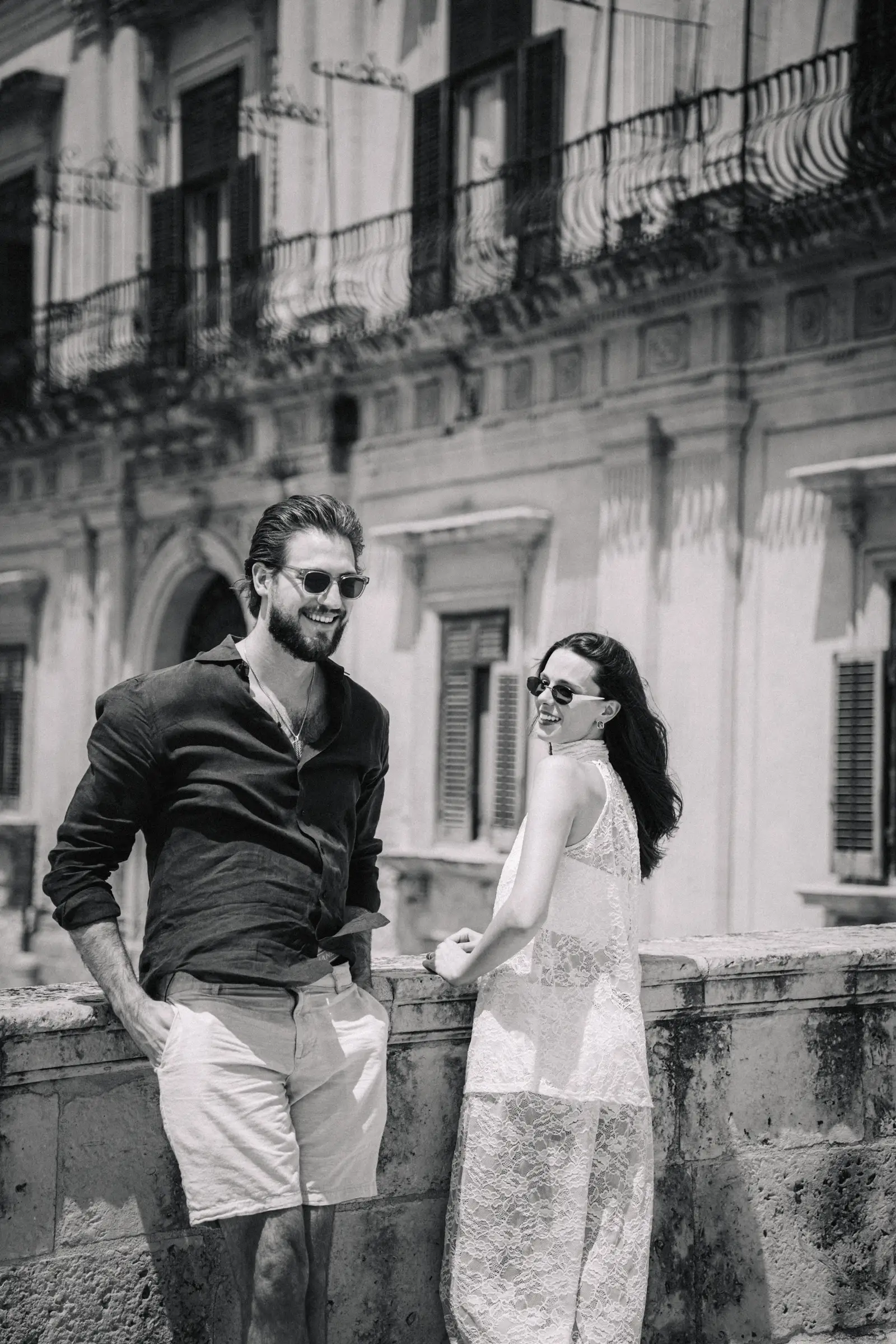
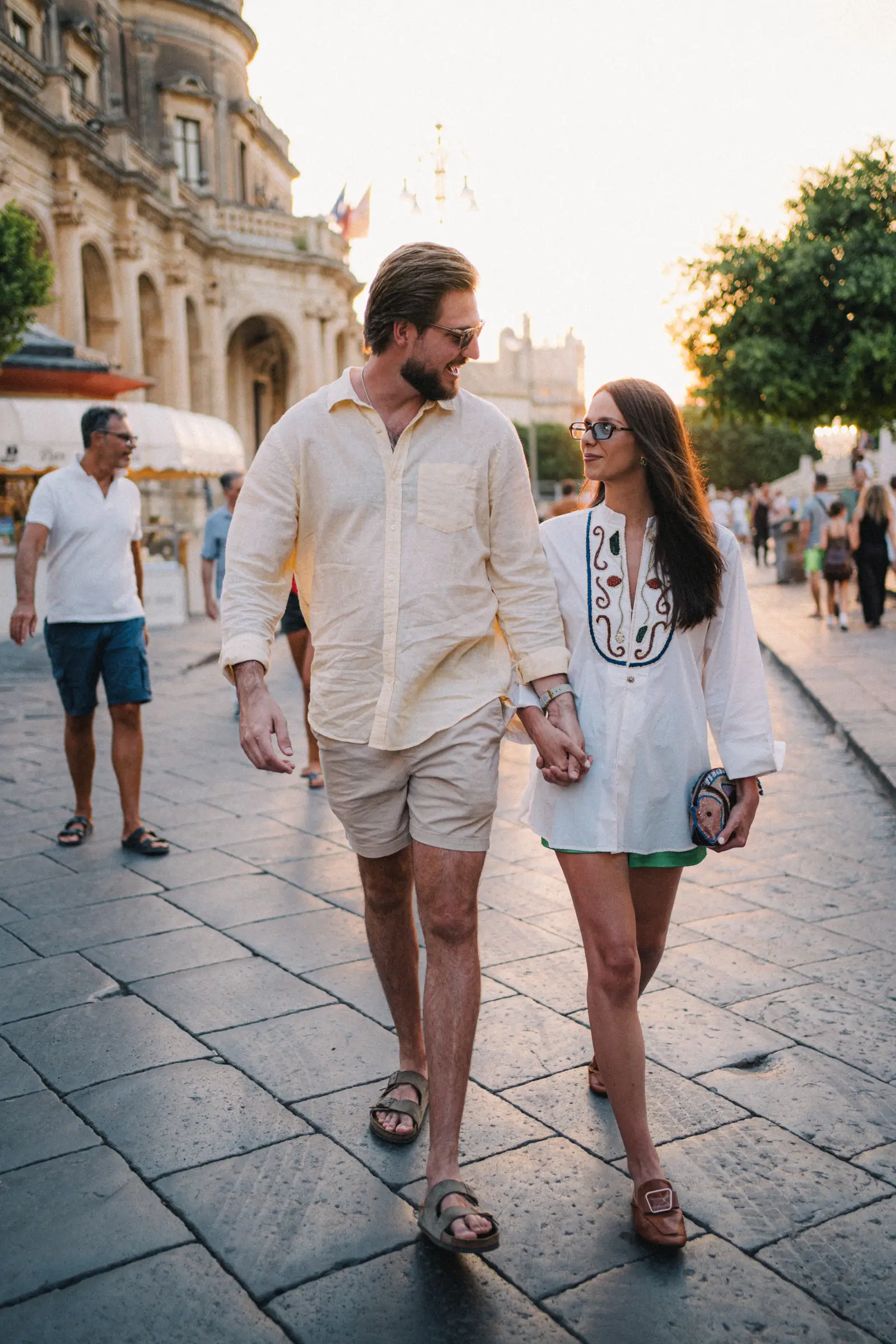
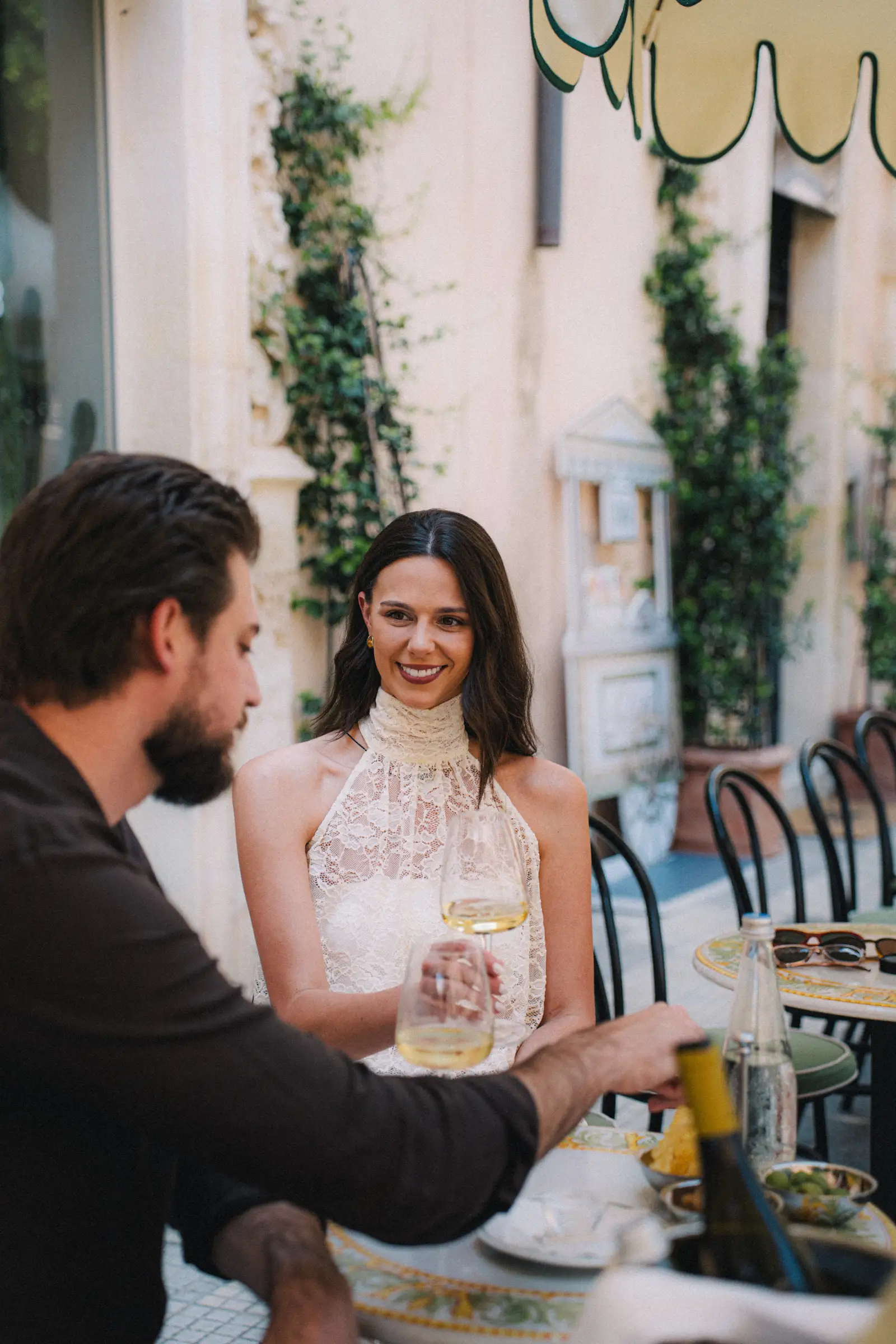
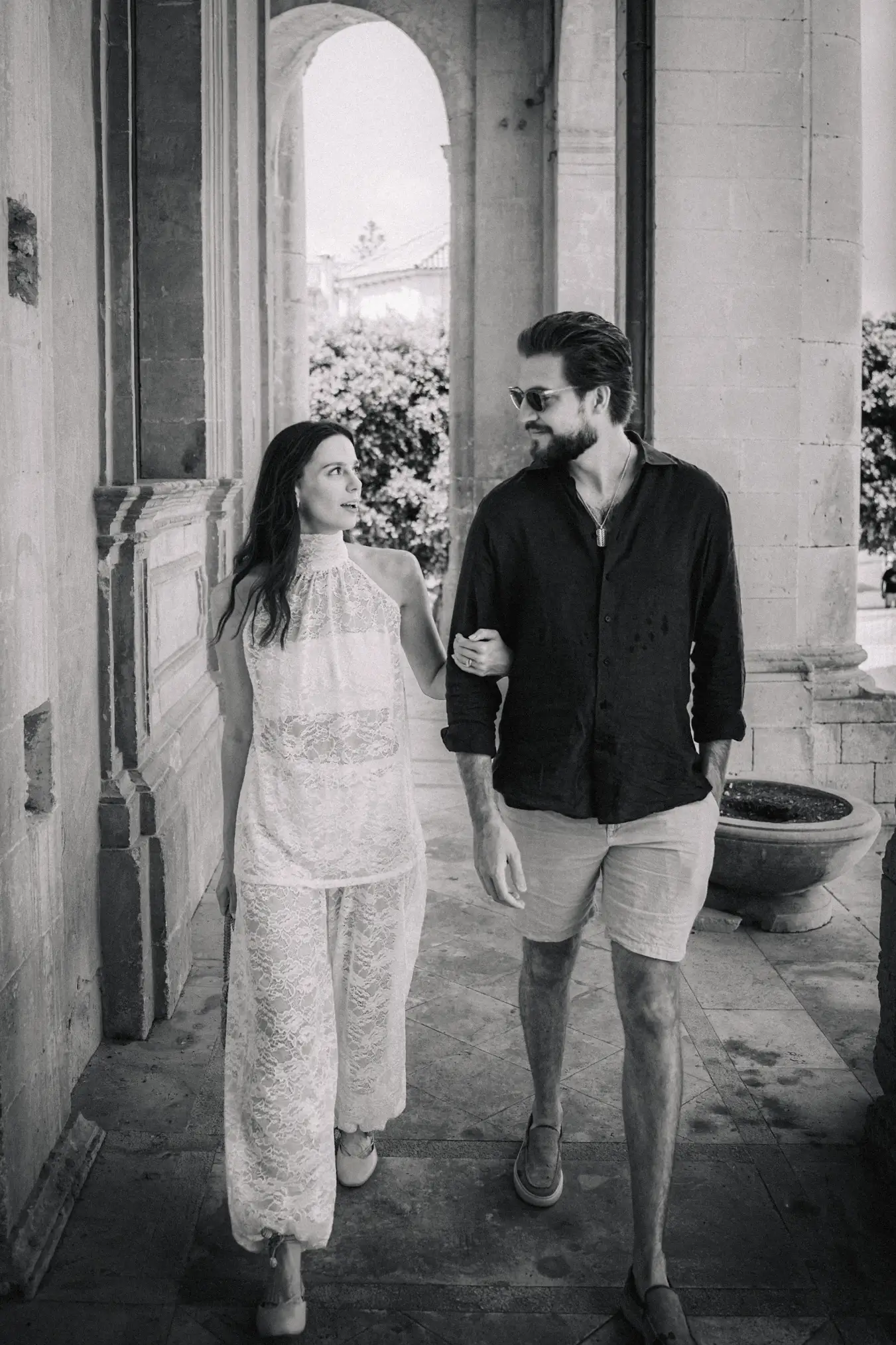
The day before the wedding, we met in Noto and simply spent time in town. Ally and Parker walked through the streets, stopped for coffee, had a drink on a terrace and bought a few small gifts. I did not want this to feel like a traditional pre-wedding shoot, with a succession of poses and locations. I followed them, sometimes giving a little direction when it helped the image, but mostly letting the afternoon happen.
For a couple planning an elopement in Noto, this is one of the reasons I often recommend filming beyond the wedding day itself. A coffee, a conversation or ten minutes walking through the city can tell you much more about the experience of being in Sicily than another staged portrait. These apparently simple moments also give me valuable material for the edit. They establish the destination, introduce the couple outside the ceremony and create natural transitions between the different parts of their story.
Filming an intimate Sicily elopement with four people
On the wedding day, the small group completely changed the way I worked. With no large guest list and no need to move through a long sequence of formal events, I could concentrate on details that are easy to miss at a larger wedding: a pause before speaking, a look between friends, voices, movement and the quiet in between the obvious moments.
My approach as their Sicily elopement videographer was documentary first. Rather than constantly directing Ally and Parker, I wanted them to experience the day with their friends while I worked around them. I also filmed selected sequences on real Super 8 and used drone footage where it made sense, bringing different visual textures into the film without allowing the equipment or the location to become more important than the people.
Their time in southeastern Sicily also gave us opportunities to move beyond Noto itself and incorporate the surrounding landscape into the story. For an elopement wedding film, these transitions between a villa, the town, the road and the coast can be just as useful as the main wedding moments. They make the finished film feel like the memory of a trip rather than a simple chronological record of a ceremony.
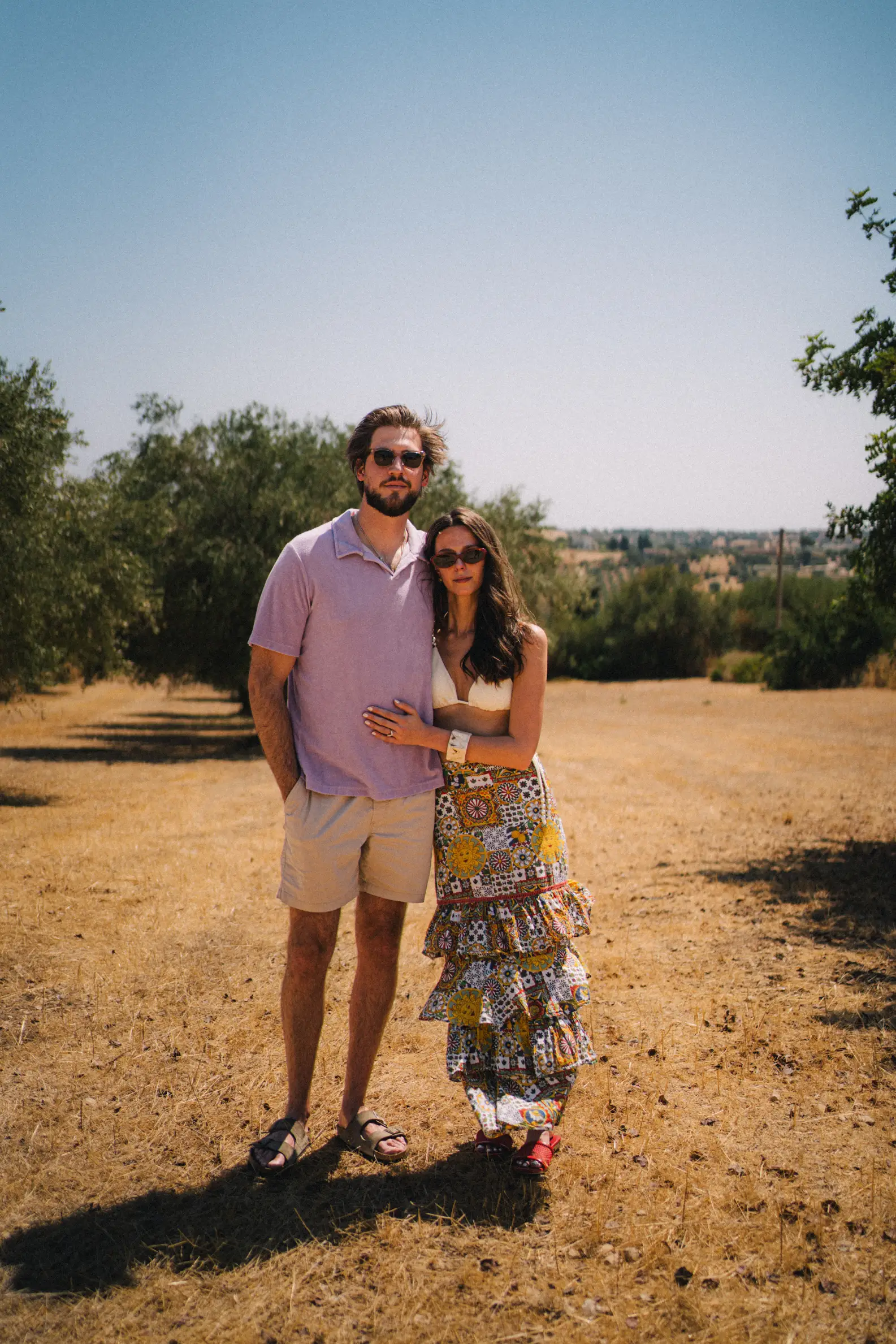
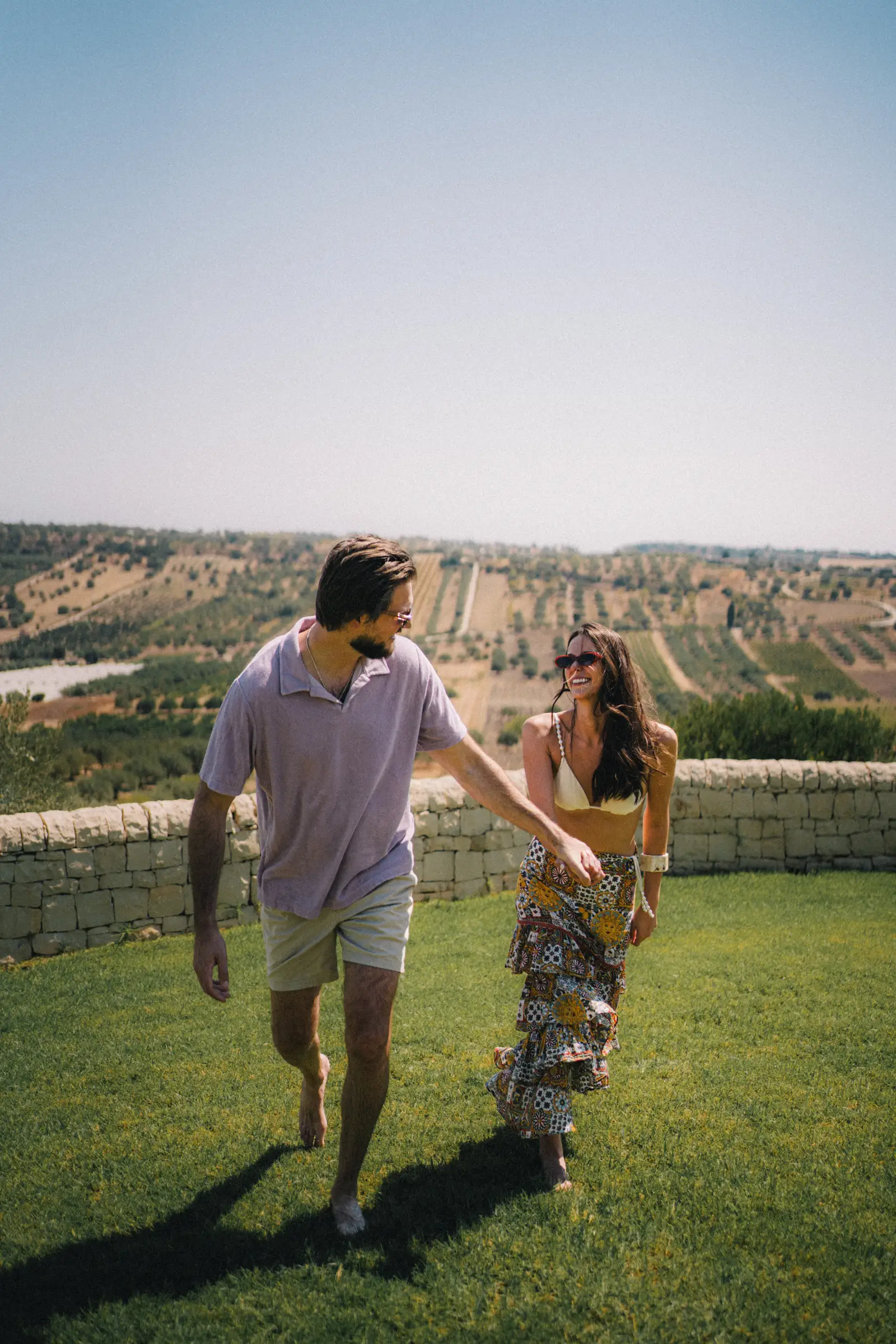
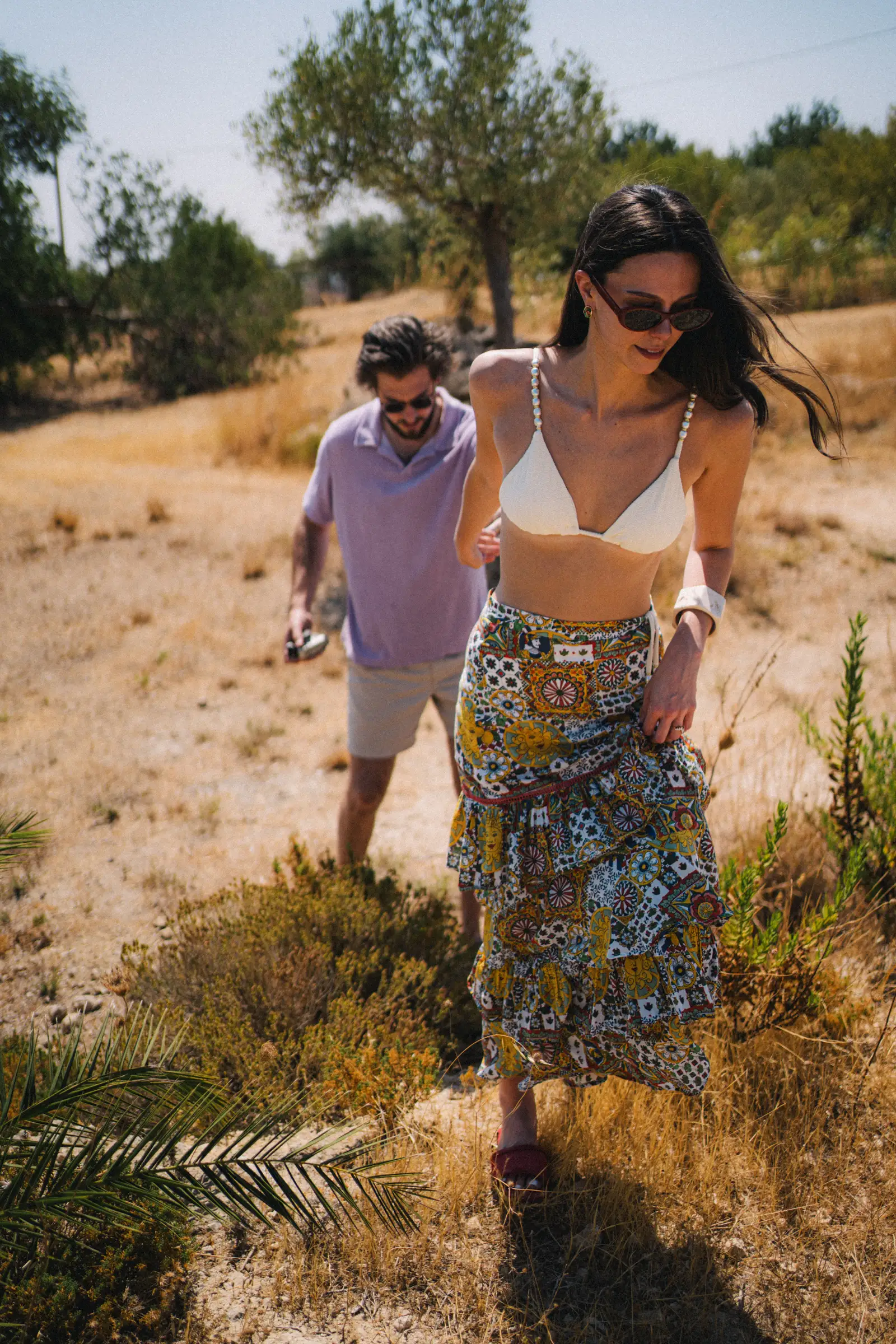
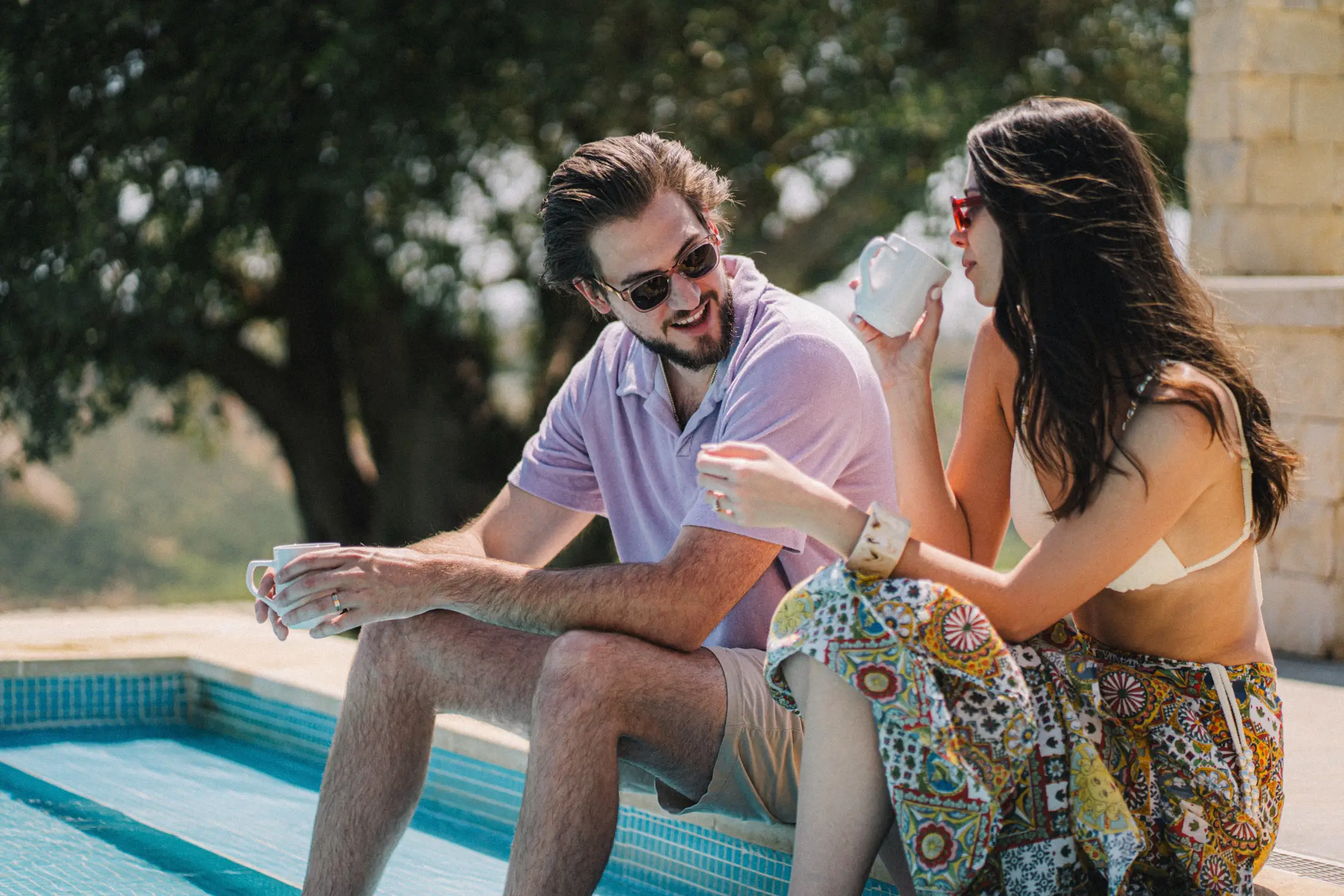
When family is not physically present
An intimate wedding does not mean there is less story. Ally and Parker’s elopement is a good example.
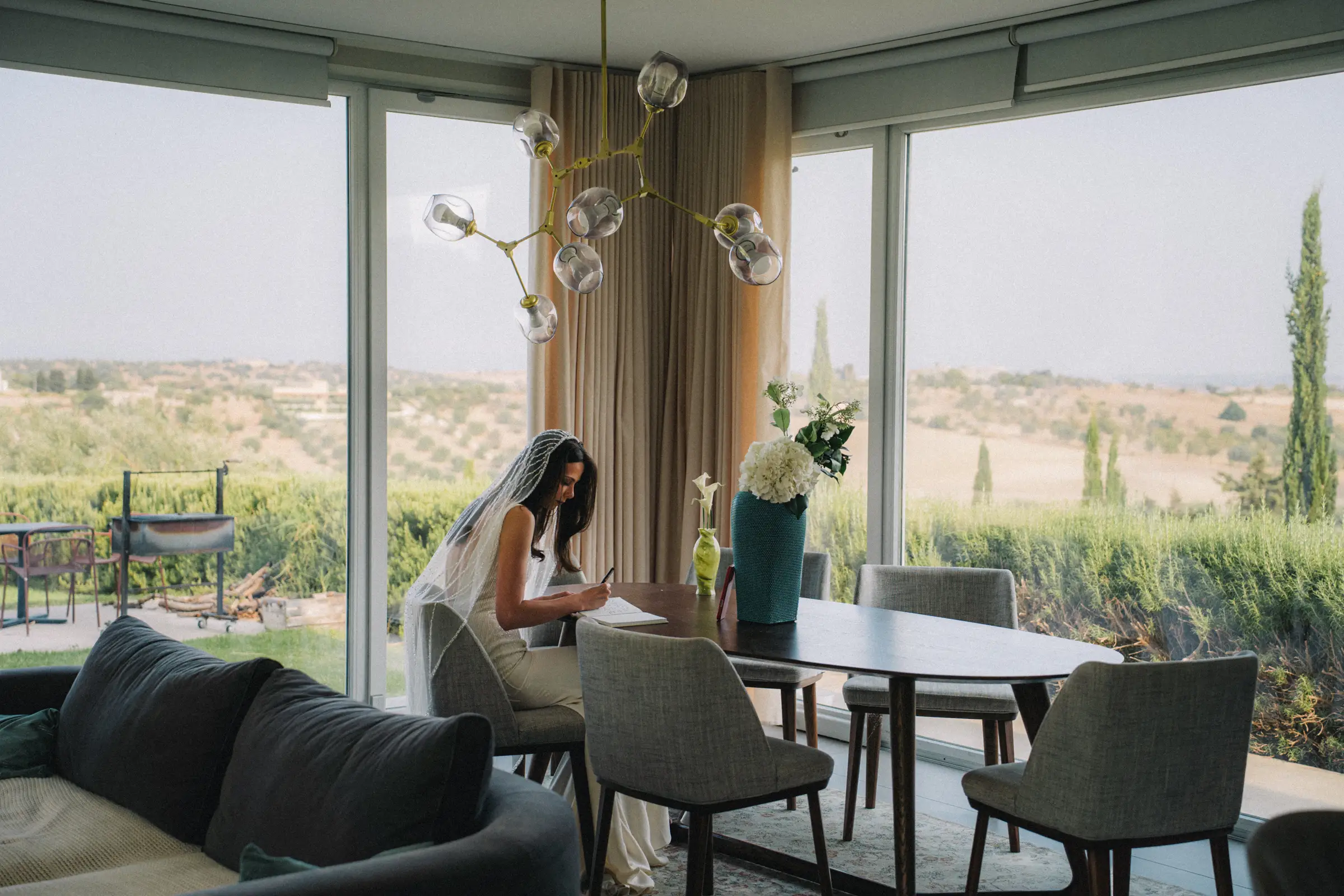
The following day, I filmed them at their villa as they read letters sent by members of their families. Their families were not physically present in Noto, but their words suddenly became part of the film. It was quiet, simple and far more personal than trying to manufacture an emotional scene for the camera.
For couples wondering how an elopement wedding video can still feel emotional when only two or four people are there, this is often the answer. You have more room for the things that are personal. A letter, a recorded voice, a private conversation or a memory can carry more meaning than a crowded schedule of wedding traditions.
It also gives me another way to tell the story. The film does not have to rely only on images and music. Words from family, vows, conversations and natural sound can create a narrative connecting what happened in Sicily with the people and relationships that exist outside the wedding itself.
Photos, friends and a final evening in Noto
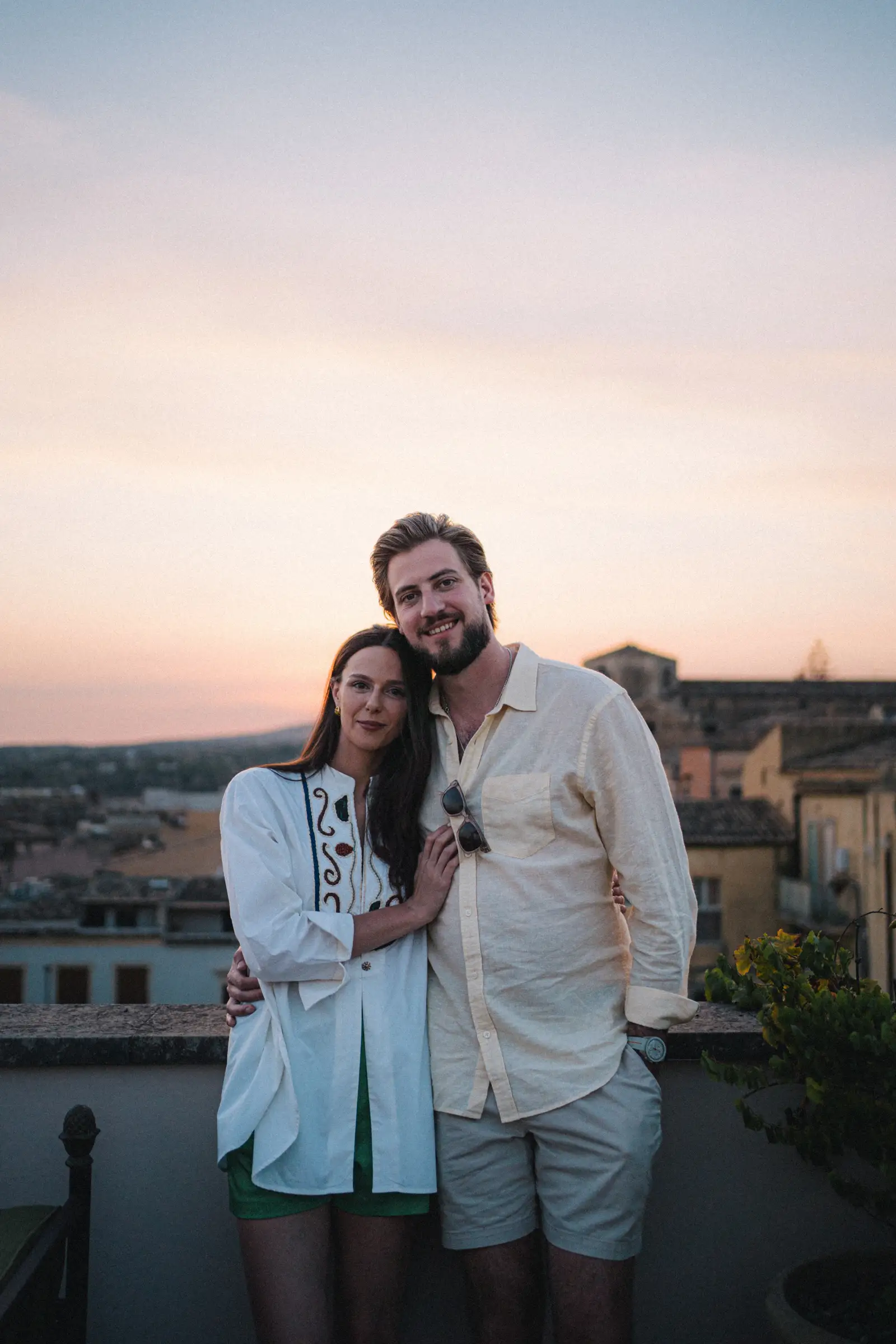
I also photographed Ally and Parker during the day, then we met their friends again in Noto that evening. They had a drink together before we moved to a rooftop for another photo and video session.
The atmosphere was completely different from the wedding day. Nobody was watching the clock. There was nothing left to organise. We could make photographs, film when something interesting happened and simply enjoy the last evening together.
That slower rhythm gave me another side of Ally and Parker to work with in the edit. It is one of the strongest reasons to consider multi-day coverage for a Sicily elopement: every part of the experience does not need to compete for space inside the same eight or ten hours.
Why I film more than the ceremony
For me, filming an elopement in Noto is not about collecting beautiful shots of Sicily and placing a couple inside them.
The place matters, but because it is part of what they actually experienced.
In Ally and Parker’s film, Noto appears through the way they lived it: walking through the streets, stopping for coffee, sharing a drink with friends, choosing small gifts and spending an evening above the city. This gives the film a clear sense of place without turning it into a tourism video.
The same principle applies anywhere I work as a destination elopement videographer. I want the destination to support the story, not replace it.
That is also why I like filming an elopement over several days. On the wedding day itself, emotions and significant events naturally take priority. The day before and the day after give us space for everything else: the destination, conversations, activities, landscapes and the smaller moments that explain what the trip actually felt like.
How much coverage does a Noto elopement need?
Couples often ask me how many hours they need for a Noto elopement or whether it is worth adding coverage the day before or after.
I prefer to start with a different question: what will you actually be doing while you are in Sicily that you would want to remember twenty years from now?
If the answer includes a morning at the villa, time exploring Noto, drinks with friends, a drive through the Sicilian landscape, letters from family or an evening together after the ceremony, those moments can belong in the wedding film too.
An elopement gives us the freedom to build the coverage around the experience rather than forcing the experience into a conventional wedding schedule. Sometimes that means a single day. For a multi-day elopement in Sicily, it can mean filming shorter periods across several days and allowing each one to have its own atmosphere.
That is how I approached Ally and Parker’s Noto elopement in Sicily. I was there to document their wedding, but also the quieter pieces around it: discovering the city before the ceremony, the two friends who had travelled with them, family members present through their letters, and the feeling of having several days together rather than a few rushed hours.
For couples looking for a Noto elopement videographer or a Sicily elopement videographer, this is the kind of story I want to create: personal, documentary and closely connected to the way the trip really felt.
Other stories in the journal
A wedding in Meribel, French Alps
Nestled in the heart of the French Alps, Lucy and Henrik’s wedding was a breathtaking blend of elegance, intimacy, and…
Wedding Pernes-les-Fontaines Vaucluse
Anna, a joyful Brazilian bride, and Hugo, her French partner, exchanged vows during an intimate Catholic ceremony in…
Intimate wedding Grand hotel Cap-Ferrat, Four Seasons
With only 10 guests, Rachael and Chris’s wedding was a true reflection of intimacy and family unity. The emotional…

Destination wedding in Costa Rica
We spend 3 amazing days in Monteverde, a giant primary forest where we walked in for hours and hours, discovering…
wedding-content-creator
- Raw wedding footage available as an option
- Vertical Reels delivered within one week
- A teaser and long-form film delivered within 15 days with priority editing
- Professional coverage designed first and foremost for the film
- One consistent creative direction across every format
- An option available for weddings in France and abroad
Gordon Wedding Films does not offer a traditional smartphone-based wedding content creator service with real-time posting. The idea is different: to give you faster access to professionally captured footage without giving up the film that will truly tell the story of your wedding.
Wedding content creator or wedding videographer: which is right for you?
Receive shareable content quickly, while still preserving a carefully crafted wedding film.
The term wedding content creator has emerged in response to a very practical expectation: seeing behind-the-scenes moments quickly, receiving vertical videos and sharing a few highlights without waiting for the main wedding film.
I am Meryll de Gordon, founder of Gordon Wedding Films and a wedding filmmaker based in Provence. My work remains centred on the film itself: the quality of the footage, the voices, the speeches, the atmosphere and the edit. Some couples also want something they can watch and share sooner. I can therefore provide the raw footage, create vertical Reels within one week and reserve priority editing for delivery of the teaser and long-form film within 15 days.
This page explains what a wedding content creator does, how the role differs from that of a wedding videographer, and when our alternative may be enough for what you actually need.
Why are couples looking for a wedding content creator?
The main reason is not to replace the wedding film. It is to reduce the wait. Couples want to revisit the reactions, behind-the-scenes moments, party atmosphere and details of the venue within the first few days, in a format that is easy to watch on a phone.
The shift is now measurable. In its 2026 study of more than 11,500 engaged couples, Zola found that 29% of Gen Z couples plan to create social-first content at their wedding. Among those couples, 40% are asking their professional photographer or videographer to capture it as part of their coverage.
Bridebook describes the wedding content creator as a distinct supplier focused on candid, social-first footage that can be shared within hours. The role is built around immediacy and behind-the-scenes access, rather than replacing a professionally produced wedding film.
Sources: Zola, First Look Report 2026 and Bridebook, What Is a Wedding Content Creator?.
Wedding content creator or wedding videographer: what is the difference?
A wedding content creator usually works with a smartphone. The focus is on short, vertical and spontaneous clips that can be delivered quickly. Depending on the service, this may include raw clips, Stories or several Reels, with either simple editing or no editing at all.
A wedding videographer creates something different. They record voices and speeches, work with several lenses, adapt to changing light and bring the footage together in a coherent film. A reaction becomes more meaningful when you understand what came before it, who is speaking and what the moment represents for the couple.
A content creator mainly responds to the desire to share quickly. A wedding videographer preserves the story, the voices and the atmosphere of the day. The two approaches can complement one another, but they do not create the same kind of memory.
Can you receive videos quickly without adding another supplier?
Yes, when your needs are clearly defined. You may not need another person following you throughout the day if your main priorities are receiving the raw footage, sharing a few carefully edited Reels and getting your wedding film sooner.
At Gordon Wedding Films, these are treated as extensions of the main film rather than a separate service being captured in parallel. This limits the number of people around you and keeps the creative direction consistent across every deliverable.
Raw wedding footage
You receive the raw video files captured during the wedding. They preserve more of the day and can be used to create additional edits later.
Raw footage is not a finished film. It may include long takes, several versions of the same scene and sections that were never intended to appear in the final edit.
Reels within one week
One or more vertical Reels can be edited from the professionally captured footage. They are designed for viewing on a phone and delivered within one week.
The number, length and purpose of each Reel are agreed before the wedding. This keeps expectations clear and allows the necessary shots to be anticipated.
The film within 15 days
A priority option reserves a post-production slot immediately after the wedding, allowing the teaser and long-form film to be delivered within 15 days.
This option must be booked before the wedding and is limited by the production calendar. Full ceremony edits, complete speeches and other deliverables may follow a different schedule.
Raw wedding footage: what it is really useful for
Raw footage is useful when you want to preserve a broader record of the day. It may include a complete conversation, an uncut moment with your family or a scene that did not fit the rhythm of the main film.
Much of the horizontal footage can also be reframed vertically when the subject remains well positioned in the image. When Reels are planned in advance, I can anticipate certain shots so they work in both formats without building the entire wedding day around social media.
Wedding Reels delivered within one week
A Reel is not a randomly shortened version of the film or a single unedited shot placed over a song. It needs a clear purpose: capturing the energy of the wedding weekend, the atmosphere of the party, the setting or a selection of the most spontaneous moments.
The vertical format is agreed before the wedding. I can then identify the scenes that need to remain clear in 9:16 and reserve the necessary editing time during the following week.
The result remains consistent with the main film: the same footage, the same attention to light and the same overall creative direction. The Reel is simply designed for a different use.
Teaser and long-form film within 15 days: how does priority delivery work?
The 15-day timeframe requires an editing slot to be reserved immediately after the wedding. It must therefore be confirmed in advance and cannot automatically be added after the event.
The option covers the teaser and long-form film included in the agreed collection. It does not mean that all original files, full ceremonies or complete speeches will also be delivered within the same timeframe.
This option may be especially useful for couples planning a private screening, wanting to share the film quickly with family abroad or simply wishing to relive the full story soon after the wedding.
A dedicated wedding content creator remains useful if you want to post during the wedding, receive a very large number of smartphone clips, recreate specific social trends or have someone manage your Stories throughout the day.
In that situation, it is better not to force two different roles into a single service. A content creator can work alongside the wedding videographer, provided that positions, priorities and the time required from the couple are agreed in advance.
When should you book a dedicated wedding content creator?
Choose the right deliverables, not a service by default
You do not need to follow a trend that does not match the way you want to experience your wedding. Tell me what you would like to receive, when you need it and how you plan to use the footage. We can then decide whether the raw footage, vertical Reels, priority delivery or a separate content creator would genuinely be useful.
A wedding content creator mainly captures short, spontaneous videos for social media. Coverage is often filmed on a smartphone in a vertical format, with raw clips, Stories or Reels delivered quickly. The service focuses on immediacy and behind-the-scenes moments rather than the production of a complete wedding film.
A content creator mainly produces short content that can be watched and shared quickly, often with limited editing and colour work. A wedding videographer records both image and sound with professional equipment, then builds a film through selection, editing, storytelling, sound design and colour grading. The two services have different purposes and deliverables.
Only if you do not want a fully crafted wedding film and your priority is receiving vertical clips quickly. If you want to preserve the voices, speeches, progression of the day and a film designed as a complete story, the two services are not interchangeable.
I do not offer a traditional smartphone-based service with real-time posting. I can, however, provide the raw footage, create vertical Reels within one week and offer priority delivery of the teaser and long-form film within 15 days.
Yes. Raw wedding footage can be added to selected collections. It allows you to keep more of the material captured during the wedding, but it is not selected or edited like a finished film. Delivery arrangements depend on the length of coverage and the volume recorded.
Many horizontal shots can be reframed in 9:16 when the subject remains well positioned. When vertical use is planned before the wedding, certain compositions can be anticipated without compromising the main film.
Reels can be delivered within one week. Their number, length and purpose need to be agreed before the wedding so that the necessary footage and editing time can be planned.
Yes, with the priority delivery option and subject to availability. A post-production slot is reserved immediately after the wedding. Other deliverables, including full ceremony edits and complete speeches, may follow a separate schedule.
Not necessarily. If you want a few Reels, the raw footage and faster delivery of the film, one team may be enough. A dedicated content creator remains useful if you want to post during the wedding, receive a large number of smartphone clips or follow specific social media trends.
Yes. It is best to discuss positions, priority moments, movement and the time required from the couple before the wedding. This coordination allows both suppliers to work without obstructing one another during moments that cannot be repeated.
FAQ.
Frequently asked questions about wedding content creators

Wedding in Jivana, Phuket
A wedding in Phuket, Villa Jia Jivana Beach Villas
The Story of Sam & Zarah
Want to see what went into making this film? Take a look behind the scenes of Sam and Zarah’s wedding story, from our first conversations to the editing room.
This is not just a wedding film.
It is Sam and Zarah’s story, told through images, sound, and real moments.
Before the wedding day itself, we took time to write their story together. Three dedicated writing stages shaped the narrative structure of the film well before the cameras rolled. This process allowed the film to move far beyond a simple timeline and focus on meaning, identity, and the journey that brought them to Thailand.
This project was conceived as a complete wedding photo video Phuket experience, designed to document not only the wedding day itself but also the atmosphere, culture, and personal moments that surrounded it. Shot entirely in Thailand, the film blends their wedding celebration in Phuket with scenes lived during the days leading up to it. Sam and Zarah did not want a film that only documented a ceremony. They wanted something that reflected who they are, how they travel, and the way they experience places together.
Part of the film was therefore built around moments that naturally belong to their story in Thailand. One of these sequences takes place in a Muay Thai gym, where Sam trains while Zarah watches and interacts with him. The scene introduces movement, rhythm, and personality into the narrative. Other moments were filmed during motorbike rides across the island, capturing the feeling of freedom that often defines travelling as a couple. The story also unfolds on the water during a private boat cruise filmed at sunset across the Andaman Sea, where the calm atmosphere allowed space for conversation and reflection.
Several scenes were also filmed at the villa where they stayed with their closest friends. These quieter moments create an important contrast with the intensity and emotion of the wedding day itself. The ceremony and the speeches later connect these personal experiences with the presence of their families and friends, bringing depth to the narrative. Everything you see in the film is intentional and connected to the story. Every scene exists because it contributes to the meaning of their journey together. This approach reflects the philosophy behind creating a wedding photo video Phuket production where the wedding becomes the emotional climax of a broader story shaped by travel, shared experiences, and the unique atmosphere of Phuket.
Villa Jia Jivana Beach Villas, Phuket, Thailand
Wedding Photo Video Phuket
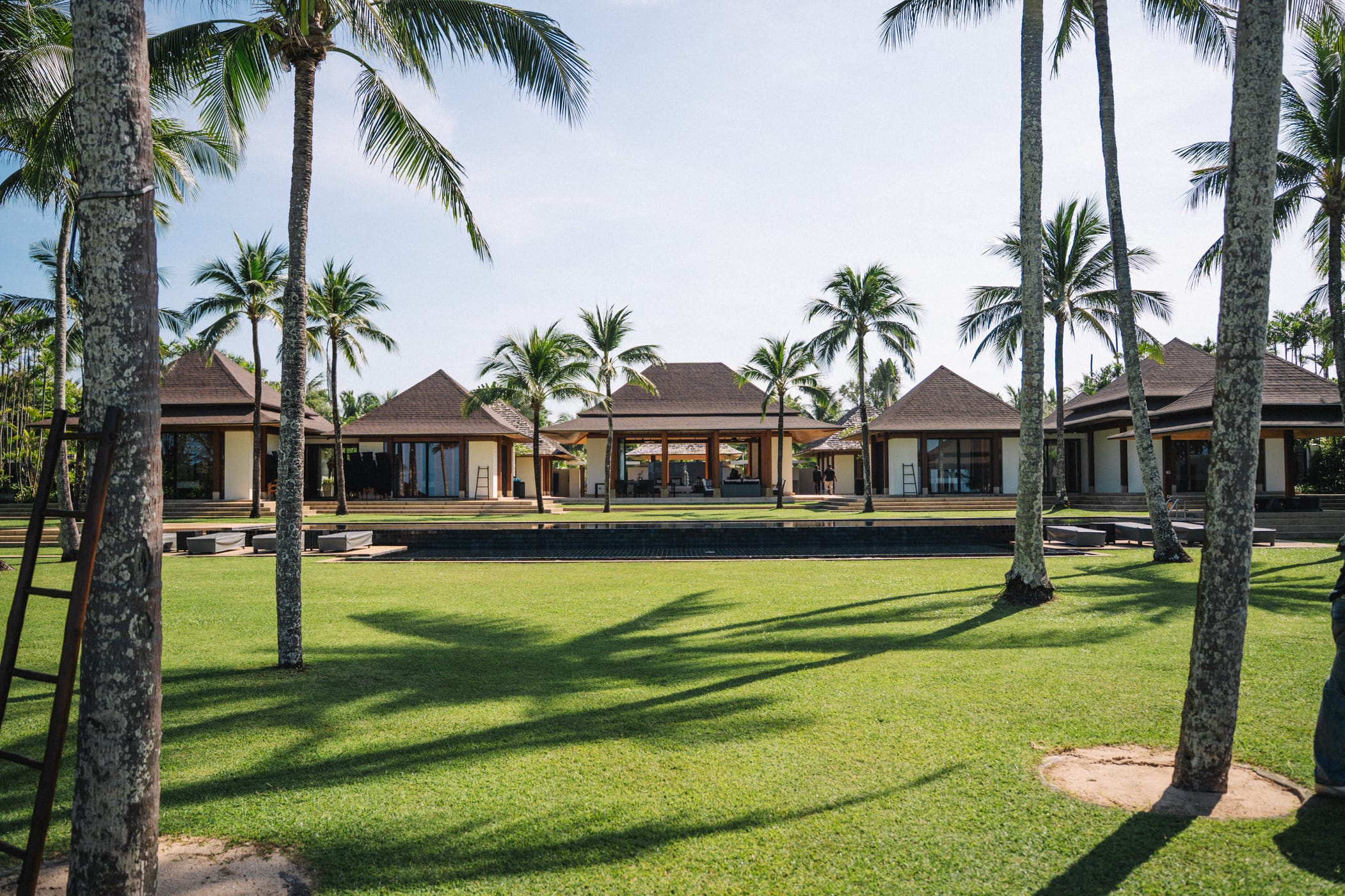
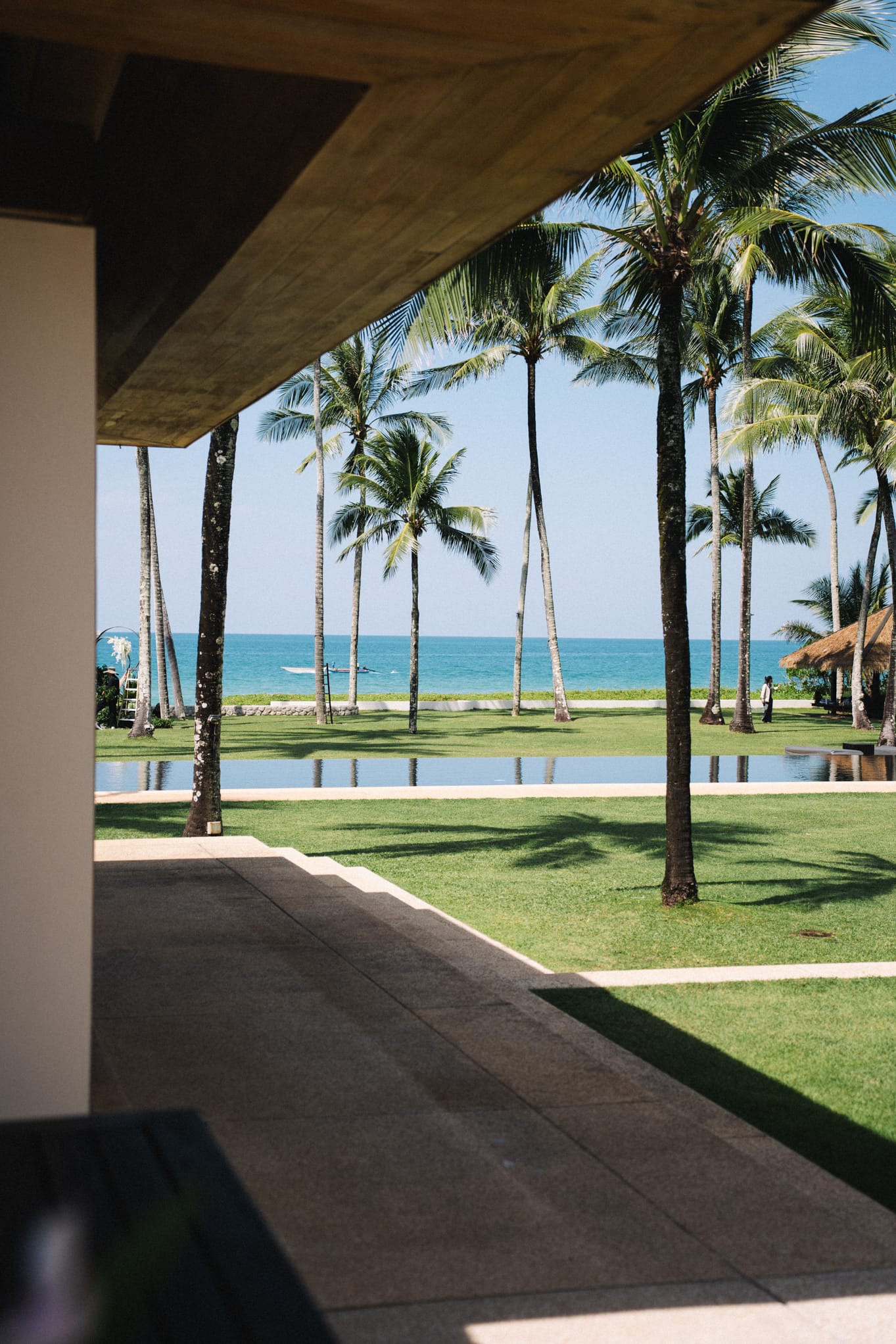
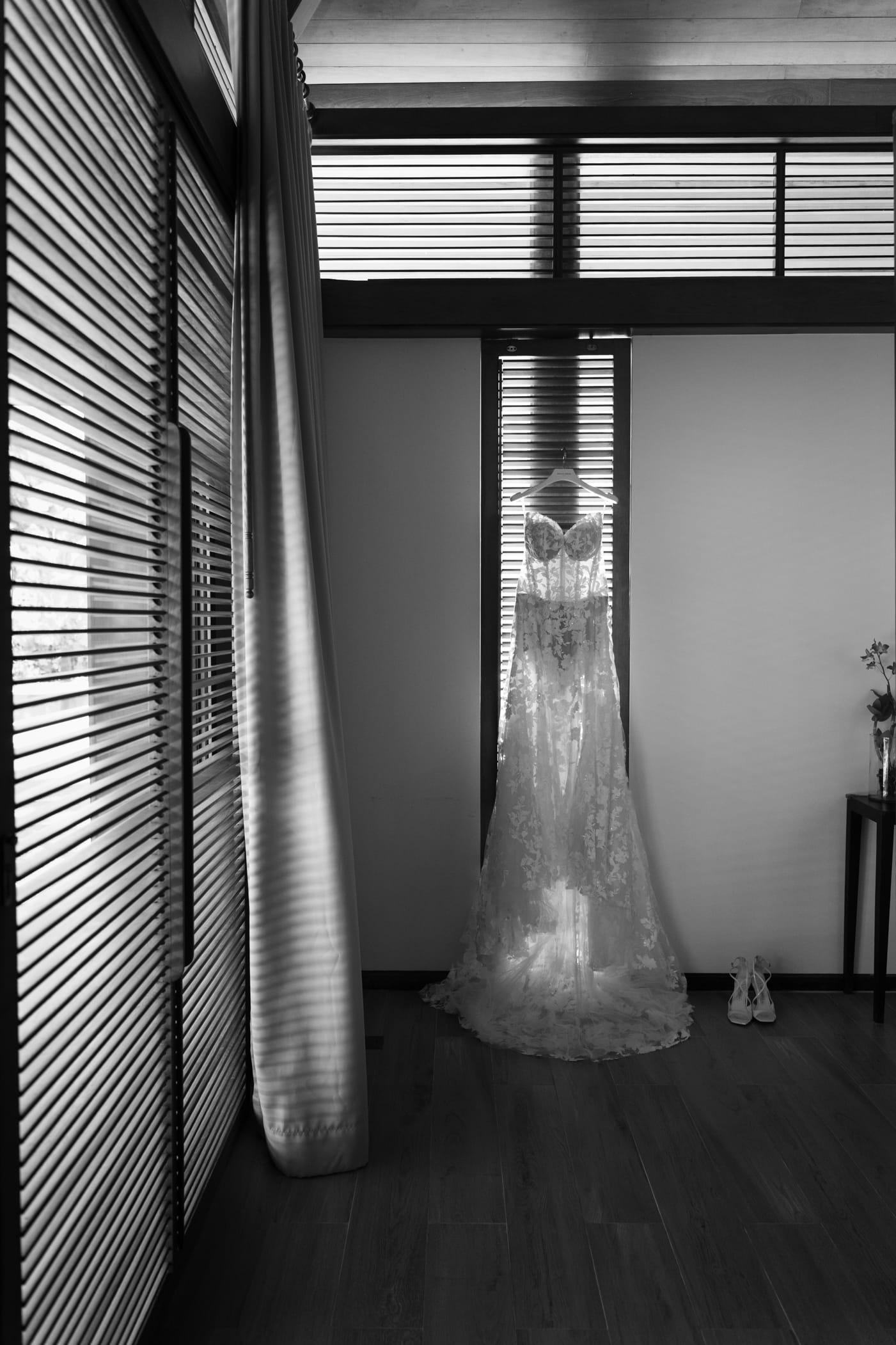
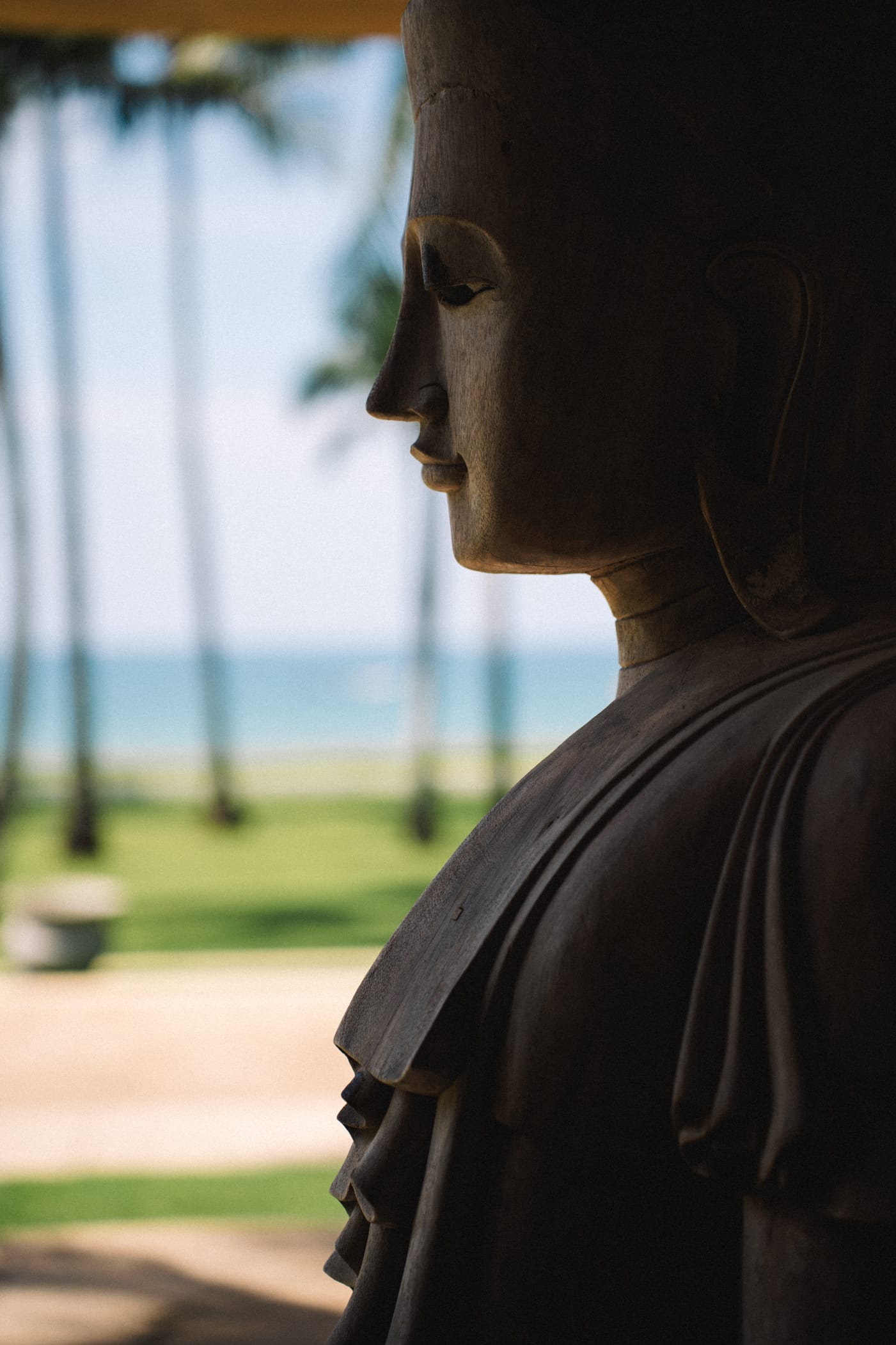
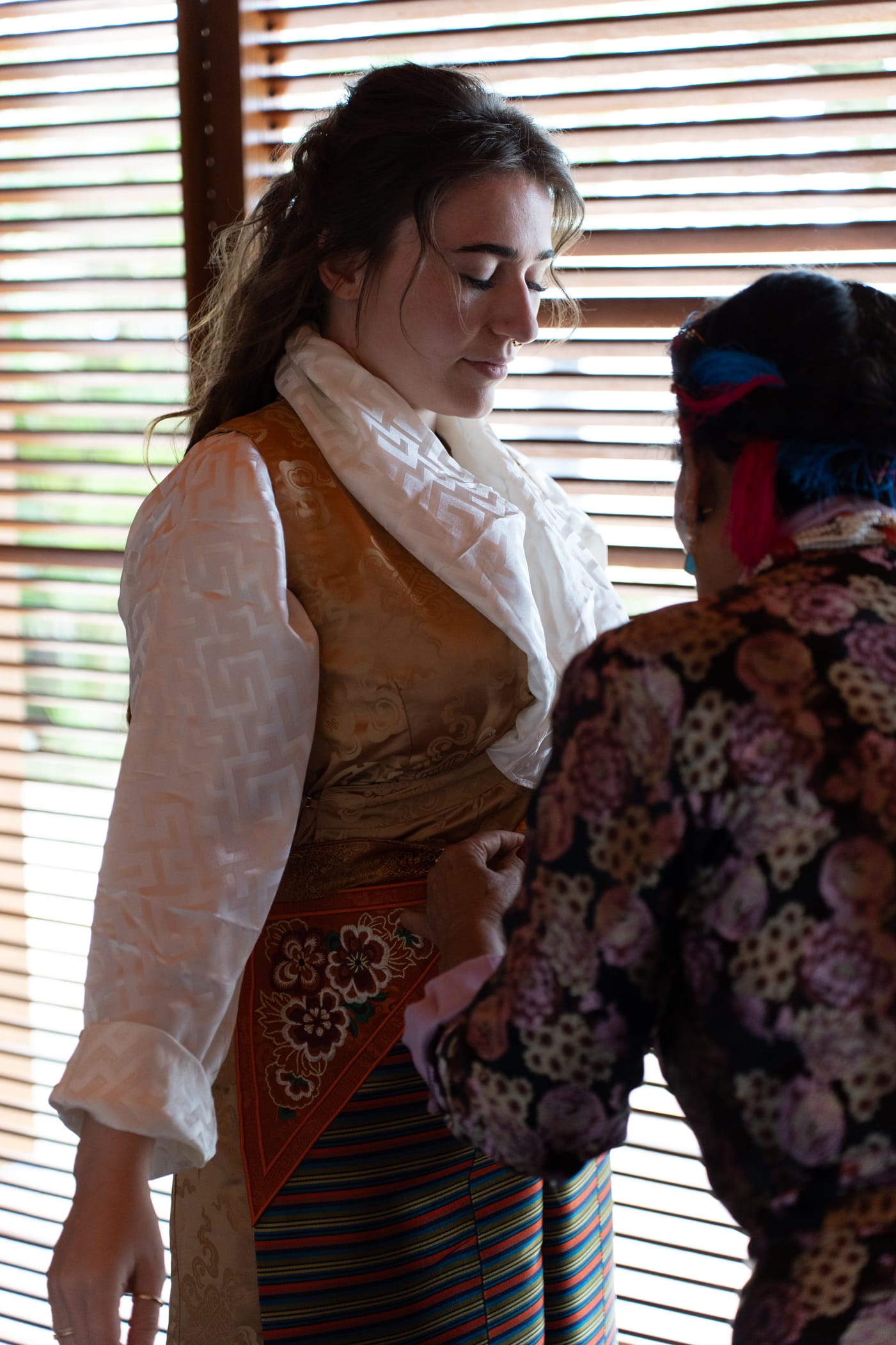
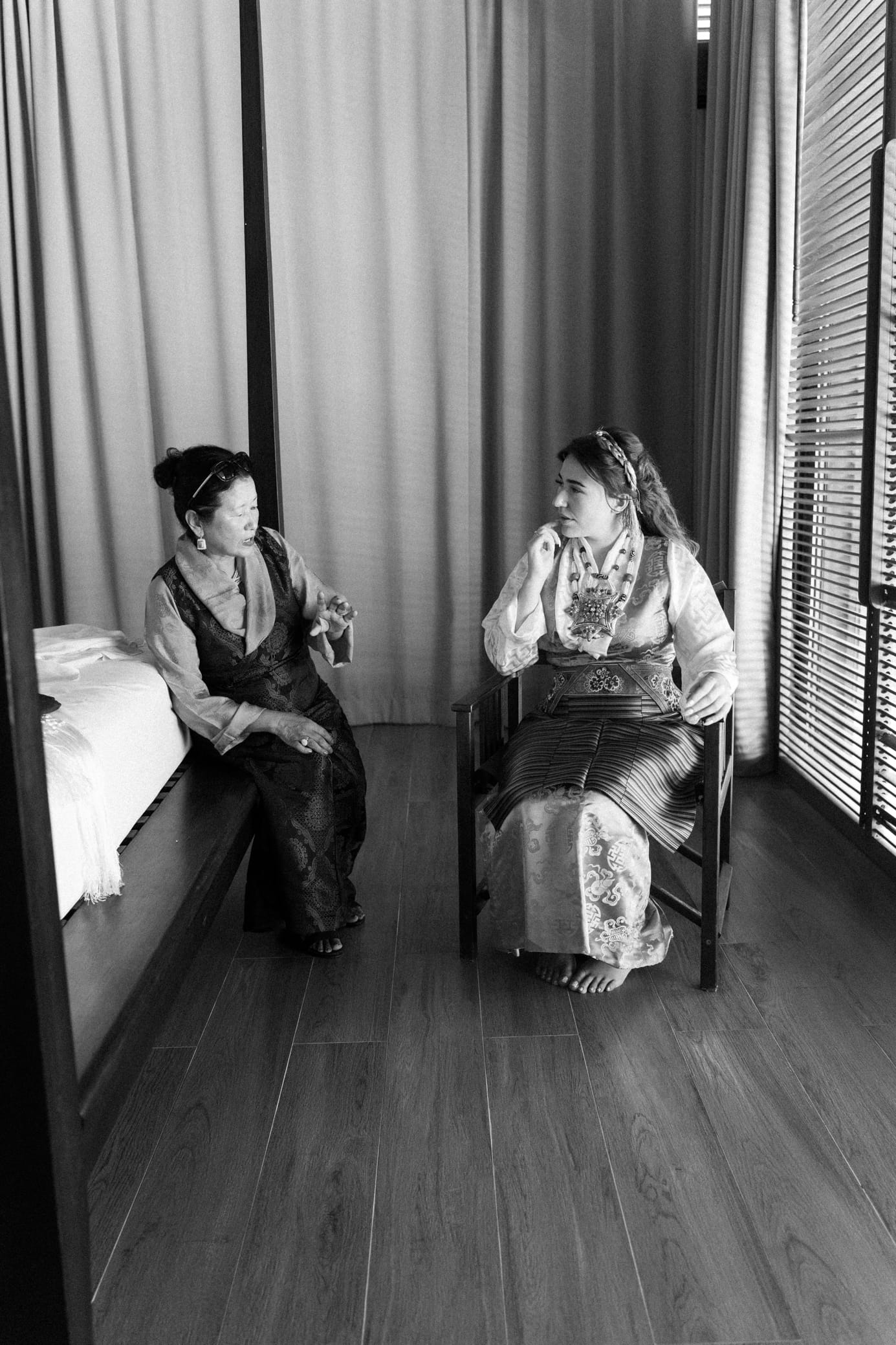
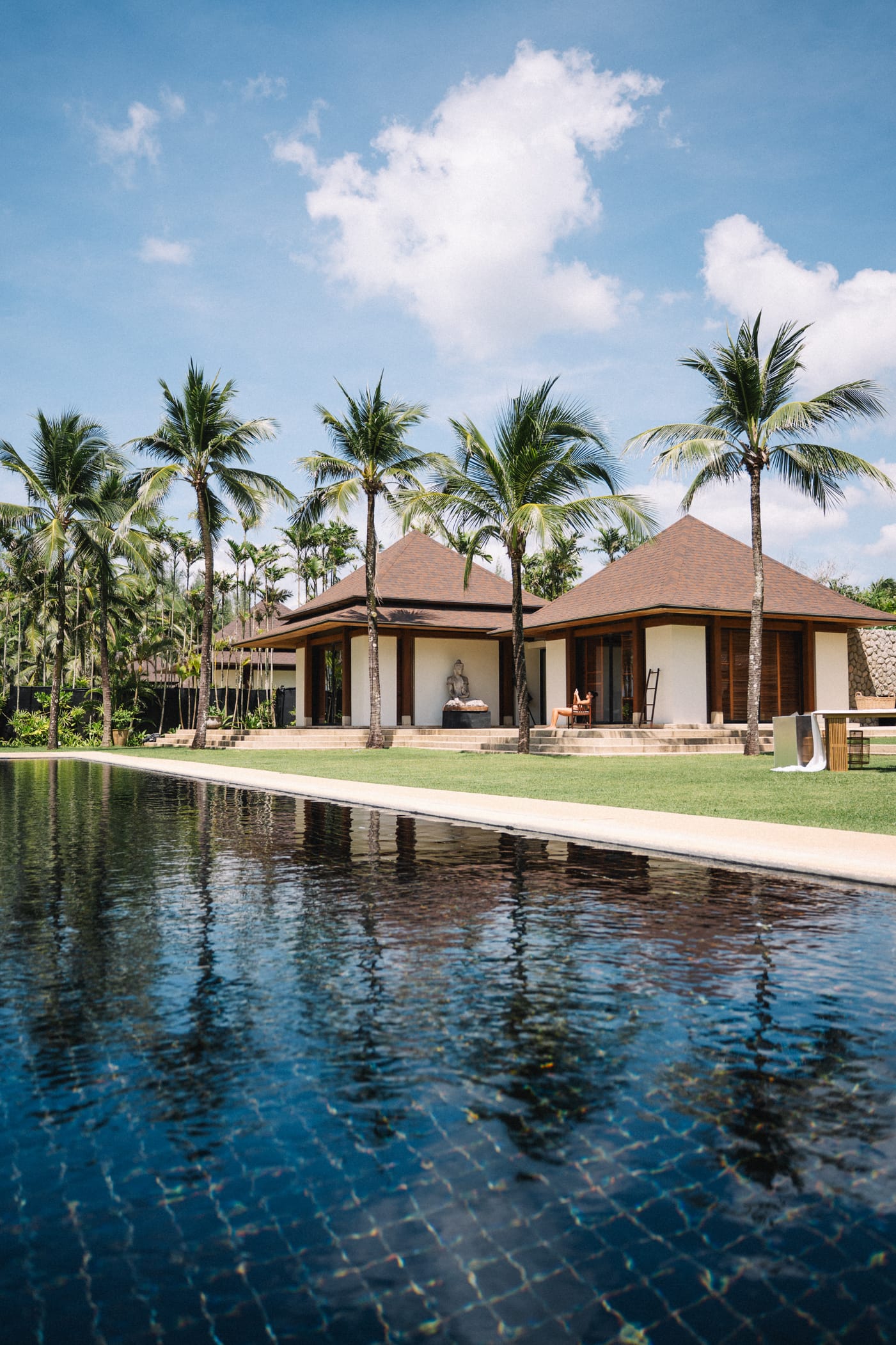
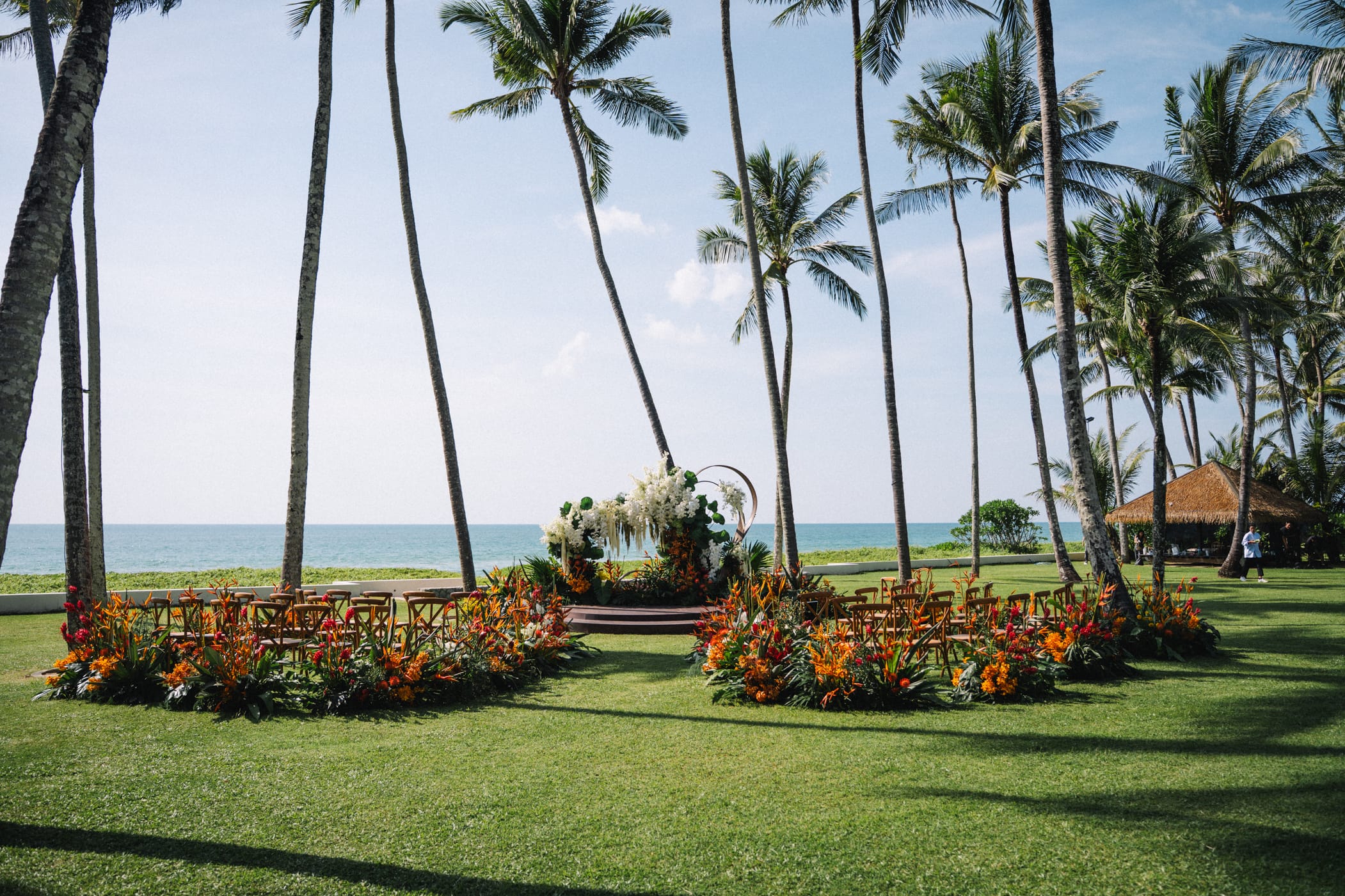
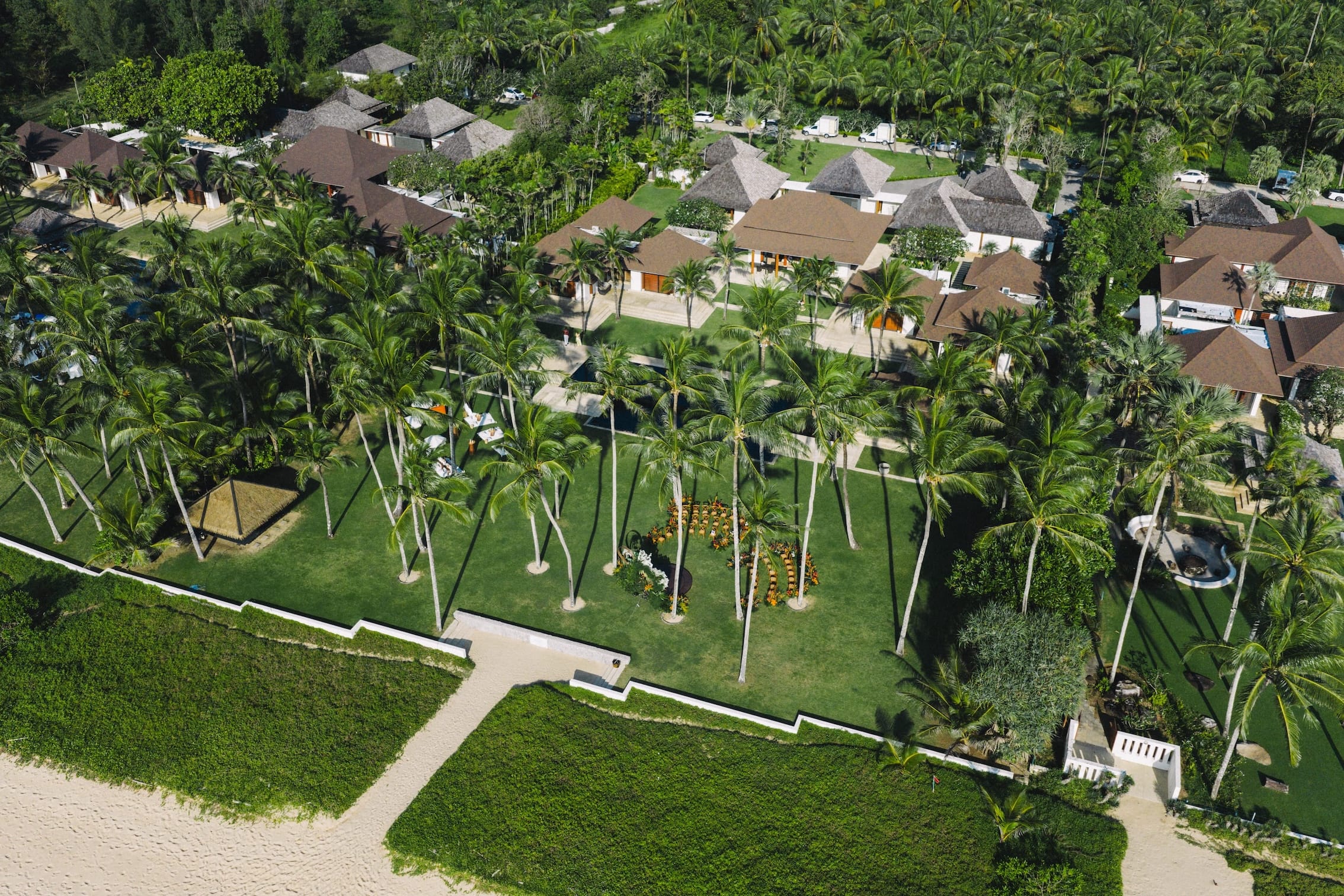
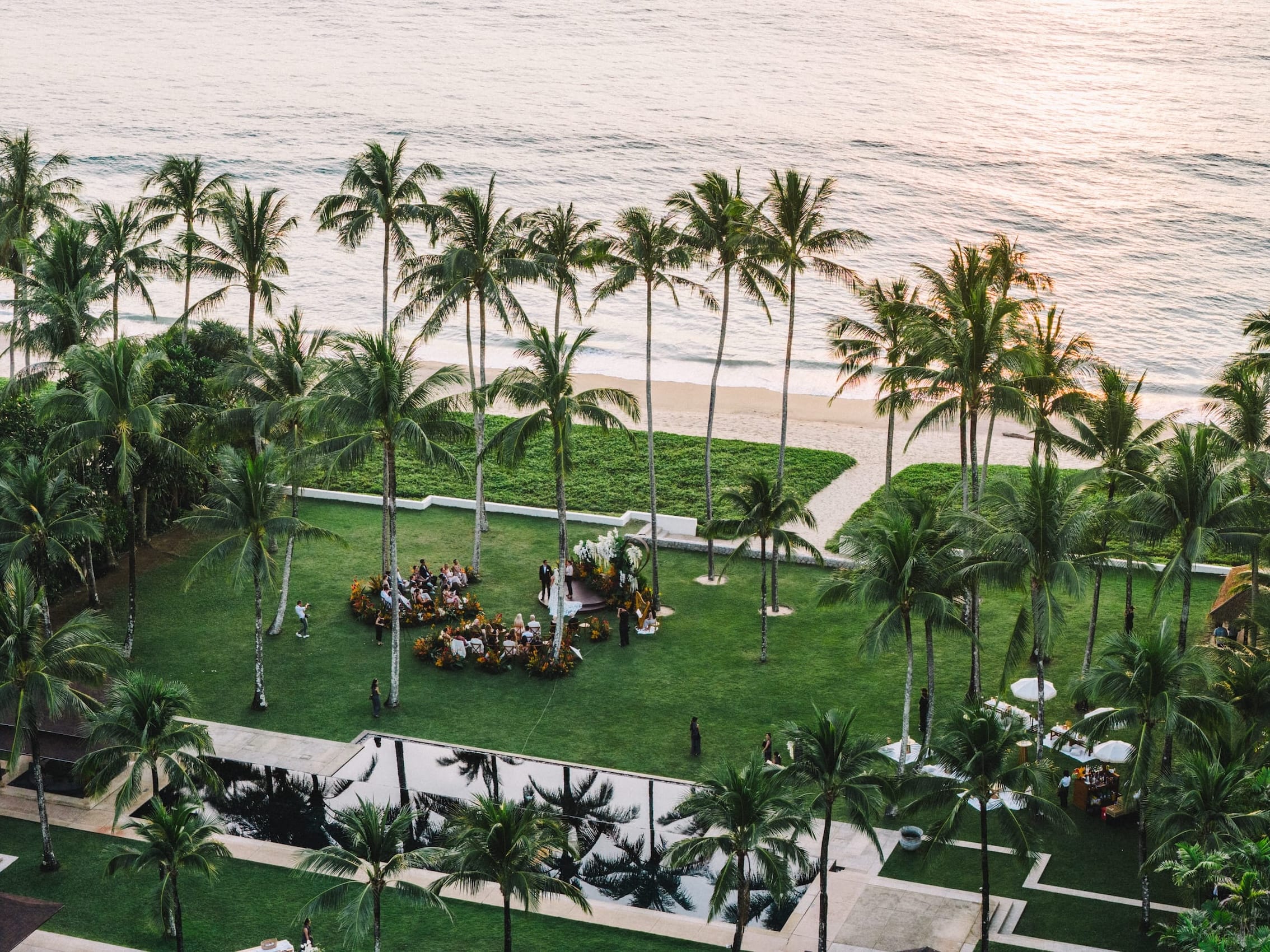
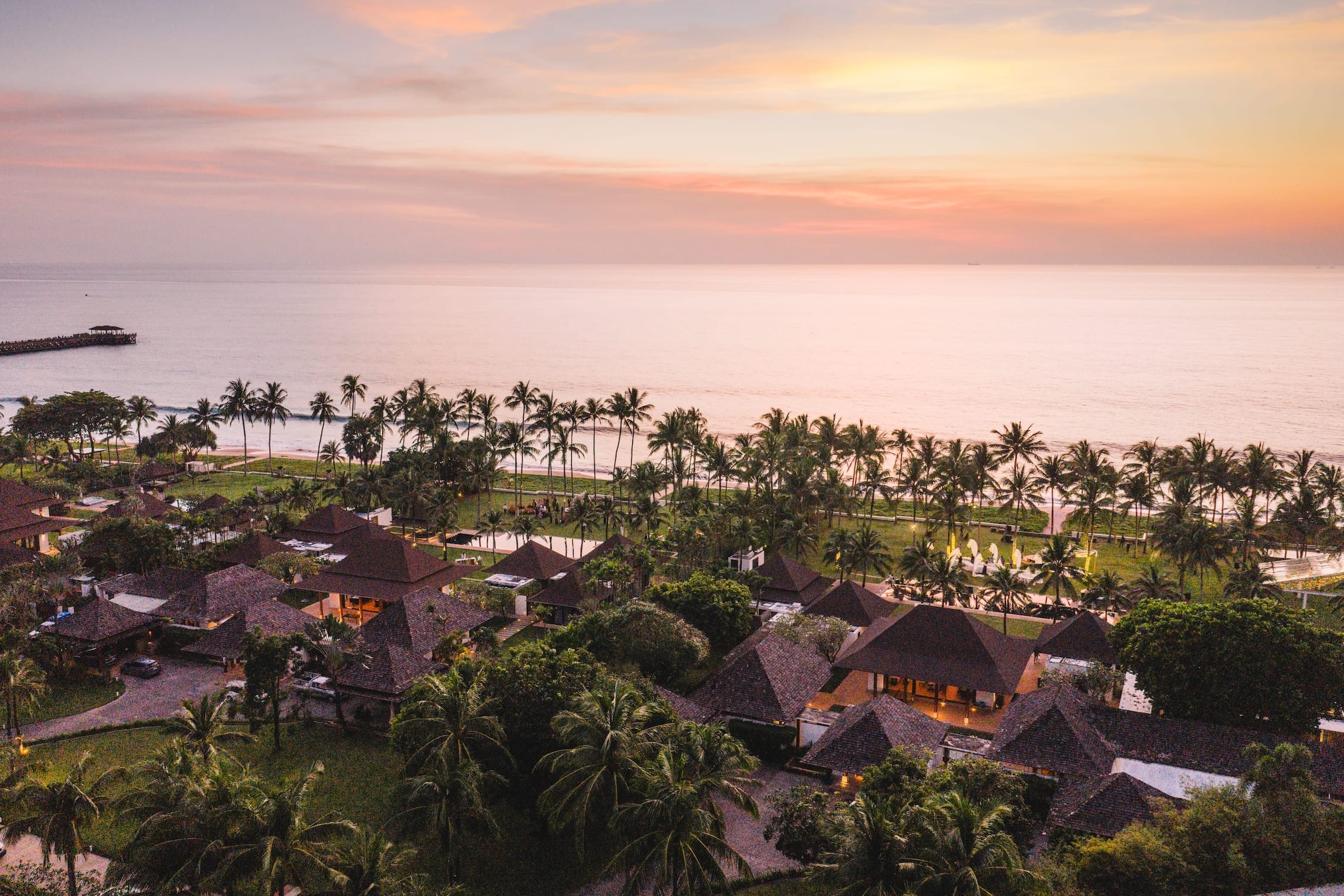
Related posts
Elopement in Valensole, Provence
Jessie and Keaton, two Americans deeply in love, ventured to the so beautiful lavender fields in Valensole, France for…
A wedding in Meribel, French Alps
Nestled in the heart of the French Alps, Lucy and Henrik’s wedding was a breathtaking blend of elegance, intimacy, and…
Destination wedding in Bangkok, Thailand
Nat & Jum live in Bangkok, and I couldn’t imagine not shooting them in their daily lives. They invited me to a homemade…
Wedding in Chateau de Castellaras, Provence
Here is the sweet wedding of Michelle & Louise who got married at the Château de Castellaras, near Cannes, French…
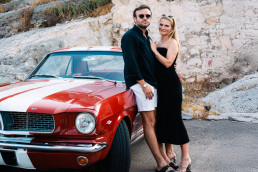
Wedding in Saint Paul de Vence
A wedding in Saint-Paul-de-Vence
Wedding Videographer Cannes Nice Riviera
Connor and Vladimira’s wedding was a stunning celebration of love and style in the South of France. They exchanged vows in the charming church of Saint-Paul de Vence, before heading to their private villa overlooking the sea for an intimate cocktail, elegant dinner, and an unforgettable party under the stars.
The day before, we explored the winding coastal roads in Connor’s vintage Chevrolet Ford, a true cinematic moment that reflected his passion for classic cars.
As a wedding videographer Cannes Nice Riviera, it was a joy to capture such a relaxed yet vibrant atmosphere, from the peaceful ceremony to the wild, joyful energy of the night. Here is their wedding film.
A wedding in Saint-Paul-de-Vence, French Riviera
Wedding Videographer Cannes Nice Riviera
Related posts

A luxury wedding Marbella, Spain
Wednesday / Landing in Malaga, I pick up the rental car and drive towards Marbella. 35°c. Thursday / Lunch on the beach…

Lake Annecy wedding, France
This beautiful couple wanted to honor the ancestral traditions of their respective families by getting married in the…
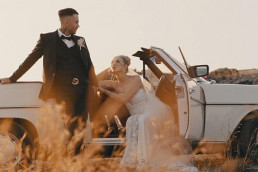
Wedding videographer Santorini Greece
Let me introduce to you the Shannon and Liam's wedding in Santorini, Greece. - Wedding videographer Santorini Greece
Wedding in Saint Paul de Vence
Connor and Vladimira’s wedding was a stunning celebration of love and style in the South of France. They exchanged vows…
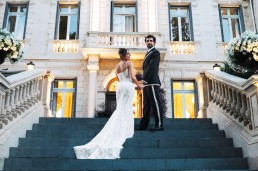
Wedding Pernes-les-Fontaines Vaucluse
Wedding Videographer Pernes-les-Fontaines
A wedding at Château des 3 Fontaines
Anna, a joyful Brazilian bride, and Hugo, her French partner, exchanged vows during an intimate Catholic ceremony in Avignon before returning with their guests to Château des 3 Fontaines in Pernes-les-Fontaines for a sweet cocktail hour and an elegant evening reception. Temperatures soared, typical of Provence’s long, hot summers, creating golden light that every Wedding Videographer Pernes-les-Fontaines dreams of capturing.
Château des 3 Fontaines, Pernes-les-Fontaines
Wedding Videographer Pernes-les-Fontaines
A wedding at Pernes-les-Fontaines & Château des 3 Fontaines: A Perfect Duo
Situated between Carpentras and L’Isle-sur-la-Sorgue, Pernes-les-Fontaines is famed for its forty historic fountains and medieval heritage, offering character-rich streets for portrait sessions. The 19th-century Château des 3 Fontaines complements this setting with expansive reception facilities (600 m² of renovated stone halls opening onto a 1 200 m² lawn). On-site accommodation: up to 34 guests, ideal for destination weddings. Centennial parkland: shaded lawns, mature trees and three signature fountains for cinematic backdrops. Together, the village charm and château grandeur provide a cohesive canvas for any Wedding Videographer Pernes-les-Fontaines to weave a compelling visual narrative.
Choosing the Right Wedding Videographer Pernes-les-Fontaines
When selecting a wedding filmmaker, rely first on instinct: the connection you feel during the initial consultation often predicts a smooth creative partnership. Validate that instinct with objective criteria:
Deliverables & Storytelling Options: Highlight films, full-day documentaries, or narrated “story-driven” edits.
Proven Expertise: Years of specialised wedding work in Provence; industry awards or festival accolades.
International Recognition: Commissions for destination events or luxury brands demonstrate adaptability to multicultural expectations.
Style Compatibility: Does the colour grading, pacing and audio design resonate with your vision?
Professional Structure: Clear contracts, data-backup protocols and liability insurance.
Selecting a Wedding Videographer Pernes-les-Fontaines who scores highly across these points ensures a refined film that mirrors the elegance of Pernes-les-Fontaines itself.
Vaucluse: Why the Region Remains a Destination-Wedding Icon
Mediterranean Climate, over 300 sunny days a year support outdoor celebrations from April to October.
Effortless Access, Marseille-Provence, Nice and Avignon airports plus high-speed train links.
Diverse Landscapes, lavender plateaux, vineyards and ochre villages supply varied shooting locations within one department. Refined Gastronomy & Hospitality, Provençal menus and a service culture seasoned for international clientele. These assets make Vaucluse, and by extension Pernes-les-Fontaines, a magnet for couples seeking a sophisticated yet authentic French backdrop further elevating the craft of every Wedding Videographer Pernes-les-Fontaines documenting love stories beneath the Provençal sun.
Beyond the Film
Random photographs through the filmmaker’s lens


Related posts

A wedding at the Ritz, Paris
This is a 1 minute trailer of this fantastic wedding at the Ritz, Paris. Experience the real essence of forever romance…
Wedding Pernes-les-Fontaines Vaucluse
Anna, a joyful Brazilian bride, and Hugo, her French partner, exchanged vows during an intimate Catholic ceremony in…
Elopement in Valensole, Provence
Jessie and Keaton, two Americans deeply in love, ventured to the so beautiful lavender fields in Valensole, France for…

A winter wedding in Megève
[Styled Shoot] This is the story of this lovely couple, Emma & Tom, who wanted to get married in the French Alps. A…