How I create a wedding film that tells your story
A guide to creating a wedding film that feels personal, meaningful and true to your story.
By Meryll de Gordon, destination wedding filmmaker
I’m Meryll de Gordon, a destination wedding videographer based in Provence. I create story-driven wedding films for couples getting married in France, Italy, Thailand and beyond. My approach combines documentary filmmaking with a strong focus on storytelling, taking time before the wedding to understand your relationship, the people who matter to you and the experiences that have shaped your story. When it makes sense, I also help plan additional moments or activities around the wedding so the final film can reflect more than the event itself and feel deeply personal to you.
A wedding film can tell more than what happened
The difference between documenting a day and telling a story
A wedding film can simply capture a beautiful day: the people you love, the ceremony, the speeches, dinner, the party and everything happening in between. For many couples, that is exactly what they want. But a story-driven wedding film can go further. Your wedding can become the starting point for a film about who you are, where you come from, the people who shaped your lives and what brought you to this particular day. That does not mean turning your relationship into a screenplay. It means noticing the details that already carry meaning and deciding which of them deserve a place in the film. This is where wedding storytelling becomes different from simply recording events. The wedding remains at the centre, but the film can also reveal what surrounds it.
You do not need an extraordinary story
Personal does not have to mean spectacular
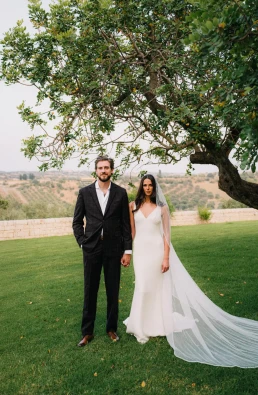
You do not need to have met on the other side of the world, spent ten years apart or lived through something worthy of a Hollywood screenplay. Most meaningful stories are much simpler. It might be a place you keep returning to, a family tradition, the city where you met, a friend who has known you since the beginning, something your parents taught you, an old photograph, a letter or a memory that still makes both of you laugh. A personal wedding film does not become interesting because something extraordinary happened. It becomes interesting because the details belong to you. That is also why I never want to manufacture a story simply because a narrative wedding film is supposed to have one. I would rather listen long enough to understand what is already there.
The story starts before I start filming
Understanding the people behind the wedding
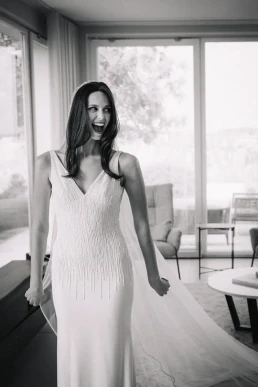
I cannot understand everything that matters to you by arriving with a camera on the morning of your wedding. The process begins earlier. Through conversations and questions, I start to understand your relationship, your personalities and the people around you. Of course, I want to know where you met and how you became engaged, but the factual timeline alone rarely tells me enough. I am more interested in what brought you together, what changed after you met, who played an important part in your lives, which places hold memories and what you hope you will still remember twenty years from now.
This wedding film planning can include video calls, messages, your itinerary, information about important people, planned speeches and sometimes family archives. Not everything we discuss will appear in the final film. The purpose is to give me context before I begin observing. My role as a filmmaker is not to collect as much information as possible, but to recognize the details that may eventually give the film its shape.
Finding the thread is part of the process
Many couples know they want an emotional wedding film, but they have no idea how their relationship could become a story. You do not need to arrive with a narrative already written or a list of scenes you think we should create. During our conversations, certain things usually begin to stand out naturally. It might be your relationship with your parents, a group of friends who have followed you through several stages of your life, a destination that carries more meaning than expected or a small story you almost forgot to mention.
Old photographs may reveal connections to the past. The presence of friends travelling from several countries may explain something about the life you have built. For an elopement, simply choosing to leave expectations behind and experience somewhere new together may already say enough. My role in the wedding film storytelling process is not to invent the thread. It is to recognise it.
A cinematic wedding film with a personal narrative does not necessarily require a three-day celebration. Sometimes the wedding itself contains everything. Vows, speeches, preparations, conversations and interactions with the people around you already provide an enormous amount of material. Knowing more beforehand simply changes the way I look at those moments. If I know your grandmother played an important role in your childhood, I understand the significance of a small interaction between you. If close friends supported you through a difficult period, I know their presence carries more weight than another group of guests.
At an intimate celebration, these relationships become especially visible. Rachael and Chris celebrated with ten guests at the Grand-Hôtel du Cap-Ferrat. With so few people, a parent’s expression, a hand held during the ceremony or someone’s reaction to a few words can become an essential part of an intimate wedding film. This is particularly powerful in places such as the French Riviera, where a wedding can remain visually spectacular without needing to become a large production. Preparation allows me to understand what I am looking at while it is happening.
One wedding day may give us everything we need
Storytelling does not automatically mean filming for several days
Sometimes the story needs more than one day
Why the time around the wedding can matter
A destination wedding often represents much more than a ceremony and a party. You may have travelled thousands of kilometres with your closest friends and family to spend several days together in Provence, Sicily, Tuscany, Thailand or somewhere completely new. In that situation, arriving for the ceremony and leaving after the party can mean missing part of the experience.
A multi-day wedding film can include the quieter spaces around the wedding: a dinner the night before, time at the beach, a boat trip, breakfast, walking through town, cooking together, drinks at a villa or simply several hours with people you rarely see. These scenes create space. They show you outside the formal rhythm of the wedding and give a destination wedding film more context.
This does not mean that every destination wedding needs three or four days of coverage. The additional time is useful only when it contributes something. A destination wedding weekend can take many forms, and more filming is not automatically better. The real question is whether there is more of the story worth seeing.
Case study:
Nicoletta & Connor, Sicily
Nicoletta and Connor’s elopement in Sicily was deliberately private. The challenge was not to create a complicated backstory, but to make such a small celebration feel like a complete experience rather than simply a film of a ceremony.
What we discovered
What mattered was the experience of leaving home and spending this time together in Sicily. The destination was not simply scenery surrounding their wedding. It was part of the experience itself. For this Sicily elopement film, there was no reason to invent another storyline.
What we decided to film
We began the day before the ceremony. Nicoletta and Connor spent time on a boat along the Sicilian coast, had dinner together and walked through Taormina. The following day brought their ceremony, cocktails, dinner and the slower moments surrounding them. There was no reason to add anything more complicated.
Why these scenes mattered
The boat was not included simply because Sicily looks beautiful from the sea. Those hours showed something the ceremony could not: Nicoletta and Connor experiencing the destination together. There was time to walk, talk and enjoy where they were without the structure of the wedding day. The wedding became part of a larger memory rather than an isolated event.
How it became a story
The progression of the experience became the narrative. The sea, Taormina, the anticipation of the previous day, the ceremony and the moments afterwards naturally belonged together. This elopement wedding film did not need a heavy narrative device. Sometimes storytelling means finding more information. Sometimes it means recognising that what is already happening is enough
I choose experiences for the couple, not for the camera
Additional filming should never feel like a production
When filming outside the wedding day could add something useful, I can help imagine what that time might look like. You do not need to design an itinerary for your destination wedding videographer. I can research places and suggest experiences that make sense for your personalities, the destination and the rhythm of the celebration.
What I do not want is to add an activity simply because it would look impressive on camera. If you love being on the water, a boat may make sense. If food plays an important part in your life together, perhaps the right setting is a local market, a kitchen or a long table. If friends have travelled across the world to see you, spending an informal afternoon together may reveal much more than another hour of posed portraits. This approach to wedding weekend videography is simple: the activity is never the story by itself. It gives the story somewhere to happen.
Case study:
Sam & Zarah, Phuket
Sam and Zarah’s wedding in Phuket began as a request to film their wedding, but as we spoke, it became clear that the wedding day alone would not really explain who they were together. They had met by chance in Goa, lived between different countries, travelled together and eventually built a life in Dubai. The challenge was to bring part of that journey into the film without reconstructing their past.
What we discovered
We had several conversations before the wedding. Travel, food, movement and experiencing places together were recurring parts of their relationship. I also learned that they had both practised Muay Thai when they were younger, Sam loved motorcycles, and their friends were an important part of the experience they were creating in Thailand. That context meant I was no longer searching for generic images for a Phuket wedding film. I knew more about what might actually feel like them.
What we decided to film
Before travelling, I researched Phuket and prepared several possible experiences. Together, we selected a quiet conversation about their story, Muay Thai, motorbike rides, a private sunset boat trip, a night market with friends, time around the villa and their wedding celebrations, vows and speeches. I also had access to personal archives, while Sam recorded part of their story in his own voice. The complete project represented around three and a half days of filming.
Why these scenes mattered
None of these activities existed simply to produce attractive footage. Muay Thai belonged to both of their lives. The motorbikes felt natural to Sam. The night market connected travel, food and friends. The boat gave them a quieter space together. The scenes worked because they revealed different aspects of their relationship. That is why I prefer to start with the couple and then think about the activity, rather than finding a beautiful activity and trying to fit the couple inside it.
How it became a story
The wedding did not need to open the film. It became the point everything was moving towards. Their wedding film with family archives, Sam’s voice, conversations, vows, speeches and footage from Phuket could move between different periods instead of simply following the chronology of the weekend. By the time we reached the wedding in the film, we already knew something about the people getting married.
The people and voices around you are part of the film
Relationships often carry more story than locations
Very few wedding stories are only about two people. Parents, siblings, grandparents and friends often hold important pieces of the story. Some will appear through speeches, others through letters or conversations, and many will never speak directly to the camera. They do not need to. A glance across a room, a gesture during the ceremony or someone’s reaction to a familiar story can say enough.
Multi-day celebrations give me more time to understand those connections. By the time the same person appears during the ceremony, gives a speech or joins you on the dance floor, their presence can mean something different. Sound matters for the same reason. A wedding film with vows, a wedding film with speeches, letters, conversations and fragments of natural dialogue can completely change the meaning of an image.
This is why wedding film sound design begins with what people are saying, not only with the music chosen later. The images show what happened. Voices can explain why it mattered.
Case study:
Adelle & James, Krabi
Adelle and James’s wedding in Thailand came with a very different kind of story. They had known each other since fifth grade. Their lives crossed, separated and came together again over many years, and a deeply personal letter from James became an important point in that journey. By the time they reached Rayavadee in Krabi, there was already a long history behind their wedding. The challenge was not finding a story. It was deciding how much of it the film actually needed.
What we discovered
Their wedding made more sense once you understood that the relationship had existed in different forms for many years. Friends and family had also travelled from different countries to Thailand, bringing together many of the people connected to that history. For this Krabi wedding film, I did not want the past to overwhelm everything happening in the present.
What we decided to film
Across four days, I filmed reunion games, time with friends and family, island hopping, swimming, time on the water, informal moments between the people closest to them, the wedding itself, dinner and dancing, brunch and quieter family moments. I also paid attention to the way Adelle and James naturally spoke together, which helped prepare a conversation that could become part of the film.
Why these scenes mattered
Their history explained where they had come from. Thailand showed where they were now. A film built only around stories from the past would have missed all the life happening in front of me. The days spent swimming, laughing with friends, travelling between islands and being with family gave that history a present tense.
How it became a story
The past provided a narrative backbone. The footage from Krabi gave me the present. Their friends and families connected the two. The wedding became the place where those periods of their lives finally met. That is why four days of wedding videography in Thailand made sense for them. The objective was never to make the wedding appear bigger than it was. It was to have enough life around it to tell a story that began long before.
The film is prepared in advance but discovered in the edit
There is a plan, but never a script
Preparing a story does not mean deciding what the final film will become before the wedding has happened. Weddings are unpredictable. Someone may say something I could never have anticipated. A speech may reveal the emotional centre of the film. A small moment nobody planned may become more important than something we discussed for weeks. So I prepare a direction rather than a script.
When a planner is involved, I also work with them around the schedule, locations and logistics. Good preparation means knowing when to film, but also when to disappear. The priority is that you experience the wedding rather than perform it for the camera.
The final structure appears during wedding film editing. A father’s sentence might suddenly connect with something filmed two days earlier. A childhood memory may belong beside a scene from the ceremony. Someone introduced casually during a welcome dinner may reappear through the entire weekend. This is why the finished film does not always follow chronological order. I am looking for relationships between images, voices, gestures and memories.
Some couples will want a simple, elegant record of an extraordinary wedding day. Others will want a film that goes deeper into the people, places and history surrounding it. Both approaches are possible. If you are still deciding what type of filmmaker and approach will suit your celebration, this guide on how to choose a destination wedding videographer explains some of the points worth considering.
What matters is that years later, the film does more than remind you what your wedding looked like. It should bring back what it meant.
Share your wedding plans and let’s schedule a call
Share your story, the people who matter to you and the kind of film you would like to create. We can schedule a call to explore what could make your wedding film more personal, and whether additional moments, conversations or experiences could naturally become part of the story.
Being recognised among international wedding videographers means a lot to me, but I try not to let awards change the way I work. Every wedding is still a new story, with different people, places and emotions. What matters most is creating a film that feels true to the couple, rather than repeating something I have done before. These recognitions reflect years of weddings, travel and encounters, but also the trust couples have placed in me. That is what I try to honour each time I pick up a camera: paying attention to a look, a voice, the light and all the small moments that will still mean something years later.

Featured in
Work featured in French and international wedding blogs and publications known for their carefully curated selections.

Frequently asked questions about story-driven wedding films
A story-driven wedding film uses more than the chronology of the wedding day. It can combine vows, speeches, conversations, personal archives, people, places and moments filmed around the wedding to reveal something about the couple and the journey that brought them there.
No. A meaningful story can come from a family relationship, a place, an old photograph, a tradition, a group of friends or a simple memory. The purpose of documentary wedding videography is not to make ordinary lives appear extraordinary, but to recognise what already matters.
No. You can simply know that you want the film to feel personal. Finding the relevant themes through conversations and preparation is part of my work as a wedding filmmaker for international couples.
Preparation can involve video calls, messages, the wedding itinerary, planned speeches, information about important people and sometimes personal archives. The exact process depends on the couple and on how much context the film needs.
No. A wedding day may already provide everything through preparations, vows, speeches and interactions. Additional days are useful only when they add something that cannot naturally be found during the wedding itself. For celebrations taking place over several days, my multi-day wedding videography page explains this approach in more detail.
It can be something very simple: dinner, a boat trip, walking through town, breakfast, the beach, time at a villa or an informal afternoon with friends. Multi-day destination wedding videography does not require creating another formal event.
No. I can suggest experiences, but they need to make sense for the couple. The objective is to create situations where real interactions can happen rather than scenes performed specifically for the camera.
Yes. Parents, grandparents, siblings and friends can become part of a wedding film with family stories through speeches, letters, conversations or simply through the way they interact with you during the celebration.
Sometimes a conversation can be useful when something important would not otherwise appear through vows or speeches. The objective is not to turn the film into an interview, but to find a natural voice for the story when it is needed.
Very important. Natural sound, vows, speeches, letters and conversations can completely change the meaning of an image. For moments that cannot be repeated, I prepare several audio sources so spoken material remains clear and natural.
The approach matters as much as the images. If you want a personal or story-driven film, look at how the filmmaker works before the wedding, how they use sound, whether they understand multi-day celebrations and whether their films feel connected to the people rather than only to the location. I explain these points in more detail in my guide on <a href=”https://www.gordonweddingfilms.com/how-to-choose-destination-wedding-videographer/”>how to choose a destination wedding videographer</a>.
Not necessarily. The wedding film narrative structure is discovered during editing. A sentence recorded on the wedding day might connect with footage filmed earlier, while a memory or archive image can introduce a later scene. The final order is chosen according to meaning rather than simply according to time.