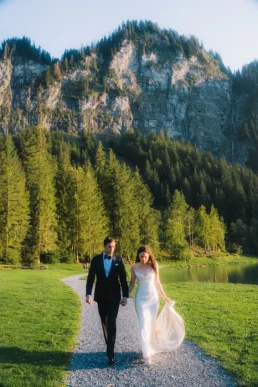

How to choose a destination wedding videographer
The ultimate guide to comparing style, sound, teams and coverage
Choosing the right filmmaker
The right destination wedding videographer is the filmmaker whose complete work moves you, whose presence makes you feel comfortable, and whose preparation can withstand the realities of travel. A beautiful portfolio may start the conversation, but it should not make the decision for you.
Compare full films, sound, working style, team structure, destination planning, deliverables and contract terms before comparing headline prices. The aim is to understand both the film you will receive and the experience of having that person close to you throughout the celebration.
I am Meryll de Gordon, a destination wedding videographer based in Provence and the founder of Gordon Wedding Films. I have filmed weddings in France and internationally since 2014, from intimate elopements to weekend weddings spread across several days. I wrote this guide to explain the parts of the choice that are harder to judge from a short portfolio or an Instagram reel.
- Start with what you want to remember
- Read style in observable terms
- Watch several complete wedding films
- Know who will film and edit your wedding
- Test the destination plan
- Compare proposals and contracts
- Choose the right amount of coverage
- Check how the filmmaker collaborates
- Make the final choice
- Frequently asked questions
- Choose from several complete films, not a showreel alone.
- Separate visual style, working style and narrative style.
- Confirm who will attend, who will edit and what happens if plans change.
- Compare the complete scope, including travel, delivery, revisions and rights.
Start with what you want to remember
Before you search for a filmmaker, decide what you want the film to preserve. This is more useful than beginning with labels such as cinematic or documentary. One couple may care most about hearing their parents speak. Another may want the social rhythm of the whole weekend, while another may value quiet exchanges more than formal events.
Write down three priorities before you build a shortlist. They could include:
- Vows, speeches and the voices of family and friends.
- Natural interactions with very little direction.
- A strong sense of place without turning the film into a travel advertisement.
- The welcome dinner and day-after gathering as part of one story.
- A concise film you will revisit often, or a longer narrative with more context.
- Complete ceremony or speech edits alongside the main film.
Use those priorities throughout the selection process. A filmmaker can be highly skilled and still be wrong for you. If voices matter, a portfolio built almost entirely around music and portraits may be a poor match. If you dislike being directed, ask what the filmmaker does when the timeline is late or the available light is difficult.
Read style in observable terms
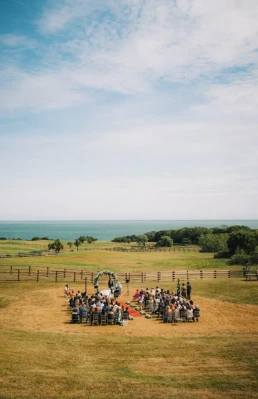
Words such as cinematic, luxury, authentic and timeless appear throughout wedding filmmaking. They often describe an intention, not a consistent method. A useful style assessment separates what the film looks like, how the filmmaker works and how the story is edited.
Visual style
Look at framing, camera movement, colour, contrast and the treatment of light. Does the filmmaker favour composed portraits, handheld observation, wide landscapes or intimate close-ups? Check whether people still look like themselves and whether the destination supports the story rather than overwhelming it.
Review work made in different conditions. A portfolio of sunset portraits says little about a dark dinner, a bright midday ceremony or a crowded dance floor. Consistency means the filmmaker can maintain a coherent standard while responding to the place and the people in front of the camera.
Working style
Ask how much direction is given during the day. Documentary work can include light guidance for portraits or better light. Editorial-looking work can still rely on genuine observation. The practical questions are whether you will be asked to repeat actions, leave dinner for a long portrait session or perform conversations for the camera.
There is no universally correct level of direction. The right one is the level that lets you remain present while giving the filmmaker enough structure to do strong work.
Narrative style
Notice how the film is built. Is it chronological, impressionistic or shaped around voices? Do vows and speeches add meaning, or do they sit under attractive images without changing the story? Does the edit reveal relationships and shifts in atmosphere?
A story-driven film should feel specific to the couple and remain understandable to someone who was not at the wedding. Choose the work you respond to first, then ask the filmmaker to explain what you are seeing. Their answer should be more precise than a list of adjectives.
Watch several complete wedding films
A short reel shows that a filmmaker can select a few strong moments. A complete film reveals whether they can sustain attention, record clear sound, handle transitions and give people beyond the couple a meaningful place in the story.
Ask to see two or three recent films with some practical similarity to your plans. They do not need to come from the same venue. A multi-day schedule, an outdoor ceremony, a dark reception, a multilingual family or a celebration of a similar scale may tell you more.
| What to review | What it reveals |
|---|---|
| The opening and final minutes | Whether the film has a deliberate beginning, progression and conclusion. |
| Vows and speeches | The clarity of the recording and whether voices carry part of the story. |
| Guests and family | Whether the filmmaker notices relationships beyond portraits of the couple. |
| Harsh daylight and dark interiors | How consistently the work holds up outside ideal conditions. |
| Quiet transitions | Whether the edit has rhythm without depending on spectacle. |
| Films from different weddings | Whether each couple feels distinct or is placed into the same template. |
Listen to the sound as carefully as the images
Sound is one of the clearest differences between a sequence of attractive clips and a lasting wedding film. Listen for intelligible vows, speeches and natural atmosphere. The movement of a room before the ceremony, a laugh between sentences or the sound of dinner around a toast can restore the feeling of a place years later.
Ask how the filmmaker records the ceremony, the speech microphone and ambient sound. Important moments should not depend on a single source. If the venue or band controls the sound system, the filmmaker should plan with them rather than assume a clean audio feed will be available.
Also distinguish complete client films from styled shoots, venue editorials and work created mainly for suppliers. Editorial projects can demonstrate taste, but they do not show how someone anticipates unrepeatable moments throughout a live wedding.
Santorini, Greece
The wedding film of Shannon & Liam in Santorini
Places we’ve filmed so far // On our bucket list: Japan, Bali, Vietnam
The brand in the portfolio, the person on the discovery call, the person holding the camera and the editor may not be the same. A studio team can work very well, but its structure should be clear before you book.
Ask who is confirmed to attend, how additional filmmakers are chosen and under what circumstances a substitution can happen. Find out who makes the final decisions in the edit. If the lead filmmaker’s eye or personality is central to the work you love, make sure the proposal and contract reflect that role.
The first conversation is part of your evidence. A wedding filmmaker works close to private conversations, family dynamics and emotionally charged moments. Notice whether they ask about your people and priorities, or mainly talk about equipment, venues and social reach.
For an international wedding, clear communication is also part of the service. Discuss the working language, time zones, pronunciation of names and any religious, family or cultural context the team should understand in advance.
Know who will film and edit your wedding
Test the destination plan
Destination experience is not simply a list of countries or famous venues. It is the ability to prepare for an unfamiliar place, travel with suitable redundancy and work within local conditions. A filmmaker who has never visited your exact venue may still be the better choice if their research, arrival plan and contingency thinking are strong.
Travel and access
Ask when the team plans to arrive and what happens if a flight is delayed. Clarify who books flights, accommodation and local transport, and whether those costs are fixed, estimated or invoiced later. If events take place in several locations, share transfer times, parking, loading access and venue restrictions before the proposal is final.
Previous work at the same venue can be reassuring, but it should not be a requirement. Preparation and adaptability are better tests than the ability to repeat familiar compositions.
The wedding film of Mimi & Greg, Guanacaste, Costa Rica
The wedding film of Sydney & Clement, French Alps
Equipment, files and backup
You do not need to compare camera models. Ask what happens if a camera, microphone, memory card or item of luggage fails. Confirm how footage is backed up during a multi-day celebration and what plan exists if the agreed filmmaker becomes ill. A specific answer matters more than the size of the equipment list. The goal is to understand how essential images and voices are protected when something unpredictable occurs.
Drone footage
Treat aerial footage as conditional. In some destinations, drone flights are restricted or prohibited altogether, while others require local permits, specific authorisations or coordination with the venue. An experienced destination wedding videographer should understand these limitations and, when necessary, work with licensed local drone operators who know the regulations and airspace. Having this network and knowing how to arrange a legal flight is a real advantage, while weather, wind and privacy considerations can still make flying impossible on the day. A responsible filmmaker should always have another way to establish the location visually if a drone cannot be used.
Equipment, files and drone footage
Compare proposals and contracts
2 wedding videography proposals can use similar language while describing very different work. Put the scope into one table before you judge value.
| Comparison point | What to confirm |
|---|---|
| Coverage | Dates, events, approximate hours and any split-day limits. |
| Team | Named lead, number of filmmakers and conditions for associates or substitutions. |
| Films | Type, approximate duration, aspect ratio and delivery method. |
| Additional edits | Complete ceremony, speeches, teaser, vertical content or other versions. |
| Post-production | Editor, expected delivery period, revision policy and file-retention period. |
| Destination costs | Travel, accommodation, local transport, baggage, taxes and overtime. |
| Rights and privacy | Personal use, portfolio permission, confidentiality and music licensing. |
More hours, cameras or minutes do not automatically create a better film. Each addition should solve a genuine need. A second filmmaker may be valuable when preparations happen simultaneously or events take place at separate locations. It may add little to an intimate celebration with a simple sequence.
Read the contract as part of the creative decision
The contract should clearly reflect what was agreed in the proposal and during the call: service, dates, locations, payment, travel, cancellation terms, delivery and revisions.
At GordonWeddingFIlms, the contract is always clear about what is included, and my films include the possibility of revisions after delivery. This allows couples to request adjustments while keeping the scope of the service clearly defined from the start.
Privacy and publication rights should also be discussed before booking, especially if you do not want your film shared online. Music choices and licensing should be clear too, as not every commercial song can be legally used. If raw footage matters to you, check exactly what is included, in which format, at what cost and for how long the files are retained.
French Alps, France
The wedding film of Sydney & Clement, French Alps
A destination wedding often begins before the ceremony. Guests arrive after long journeys, families meet and friendships become visible. A welcome dinner can introduce people whose words carry meaning later. A brunch, pool party or boat trip can give the film a quieter conclusion.
This does not mean that every hour needs to be filmed. Ask which events change the story and which would repeat the same information. A thoughtful multi-day plan may use selected periods from the welcome gathering, wedding day and following morning.
When I create multi-day wedding films, I look for relationships that develop across the celebration rather than treating each event as a separate recap. A sentence from the first evening can introduce a parent before the ceremony. A friend can reappear through a speech, the dance floor and the morning after.
If your celebration is intentionally compact, one-day coverage may be the more coherent choice. The right scope is the one that protects the people, voices and atmosphere you most want to remember.
Choose the right amount of coverage
Consider the film format as well as the schedule
A concise wedding film, a longer narrative, full-event edits and a Super 8 film serve different purposes. Ask what each format preserves. A short film can be emotionally complete without documenting every stage. A narrative film can use voices, archives or scenes outside the wedding day to give the relationship more context.
Real Super 8 film has a distinct analogue texture and does not record synchronised sound. It can stand alone or sit alongside digital footage, which carries voices and more detailed coverage. Choose it because you value that material quality, not because it is currently fashionable.
Check how the filmmaker collaborates
Ask how the filmmaker works with your planner, photographer, venue and sound team before the wedding. The planner can provide the latest schedule, transfers, restrictions and supplier contacts. The photographer and filmmaker should align on portrait time, ceremony positions and movement between locations.
Compatibility does not mean that both teams need the same visual style. It means they can communicate, respect each other’s frames and protect your experience. Ask former clients what the filmmaker felt like to have nearby as well as what they thought of the finished film.
A calm working relationship often becomes most important when the schedule changes. The best answer is not a promise that nothing will go wrong. It is a clear account of how the team communicates and adapts when it does.
Chiang Mai, Thailand
The wedding film of Val & Lyle in Thailand
Make the final choice
Reduce your shortlist to two or three filmmakers. Score each one from one to five on emotional connection, complete-film consistency, sound, personal rapport, team clarity, destination planning, proposal clarity and total fit. Give extra weight to the three priorities you defined at the beginning.
Then step away from the scorecard. Ask whose work and presence you would trust when the day becomes less predictable than the plan. The scorecard should expose missing information, not overrule your response to the films.
- You cannot view more than short social-media edits.
- The studio will not identify who is attending or who is editing.
- The proposal does not define coverage, films, travel costs or delivery.
- Drone footage is guaranteed without reference to permission or weather.
- Questions about backups, illness or disrupted travel receive only vague reassurance.
- Styled shoots are presented as proof of live wedding experience.
- The sales conversation creates pressure before your questions are answered.
- The filmmaker agrees to copy another artist’s work instead of explaining their own approach.
One unclear point does not always mean you should walk away. Look at the pattern and at how the filmmaker responds when you ask for detail. Trust grows from answers that remain specific and consistent once the conversation moves beyond the portfolio.
Warning signs worth discussing
How Gordon Wedding Films approaches the choice
Gordon Wedding Films offers several ways to shape a destination wedding story. Classic films are concise, visual and emotionally direct. Narrative wedding films can draw on voices, archives and scenes beyond the wedding day. Multi-day coverage follows the wider rhythm of a destination celebration, while real Super 8 film can add analogue texture alongside digital work.
If you are comparing filmmakers for a destination wedding and want help deciding which events and film format would suit your plans, share your date, destination and planned events with me. I will recommend a level of coverage based on the shape of the celebration rather than asking you to choose from a list without context.
Sicily Elopement
The Elopement wedding film of Nicoletta & Connor
Frequently asked questions about choosing a destination wedding videographer
Begin once your date and destination are secure, especially if a particular filmmaker matters to you. Availability depends on the season, travel schedule and length of coverage, so there is no universal booking window. Contact your preferred filmmakers early enough to review complete work, speak with them and read the agreement without pressure.
Choose according to creative fit, trust and the complete plan rather than distance alone. A local filmmaker may know the language, suppliers and regional rules. A travelling filmmaker may offer a style or working relationship you value more. Compare the full cost, arrival plan, local support, venue preparation and contingency arrangements for each option.
Yes. Several complete films reveal consistency, sound, structure and coverage of guests in a way that a reel cannot. Ask for recent examples with some practical similarity to your wedding, such as several events, a dark reception or a multilingual ceremony. The films do not need to come from your venue.
It depends on the schedule, number of locations, guest count and events happening at the same time. One experienced filmmaker can suit an intimate, linear day. Additional coverage can help with simultaneous preparations, complex ceremonies or celebrations spread across several locations. Ask what each additional person will make possible before adding them to the team.
Include the events that change the story. A welcome evening may introduce relationships, while a gathering the next day can provide a natural conclusion. Selective periods may be enough. If the surrounding events are mainly logistical or repeat the same social energy, concentrating resources on the wedding day may produce a more coherent film.
The proposal should state whether flights or trains, accommodation, local transport, baggage, meals, visas where relevant, taxes and travel days are included. It should also identify which amounts are fixed and which may change. Ask who makes the bookings and what happens if the itinerary, schedule or event locations change later.
No responsible filmmaker should guarantee a flight regardless of conditions. Airspace restrictions, local permission, privacy, nearby airports, venue rules, weather and safety can all prevent drone use. Treat aerial footage as conditional and ask how the destination will be established visually in the film if flying is not possible on the day.
Music should support the pace and emotional structure without replacing your voices. Ask how the filmmaker selects tracks, what input you have and whether the necessary licences cover delivery and online use. If a particular song matters to you, discuss it before booking instead of assuming it can be licensed later.
Start by asking what you hope to preserve. Complete ceremony or speech edits may be more useful than a large archive of unedited clips. If raw footage is available, define the file type, sound, organisation, delivery method, cost and retention period. Colour work, audio mixing and narrative editing are part of the finished film, not the raw files.
Confirm the dates, locations, coverage, named team where applicable, deliverables, payment, travel, overtime, delivery period, revisions, music, privacy, usage rights, cancellation, postponement, illness and force majeure terms. The wording should match the proposal and the promises made on the call. Ask for clarification before signing if any important point remains open to interpretation.
Delivery times vary considerably between filmmakers and should be confirmed before booking. Ask for the expected delivery period for each film included in your collection, as a teaser, highlight film, longer film or ceremony edit may not necessarily be delivered at the same time. The important point is to have a realistic timeframe written into the agreement rather than relying on an informal estimate.
That depends on the filmmaker’s revision policy, so it should be discussed before signing the contract. My agreements clearly explain the possibility of requesting revisions so couples know what can be adjusted after the first version is delivered. Revisions are generally intended for meaningful changes to the edit rather than rebuilding the film from the beginning. If a particular song, person or moment is especially important to you, it is better to mention it before editing begins.
A professional videographer should be able to explain the insurance they carry for their work and equipment. Some wedding venues may also request proof of liability insurance before allowing a professional team to work on the property. Requirements vary between venues and countries, so this is particularly worth checking for destination weddings involving private estates, hotels or activities organised by external suppliers.
Potentially, yes. The requirements depend on the country and the locations included in the wedding. Private venues can impose their own filming rules, while public spaces, heritage sites, protected areas or certain activities may require permission. Drone filming has additional aviation and location-specific restrictions. A destination filmmaker should investigate these questions before promising a particular shot and, when necessary, work with an authorised local professional.
Wedding timelines change frequently, so ask in advance how your videographer handles delays and additional coverage. The contract should make clear what happens if filming continues beyond the agreed hours, including any overtime rate and whether additional time depends on the filmmaker’s availability. For a destination or multi-day wedding, good coordination with the planner is particularly useful because dinner, speeches, transport, weather or earlier events can all shift the original schedule.