

Mexico Wedding Videographer
Wedding films in Mexico crafted around meaningful experiences
By Meryll de Gordon, destination wedding filmmaker
Getting married in Mexico
The place sets the scene. The people make the film.Voices before scenery
I am Meryll de Gordon, founder of Gordon Wedding Films, and I welcome enquiries from couples looking for a wedding videographer in Mexico. I create cinematic, documentary-led films for destination weddings, celebrations across several days and intimate elopements. I am based in Provence, France, and work internationally in English and French. I build each film around the people, their vows, speeches and the moments that happen naturally between planned events. Travelling for weddings is a regular part of my work. For a celebration in Mexico, I would coordinate early with your planner and venue to prepare the filming conditions and local requirements.
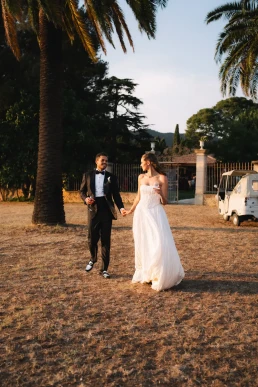
I founded Gordon Wedding Films in 2014 and have worked on destination celebrations in Europe, Asia, North Africa and the Americas. At Villa Jivana in Phuket, Sam and Zarah’s story extended beyond the ceremony into the days around it. Adelle and James gathered their guests at Rayavadee in Krabi, while L and M’s three-day celebration at Castello di Casole in Tuscany needed to feel like one story rather than separate recaps. You can see more about this approach in my storytelling films and multi-day work. What these films have in common is not a destination aesthetic. Each one asked for a different structure, pace and way of listening to the people in it.
International wedding films, built around real people
Tamara & Aref
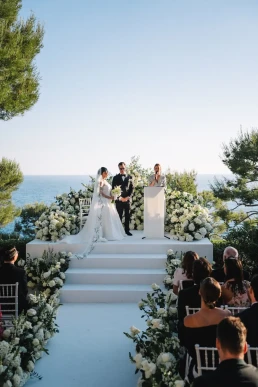
Mexico, countless ways to tell your story through film
The location of a wedding changes far more than its background. A celebration on the Caribbean coast may give guests long stretches of time together by the water, while a city wedding in Mexico City or a weekend in Los Cabos may unfold around several distinct events and locations. I want to understand why you chose the place and what you hope to share there. That decision influences which voices, relationships and unscripted moments become the heart of your film.
I film with my heart, guided by creativity, emotion, and the belief that every wedding is a singular experience, deserving a story as unique as the people living it.
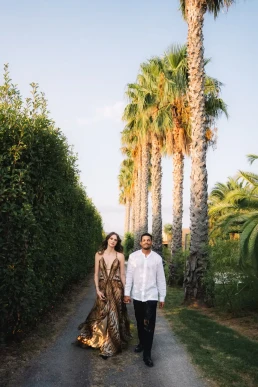
Sarah & Ricci
Mexico is not one visual formula
Before deciding between the Caribbean coast around Tulum and Riviera Maya, the resorts around Los Cabos, the venues near Punta Mita, properties in San Miguel de Allende and Mexico City, or historic venues in Oaxaca and Yucatán, ask the venue or planner for three concrete answers: how long the transfer takes from the airport, whether guests can move comfortably between the ceremony and reception, and what the indoor alternative looks like if the weather changes. Get the answers for your actual venue and date, not a regional average. They will tell you more about how the weekend will feel than photographs alone.
Tulum, Riviera Maya and the Caribbean coast
Tulum and the Riviera Maya can make it possible to keep guests, accommodation and several wedding events within the same area, but that depends on the venue rather than the region alone. For the film, the useful question is how the weekend will actually be lived: where people meet on the first evening, whether the ceremony and dinner require transfers, and when there is room for unplanned time together. Outdoor plans also need honest answers about heat, humidity, wind, rain cover and the sound of the sea. Natural light is valuable, but not at the expense of guest comfort or a schedule that feels rushed.
Los Cabos and the Pacific coast
Desert, coastline and movement
In Los Cabos, desert and coastline create a clear visual contrast, but the practical details matter more than a generic promise of sunset images. If the ceremony is exposed to wind or close to the sea, sound, shade and the route between spaces need to be considered from the start. Keeping several events at one villa or resort can make the weekend easier for guests and leave more time for the relationships around the wedding.
Punta Mita, Riviera Nayarit and Puerto Vallarta have a different Pacific environment, shaped by denser vegetation, beaches, cliffs and properties that can feel more secluded. A welcome dinner, a boat trip or a gathering the next day only belongs in the film if it adds something real: more time with family, a tradition shared with friends, or a side of the couple that the formal wedding day may not reveal.
Across both regions, light can change quickly and the coast can be demanding on sound. Strong wind in Los Cabos may affect a ceremony recording, while seasonal rain on the tropical Pacific coast can move an entire schedule. I would plan those conditions with the venue and local team early, so the wedding is not reorganised around the camera at the last minute.
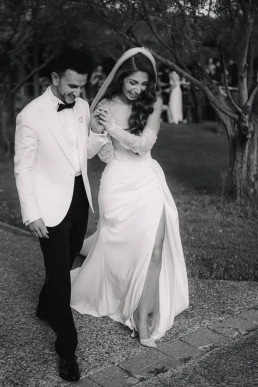
Mimi & Greg
In San Miguel de Allende, courtyards, gardens, rooftops and historic streets can allow the wedding to move through several spaces without losing its sense of place. The useful question is not how many postcard views can fit into the day, but whether the welcome dinner, ceremony and reception can stay close enough for guests to remain part of the experience rather than spend it in transit.
Mexico City has a different rhythm. A private garden, a modern building and a historic residence would each shape the movement and sound of the day in a different way. Traffic and transfer times are creative considerations as well as logistical ones: every hour spent moving between locations is an hour away from the people who came to celebrate. A compact plan can leave more room for the city to appear naturally, without turning the wedding into a tour of backdrops.
In Oaxaca and Yucatán, regional food, craft, architecture and historic venues can be part of the weekend, but they should never be treated as interchangeable visual props. If a couple chooses one of these regions because of a family connection, a tradition or a genuine attachment to the place, that reason belongs in the film. Access to haciendas, heritage buildings and archaeological areas must be checked locally. For professional filming at archaeological zones, monuments and museums under its care, Mexico’s National Institute of Anthropology and History (INAH) sets out an official authorisation procedure, INAH-01-001 (source: tramites.inah.gob.mx/INAH-01-001.html). Permission to film at a private venue should be confirmed separately with its management.
San Miguel, Mexico City, Oaxaca and Yucatán
Cities, highlands and haciendas
What I look for in a venue beyond the view
When I assess a venue, I am not only looking for a ceremony view. I want to know where people will get ready, how guests arrive, whether vows can be recorded without fighting wind or amplified music, how the spaces are lit after sunset, and whether the couple can step away for ten quiet minutes without disappearing for an hour. Four Seasons Resort Tamarindo, Four Seasons Resort Punta Mita, Rosewood Mandarina, Rosewood San Miguel de Allende, Casa Adela, Hacienda Sac Chich and leading Mexico City hotels show how different the possibilities can be. I mention them as starting points for research, not as places I have personally tested or endorsed. Outside-vendor rules, fees, sound limits, wet-weather alternatives and filming permission need to be confirmed directly with the chosen venue.
Pam & Tam
One day or a full wedding weekend?
A single-day wedding film can be enough when the story is concentrated in one place. Ten hours may cover the preparations, ceremony, speeches and the point at which the party finally takes over, without making the wedding feel like a film set. I stay close enough to hear what is happening and notice the exchanges around you, but I do not turn every transition into a directed sequence. The film should bring back the pace and personality of the day, including the parts you were too busy living to see.
A multi-day wedding in Mexico is worth filming when the days around the ceremony change what we understand about the people in it. The first dinner may show how two families meet; a boat trip may reveal the friendships that shaped the couple; the following morning may hold conversations that could never happen during a formal schedule. I would not record every planned hour simply because it is there. We would choose the welcome dinner, wedding day, pool gathering or farewell according to what each event adds to the film and to the time you want to spend with your guests.
Elopements and intimate weddings in Mexico
Intimacy needs more than scenery
An elopement needs more than a beautiful location and a short ceremony. With fewer people, small gestures carry more weight: making breakfast, reading a letter, travelling to the ceremony or sharing dinner after the vows. Beaches, cenotes, reserves, archaeological areas and historic spaces may have access rules or professional filming permits. The timeline should leave room to live the place rather than consume it as a series of stops. My role is to protect that intimacy and give the film shape, while a local planner confirms access, transport and permissions. Explore my elopement filmmaking approach.
How I film and help shape the timeline
I do not begin by fitting a wedding into a standard shooting schedule. Before the day, we talk about who will be there, which conversations or traditions matter to you, and when you genuinely want to be with your guests rather than away making images.
My experience filming destination weddings helps me spot the points where a timeline may look good on paper but feel rushed in real life. I can advise on ceremony light, realistic portrait time, the placement of speeches and the transitions between events, while the local planner and venue confirm the conditions on the ground. I explain more about this preparation in the client experience.
I coordinate with your wedding planner and photographer so that you are not pulled in three directions. On the wedding day, I work discreetly and I do not ask people to repeat an emotional moment because the camera missed it. I would rather anticipate well, listen carefully and let a real interaction remain real.
Good preparation is what makes spontaneity possible. Once the timings, sound and practical constraints are understood, there is more room for the day to breathe.
Planning for weather, travel and permissions
Mexico does not have one universal wedding season. According to the US National Oceanic and Atmospheric Administration (NOAA), the Atlantic hurricane season runs from 1 June to 30 November, and the eastern Pacific season from 15 May to 30 November (source: noaa.gov/prepare-before-hurricane-season). Those dates describe seasonal risk, not the weather forecast for your wedding. I would want the venue to answer practical questions about shade, wind, rain cover and the exact point at which an outdoor event has to move. A plan B should be large enough, properly lit and designed as part of the wedding, not treated as a last-minute compromise.
In a country this large, the airport named on an invitation does not tell the whole travel story. The final road transfer, traffic, travel between the hotel and venue, and the return after a late reception can shape the weekend as much as the flight itself. Before building the filming schedule, I would want the planner to confirm realistic journey times for the actual date and address. Keeping events within one area is often valuable, but only when it suits the wedding you want rather than forcing every celebration into the same property.
Film formats and deliverables
One proposal, shaped around your celebration
Wedding coverage can be planned for a single day or for a full weekend, including a welcome dinner, the wedding and a farewell event. The core film is a cinematic highlight; depending on your priorities, we can also discuss a longer edited film of around 15–20 minutes, separate films of the complete ceremony and speeches, raw footage and genuine Super 8. These are options to agree on in advance, not items automatically included in every package. Once I know the venue and schedule, I will prepare a proposal detailing filming hours, the team, each deliverable, delivery and travel costs. I personally edit every Gordon Wedding Films project. Share your date, venue, planner and current schedule, and I will come back with a proposal that fits the story and is realistic to produce.
Share your wedding plans and let’s schedule a call
Mexico wedding videographer: your questions
No. I am based in Provence, France, and work internationally. Mexico would be a new destination for me, but preparing and filming a wedding abroad is not new. Before accepting a booking, I would work with your local planner and venue to confirm the legal, insurance and production requirements for the actual project.
I consider wedding and elopement enquiries throughout Mexico, including Tulum, Riviera Maya, Los Cabos, Riviera Nayarit, San Miguel de Allende, Mexico City, Oaxaca and Yucatán. Final availability and acceptance depend on your date, the venue and any local production requirements. Share those details and I can confirm whether the project is feasible.
Yes. I offer multi-day destination wedding coverage, including welcome dinners, the wedding day and farewell gatherings. We can choose which events to film and agree on the edited films in advance, so the result tells one connected story rather than becoming a record of every hour.
Yes, I am happy to consider elopements and intimate weddings in Mexico. With fewer guests, the plan can be built around your vows, the way you spend the day and the small moments between the formal parts. A local planner or coordinator would still need to confirm access, transport, safety and any filming permissions.
I would confirm this for the exact commission rather than give a blanket answer. Paid work, professional equipment, insurance and venue rules can involve different requirements. I would only confirm the booking after the appropriate immigration, customs and production route had been checked with the relevant authorities and qualified Mexican advice.
Drone footage is considered case by case and is never promised before the checks are complete. AFAC rules, operator eligibility, aircraft registration, airspace, venue permission, protected-site restrictions, weather and safety all matter. If a compliant local operator is the right solution, that can be discussed as part of the production plan.
Contact me once your date, region and main venue are reasonably clear. Earlier is helpful for a multi-day wedding, a remote venue or a site that may need formal permission, because the travel and production checks take time and should not be left until the final weeks.
Mexico wedding videography is quoted individually. The price depends on whether you need one day or several, your venue and region, the number of filmmakers, the chosen films and options, and travel or production costs. Send me your date, venue and planned events for an itemised proposal.
Awards and international recognition are encouraging, but they are not what a couple should be thinking about when they watch their film years later. Since founding Gordon Wedding Films in 2014, I have wanted each film to sound and move like the people in it, rather than follow a formula that could belong to anyone. I still edit every Gordon Wedding Films project myself. A distinction may introduce someone to my work; the trust behind the film, and whether it still feels true to the couple, matter far more to me.

Featured in
Selected films and interviews have been featured in the French and international wedding publications shown here.