

How to Elope in France
A practical guide for international couples planning an elopement in France
By Meryll de Gordon, destination wedding filmmaker
Why elope in France?
Why the South works when the route stays small
I’m Meryll, a destination wedding filmmaker based in Provence. I have filmed intimate weddings across France, including Jessie and Keaton’s elopement in Valensole. That experience confirmed something I still tell couples now: France works best when you choose one region and give it time, rather than turning the wedding into a tour of the country. For most international couples, the South offers the strongest balance of access and variety. Provence brings villages, fields and long dinners, and I have created dedicated Provence elopement guide and Corsica elopement guide to help couples understand the best locations, seasons and ways to plan the experience. The French Riviera combines the sea with hotels and compact coastal towns, which I explore in more detail in my French Riviera elopement guide. Occitanie adds the Camargue, old stone cities, vineyards and a less expected Mediterranean coast. The French Alps, Corsica and Paris answer more specific wishes, but need their own logistics. France can hold a very small ceremony without making the day feel empty, provided the route stays realistic. July and August can be hot and crowded; mistral, tramontane, protected land and private property can also change a plan. France rewards simplicity, but it rarely rewards assumptions. You can read more about my approach to filming an elopement.
Can international couples legally marry in France?
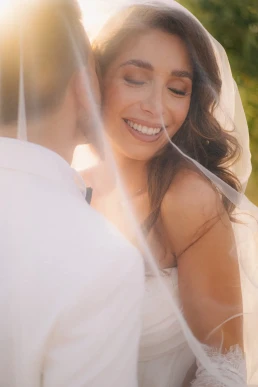
Yes. Many international couples choose France for their wedding, even if they do not live there. For most destination weddings, the legal marriage is completed in the couple’s home country, while the celebration in France includes a symbolic ceremony. This gives couples the freedom to exchange their vows at a château, private estate, villa or any location they love, without needing to hold a civil ceremony at a French town hall. It is a very common choice for American and British couples planning a wedding in Provence or on the French Riviera.
The best places to elope in France
The right region is the one that supports the day you want to live. Start with the experience, then choose the landscape. A private base in Provence suits a slow day built around preparation, vows and dinner. The French Riviera makes the sea, hotels and coastal rail easier to combine, but asks for more thought about traffic and privacy. Occitanie offers the Camargue, the Gard, Languedoc, the Aude and the Côte Vermeille, each with different wind, access and terrain. As an Elopement videographer I can confirm this: these southern regions carry most of the useful choices for this guide; the Alps, Corsica and Paris are alternatives for a very specific mountain, island or city experience.
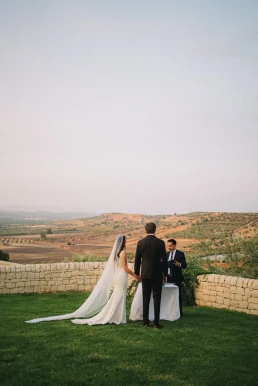
Elopement Wedding Film of Jessie & Keaton - Valensole, Provence
Provence, the Luberon and Valensole
Provence suits couples who want one base rather than a long itinerary. In the Luberon and Alpilles, a private house, small hotel or rural domaine can hold the morning, ceremony and dinner. Gordes, Bonnieux, Ménerbes, Lourmarin or Saint-Rémy-de-Provence can add a walk or lunch, but historic centres have narrow access and become busy. One village is usually enough. Valensole is a special case. When I filmed Jessie and Keaton there, the elopement was built around the couple and their vows, with lavender as context. The regional tourism authority gives a broad flowering period of roughly mid-June to mid-July and asks visitors not to enter the fields. Check the current season through the official Valensole lavender information, obtain permission where needed and keep a non-lavender plan you would genuinely enjoy. This is the region I know most closely, so I can help compare light, driving time and the likely rhythm of places. See also my wedding films made in Provence.
The French Riviera and the Var coast
Nice, Antibes, Cannes, Èze, Menton, Saint-Jean-Cap-Ferrat and Saint-Paul-de-Vence sit close on a map, yet traffic and parking can make several stops feel like a large journey. Stay in one hotel or villa, use one ceremony setting, then add the sea, a garden or an old town at the right hour. Public viewpoints and beaches are shared spaces, so privacy must be designed rather than assumed. The ten-guest wedding of Rachael and Chris at the Grand-Hôtel du Cap-Ferrat shows that intimate does not have to mean only two people. A venue with indoor and outdoor alternatives also protects the day when the forecast shifts. Explore more examples of intimate weddings on the French Riviera.
Camargue and the Gard
The Camargue gardoise has open horizons, marshes, reeds, horses, salt landscapes and the walls of Aigues-Mortes. It can suit a couple who wants to ride, walk or spend time around nature rather than move between towns. These are working and protected environments. A manade, salt property or horse ride needs an agreement with the operator, while wildlife, wind, insects and soft ground affect timing and equipment. Uzès and the surrounding Gard shift the experience towards stone streets, garrigue and rural houses. The Pont du Gard is a managed site, not an open event venue, so ask about ceremony use and professional filming.
Languedoc, the Aude and the Côte Vermeille
Montpellier and Sète give couples a city base, food and water, with the Thau lagoon, vineyards and broad beaches nearby. The Aude, Corbières and Minervois bring vines, dry hills and medieval stone. Carcassonne is highly visited, so a private property usually offers a calmer ceremony base. Collioure and the Côte Vermeille combine a harbour, sea and Pyrenean foothills, but parking, summer footfall and tramontane must be planned. The Cévennes and Pyrénées require a stronger weather margin and current park rules.
The French Alps, Corsica and the rest of France
Choose the French Alps when altitude, snow, a lake or a mountain journey is central. Keep one valley as the base and verify lift, refuge, snow and road conditions for the exact date. Corsica works best as its own island trip, focused on one area around Figari, Bonifacio, Porto-Vecchio or Ajaccio. The official Corsican transport page lists air and sea access, but routes can be seasonal. Paris suits an urban morning, symbolic ceremony and restaurant; Burgundy, the Loire, Dordogne and Ardèche make sense when a particular house or family connection is the reason to go.
The best moment to elope in the South of France
Comfort, light and access matter more than a perfect forecast
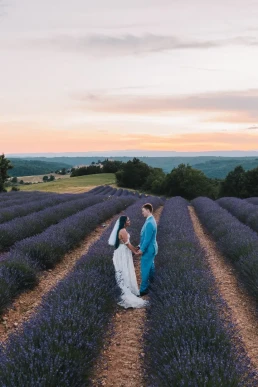
For most couples, May, June and September provide the best balance of daylight, access and comfort in Provence, the French Riviera and Occitanie. Early October can also work, though Mediterranean rain episodes become a larger part of the plan. Late June and early July are the usual target for lavender, not a guarantee. July and August bring the highest holiday demand, stronger heat and possible closures in fire-prone natural areas. If summer is your only window, place the ceremony early or late, protect the middle of the day for food and rest, and keep the route short. Spring can be green and quieter; September often keeps warm water and open hospitality with less peak-season pressure. The mistral and tramontane are regional winds, not rare anomalies. Météo-France explains both the mistral and tramontane. In the Alps and Pyrénées, choose the season around actual lift, path, refuge and road access. In Corsica, shoulder season can reduce heat and crowds, but seasonal transport and suppliers must be confirmed.
Getting to and around southern France
Airports, rail links and the final kilometres
Marseille Provence Airport is the main air gateway for Marseille, Aix-en-Provence, the Luberon and Alpilles. Check the airport’s current direct destination network and bus connections. Avignon TGV and Aix-en-Provence TGV are useful when arriving through Paris. Nice Côte d’Azur Airport serves the Riviera; its rail access guide explains the connection to Nice Saint-Augustin and the coastal network. Montpellier and Nîmes serve Occitanie. Trains solve the long journey well, but not always the final kilometres. A driver can be worthwhile when formal clothes, equipment, wine, night travel or guests are involved.
Two or three days are enough for a focused elopement in one part of Provence, the Riviera or Occitanie: arrival and dinner, then preparation, ceremony, one experience and a meal. Three days add a separate market, walk, boat trip, swim, ride or breakfast and create weather flexibility. Four or five days make sense for Corsica, a mountain base, long-haul travel or a few relatives. The entire stay does not need to be filmed. Choose the moments that matter and leave the rest private. More context on filming an elopement across more than one day is available here.
How I help shape an elopement without taking over the planning
When a couple is organising from abroad, I can help turn their ideas into a timeline that is comfortable before it is cinematic: when the ceremony light is likely to work, how much time a transfer really needs, whether two locations are enough, and which activity belongs on the wedding day or another day. I also look at sound, crowds and the transitions that let a film tell the truth of the trip. This is creative and practical guidance from a filmmaker, not a replacement for a wedding planner who manages suppliers, permissions, installations and contracts. This preparation process is designed to lighten decisions while keeping the experience the couple’s own.
How many days should you plan for a France elopement?
Enough time to settle without turning the trip into a production
A three-day elopement in Provence or Occitanie
This is a hypothetical structure, not a real client timeline.
Day one: arrive and stop travelling
Check into one base, unpack and take a short walk nearby. Have dinner at the property or in the closest town. If you want to record letters, family messages or part of your story, this quiet evening can hold them without competing with the ceremony.
Day two: ceremony and one shared experience
Keep the morning slow. Prepare separately or together, eat properly, then hold the ceremony when the chosen place is comfortable and permitted. Follow it with one activity that feels natural: a village walk, swim, private tasting, boat trip or time at the accommodation. End with dinner rather than another distant viewpoint.
Day three: a different pace
Use the final morning for a market, ride, short hike, beach breakfast or long lunch. The best activities are the ones you would choose even if no camera were present. A market and cooking session suit a couple who connects through food; a boat belongs when the water matters to the trip; an organised ride can connect a Camargue elopement to its landscape. Boats, island trips, mountain lifts, refuges and installed dinners need extra coordination and sometimes their own day.
How to get the best photographs and film during a France elopement
Light, voices and transitions matter more than a list of spots
Good images start with a day that works without the images. If you are comfortable, fed and not watching the clock, there is time for expression to change and for real conversations to happen. In Provence, pale stone and dry ground reflect strong light; use the middle of a hot day for lunch, preparation or an interior, then return outside when the light and temperature ease. On the French Riviera, the sea adds glare and wind. A garden or shaded street can hold the vows; the coast can follow when perfectly clean audio matters less. Waves, mistral, tramontane, traffic, cicadas and church bells belong to the place, but can cover the words you want to keep. I prefer a sheltered ceremony position and more than one sound source so the film holds both atmosphere and voices. Movement creates continuity: preparing coffee, walking from the room, driving, boarding a boat or sitting through dinner connects the vows to the trip. This is the basis of a story-led wedding film. Sunrise can be quieter but is not automatically empty. Sunset may bring softer light and more visitors. One controlled space and one or two shared spaces usually leave more freedom than a list of viewpoints.
Permissions, protected places and drones
Treat access and aerial footage as conditional
A public setting is not automatically a ceremony venue. Ask the owner or authority whether vows, guests, chairs, flowers, candles and professional filming are allowed. Drone use requires another check. French and European open-category rules cover registration, training, visual line of sight, distances from people and a maximum flight height that is generally 120 metres. Use the French environment ministry’s current open-category rules and the official Géoportail restriction map; landowner and protected-area rules still apply. In Calanques National Park, motorised overflight is tightly controlled and drones are prohibited in the park core. Check the park’s airspace regulations. I treat aerial footage as conditional, and the film must remain complete if weather, airspace, wildlife or the site makes a flight impossible.
Mistakes that make a France elopement harder than it needs to be
Keep the route small and the plan resilient
Do not plan by postcard or treat southern France as a compact destination. Marseille, the Luberon, the Riviera and the Camargue belong to the same broad part of the country, but combining them in one day turns the elopement into transport. Do not make the day depend on one crop, viewpoint, boat or drone shot. Lavender can be harvested, a massif can close for fire risk and wind can stop a crossing. A smaller guest count also does not remove the need to assign responsibility for permissions, setup or suppliers. Finally, avoid filling silence because the day looks too simple on paper. Time to eat, talk, call family or sit together is part of an elopement. My role begins before I press record: I help couples compare places, hours and activities so the day remains realistic. On the day, I work from a documentary base with light guidance when it helps. The film can be simple and visual, or carry more of your voices, history and the journey around the ceremony.
Thinking about eloping in France?
Whether you are considering Provence, the French Riviera or somewhere less expected, tell me what you have in mind. I can help you think about the region, timing and rhythm of the experience before we talk about the film itself.
France elopement: your questions
If both partners are foreign nationals and neither lives in France, a civil marriage in metropolitan France is generally not available. A French civil marriage normally requires a qualifying connection to the commune through a partner’s or parent’s home or residence. Confirm the exact case with the mairie and relevant consulate; many international couples complete the legal marriage at home and hold symbolic vows in France.
A symbolic ceremony is allowed when the chosen site permits it, but it does not create a civil marriage. Couples can exchange vows, rings and readings in France after completing the legal formalities elsewhere.
May, June, July and September usually offer the best balance of daylight, access and comfort in Provence, the French Riviera and Occitanie. July and August are hotter and busier. Lavender around Valensole is usually targeted from mid-June to mid-July, but flowering and harvest dates vary every year.
Choose Provence for villages, rural properties, olive groves and a slower inland rhythm. Choose the French Riviera for the sea, hotels, gardens and easier coastal rail access. Provence generally needs more driving; the Riviera needs more planning around traffic, public space and privacy.
Not always. A planner may be unnecessary for simple symbolic vows at an authorised location followed by a restaurant booking. A local planner becomes valuable when the day involves permits, setup, flowers, transport, a private dinner, boats, mountain access, witnesses or several guests.
I am also here to help you shape the day itself. I can advise you on the best timing for the ceremony and portraits based on the light, help you build a realistic schedule, and suggest activities that fit the location and the atmosphere you want to create. For a simple elopement, that can often be enough to keep the day natural, well paced and visually consistent without needing a full planning service.
Two days are enough for a focused elopement in one part of Provence, the Riviera or Occitanie. Three days allow an arrival dinner and a separate activity. Four or five days suit Corsica, mountain plans, long-haul travel or a small group of relatives.
Only with respect for access and the landowner’s rules. Most lavender fields are working agricultural land. Do not enter crops without permission, verify the season close to the date and keep an alternative setting because flowering and harvest timing change each year.
Receiving international distinctions means a great deal to me, yet the work behind them matters more than the trophies: years of filming, travelling, meeting people and being trusted with their stories. They keep me committed to films that remain personal and sincere, never reduced to a standard formula. At every wedding, I still look for the truth held in a glance, a voice, the available light and an edit shaped carefully enough to feel alive long after the day.

Featured in
Work featured in French and international wedding blogs and publications known for their carefully curated selections.