

How to Elope on the French Riviera
A practical guide for international couples planning an elopement in French Riviera
By Meryll de Gordon, destination wedding filmmaker
Why elope on the French Riviera?
A coastline made of distinct, workable worlds
I’m Meryll, a destination wedding videographer based in France specialising in elopements and intimate celebrations. I live in Provence, and around 80 per cent of my professional travel takes me to the French Riviera. I have been filming weddings here for 12 years.
A meaningful French Riviera elopement does not need the longest list of famous places. It needs a setting that feels right for you, enough time to live the day, and a plan that respects distance, light, sound and privacy. An elopement is an intentionally small wedding centred on the couple. It may involve only two people or a few close guests, and it may include a legal ceremony, a symbolic ceremony, or both on different dates.
The region works beautifully because cities, harbours, quiet caps, hill villages, islands and wilder red-rock coastline can all support very different experiences. Choose the part that reflects you, then let the day grow around it.
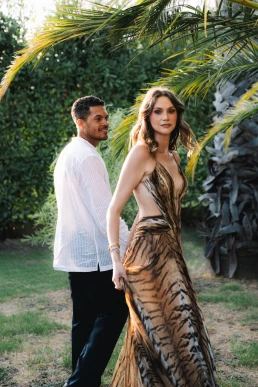
Where to elope on the French Riviera
Nice, Villefranche-sur-Mer and Saint-Jean-Cap-Ferrat form the most practical area for international travel, with city life, a harbour, private hotels and accessible stretches of coast. The full Cap-Ferrat path is a real walk, so select only a short section in wedding clothes.
Èze offers height and stone streets, but also steps and visitors. Pair a controlled private ceremony with a short village or coastal sequence rather than depending on a public viewpoint for quiet vows.
Antibes and Cap d’Antibes combine an old town with open coastline. The Tirepoil path takes about two hours in full and needs proper footwear, so it is better treated as an activity than a quick portrait stop.
Cannes and the Lérins Islands suit hotel-based celebrations and a separate maritime day. Cannes has a formal filming process, while ferry schedules, weather and island permissions must be checked.
Saint-Paul-de-Vence brings stone, art and a hill-village atmosphere, with parking outside the fortified centre. Théoule and the Estérel offer red rock and nature, subject to seasonal fire restrictions. Saint-Tropez should be your base for several nights, not an extra stop in a Nice-centred day.
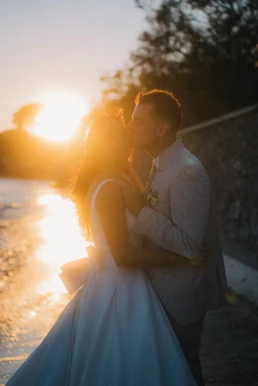
When is the best time to elope?
Late April to mid-June and September to mid-October often give the most balanced combination of light, temperature and outdoor time. They are not automatically quiet or inexpensive. Major events in Cannes and Monaco can affect rooms, roads and suppliers across the Riviera.
Spring brings longer days and comfortable walks. Check festival, sporting and public-holiday dates before booking. Summer makes swimming, boating and late dinners easy, but also brings heat, strong midday contrast, busy public spaces and possible fire restrictions in the massifs. Early autumn can retain a summer feeling with an earlier sunset, although rain and storms deserve a proper indoor option. Winter can feel calm and luminous, but some hotels, restaurants and ferries operate seasonally.
No month guarantees weather, privacy or perfect light. Choose the season for the kind of day you want, then build enough flexibility to accept what the coast gives you.
A few hours
can work when preparations, ceremony and a short walk happen in one place. It becomes rushed as soon as the plan adds several towns, outfits or a boat.
One full day
gives the story a beginning and an end, with room for preparations, vows, a meal, time alone and an evening sequence. One micro-region is usually enough.
Two or three days
suit couples bringing a few guests or adding a welcome dinner, island crossing or morning swim. More time should create calm, not more items to complete. The spaces around the ceremony can give the film voices, relationships and atmosphere that a few formal hours cannot hold.
How long should a French Riviera elopement last?
Planning support from a filmmaker who knows the Riviera
What I can help with, and where a planner remains essential
I live in Provence, but around 80 per cent of my professional travel takes me to the French Riviera, where I have filmed weddings and intimate celebrations for more than 12 years. That experience gives me a strong understanding of the region, its light, its coastline, its distances and the practical realities of organising a French Riviera elopement.
If you are planning to elope in the French Riviera, I can help you look at the day through a filmmaker’s eyes. Beyond simply documenting what happens, I can advise you on locations, activities and the overall structure of the day. This includes choosing the best time for your vows or portraits, understanding how long transfers really take, avoiding locations when they are at their busiest, and making the most of the Mediterranean light.
As your elopement videographer, I can also help you build a simple and realistic timeline around what matters most to you. For an intimate wedding, that might mean combining a symbolic ceremony with a walk through an old village, a private boat trip, lunch by the sea or portraits at sunset. The goal is not to turn your elopement into a production, but to create enough structure for the day to flow naturally while giving us the right conditions to create a beautiful film.
Before the wedding, we will discuss what you want to experience, the atmosphere you are looking for and the places that appeal to you. I can then suggest how to organise the different moments so that you spend less time travelling or waiting, and more time actually enjoying the French Riviera.
My experience with videography on the French Riviera also means I pay close attention to details that can easily be overlooked when planning from abroad: access, parking, crowds, wind, sound, changing light and the distance between locations. These practical details can have a real impact on both your experience and the final film.
I will never replace the work of a wedding planner, particularly when an elopement involves permits, floral installations, several vendors, private venues or more complex logistics. But for couples planning a simpler celebration without a planner, I can be a useful local point of reference. I can help you make informed decisions about timing, locations and activities, so that your French Riviera elopement feels relaxed, personal and carefully thought through from the beginning.
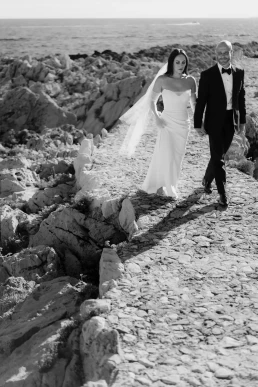
Three realistic elopement itineraries
Choose one micro-region and let it breathe
One day around Nice and Cap-Ferrat: prepare in one hotel, hold a private ceremony, share a long lunch, rest, then take a short coastal walk before dinner in Villefranche-sur-Mer or at the hotel.
Two days around Èze and the eastern coast: arrive for a quiet dinner and village walk, then hold the ceremony in a private authorised setting the next day, with one short portrait location and a sheltered alternative.
Three days around Cannes and Antibes: welcome your closest people over dinner, keep the ceremony day within one venue or tightly connected area, then add a ferry, island walk or boat trip if weather and filming permission allow it.
These are starting points, not fixed packages. Every location, supplier and permission still needs to be confirmed.
Activities and settings that feel personal
Choose an activity because you would enjoy it even without a camera. A market breakfast, a swim, a coastal walk, a ferry crossing, a scenic drive, a garden visit or a long table with close friends can create natural movement in the day. Reading letters, listening to family voice messages or returning to the water the next morning can be just as meaningful.
For architecture and movement, consider Nice, Antibes, Villefranche-sur-Mer, Èze or Saint-Paul-de-Vence. For the sea, look at Cap-Ferrat, Cap d’Antibes, the Lérins Islands or the Estérel. For private vows, a villa, hotel terrace, garden or restaurant room usually gives more control over sound and access. Always confirm photography and filming rights. A visitor ticket is not professional permission, and the Villa Ephrussi currently states that wedding photo shoots are forbidden unless its current policy says otherwise after direct enquiry.
Legal, symbolic or religious ceremony?
What international couples need to know
A French civil marriage is tied to a qualifying commune. It may take place where one partner has a domicile or a residence established by at least one continuous month of habitation by the date the banns are published, or in certain cases where a parent lives. If both partners are foreign and neither has that connection, a standard civil wedding in metropolitan France is generally not available simply because they are visiting. Confirm your situation with the mairie or consulate and consult Service-Public.fr for the current rules.
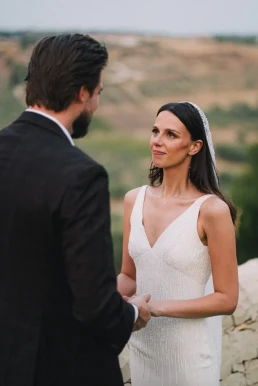
Many international couples complete the legal marriage at home and hold a symbolic ceremony on the Riviera. It can include vows, rings, readings and music but has no French legal effect. The owner or public authority must still approve use of the place. Religious requirements vary by faith, building and community and need a separate direct enquiry. Visa rules also depend on nationality, so each traveller should use the official France-Visas service.
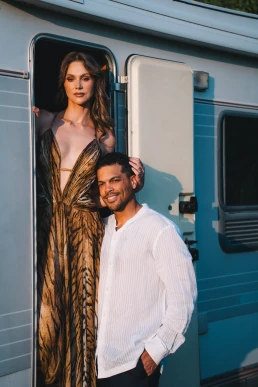
Travel, sound, permissions and drone
Practical details that protect the experience
Nice Airport, its tram and nearby rail station make a car-free stay possible across much of the central and eastern Riviera. A car or driver becomes more useful for the hills, the Estérel and Saint-Tropez. Stay close to the ceremony and include parking, walking, steps and equipment in every transfer.
For film, protect your vows from wind, waves, boats, traffic and visitors. A dramatic viewpoint may be better for a walk than for quiet words. Light also depends on the exact orientation: hills and buildings can block it before the published sunset. Cities and private venues may regulate tripods, team size, parking and commercial use, while drone permission depends on the exact airspace, aircraft, temporary restrictions and property consent. An aerial shot can never be guaranteed.
The mistakes I see most clearly in a proposed timeline are trying to cross the whole Riviera in a day, treating public space as private, planning only for photographs, leaving permissions late and having no real weather alternative. My approach begins with rhythm: where you wake up, where you can speak, when you eat and which part of the day belongs only to you. Learn more about my French Riviera wedding videography and elopement wedding films.
Share your wedding plans and let’s schedule a call
French Riviera elopement guide: your questions
Yes. If you are both foreign nationals, you can absolutely celebrate your wedding on the French Riviera. In most cases, however, this will not be a French civil marriage. International couples usually complete the legal formalities in their home country and hold a symbolic ceremony in France.
A secular ceremony (cérémonie laïque) is often the best option. It gives you complete freedom to choose the location, write personal vows, involve friends and family, and create a ceremony that truly reflects your story, whether it takes place in a private villa, a château, a garden or overlooking the Mediterranean.
May, early June, September and early October often offer a useful balance of light, temperature and outdoor possibilities. They can still be busy, especially during major events. Check the local calendar, accommodation and transport before deciding.
Sunrise can make some public areas calmer. Sunset is often easier for a natural transition into dinner. Neither is universally better because orientation, hills, buildings, season and access change the light. Choose after assessing the exact place.
Not every two-person day needs full-service planning, but a planner is valuable when you have guests, several suppliers, private property, design, a boat, multiple days or complex permissions. I can advise on locations, activities and timeline from a filmmaker’s perspective, but I do not replace a planner.
There is no reliable single figure. A symbolic ceremony and dinner for two is different from a private villa, yacht, floral design and ten guests over three days. Ask every supplier for a current written quote, including travel, taxes, permits, overtime and weather terms.
Possibly, but public access does not automatically authorise a ceremony, setup or professional filming. Ask the municipality or land manager, keep the setup minimal and have an authorised alternative. Privacy cannot be guaranteed in a public place.
Only if the exact location, airspace, operation category, local permission and temporary restrictions allow it. Much of the urban coast and areas near airports or heliports are constrained. A drone should never be treated as guaranteed.
One day is enough for a ceremony, meal and one small area. Two or three days are better if you want a welcome dinner, guests, a boat or island experience, or two distinct landscapes. More time should create calm, not more items to complete.
International recognition is meaningful to me because it reflects years of trust, travel and stories shared by couples from many places. More than a title, it is a reason to keep working with care: listening to every voice, noticing the light without forcing the moment, and shaping each film around the people in it. I never want an award to become a formula. Its value is in reminding me to make work that remains sincere, personal and alive long after the wedding day.

Featured in
Work featured in French and international wedding blogs and publications known for their carefully curated selections.