

Provence Elopement Guide
A practical guide for international couples planning an elopement in Provence
By Meryll de Gordon, destination wedding filmmaker
What an elopement means today
A small wedding with enough room to be present
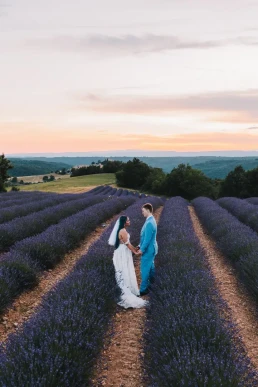
I am Meryll, a destination wedding filmmaker specialising in elopements. I live in Provence and have filmed weddings across the region for more than twelve years. I also filmed Jessie and Keaton, two Americans who exchanged their vows among the lavender fields of Valensole. What stayed with me was not only the setting. A small day gave their looks, voices, footsteps and silences room to matter.
This Provence elopement guide is for international couples who want that kind of presence in France, but also need reliable answers. It will help you choose one coherent part of Provence, understand the seasons, decide between a legal and symbolic ceremony, plan your travel and build enough space into the day to enjoy it.
An elopement is an intentionally small wedding built around the couple rather than a large guest list. It may involve only two people, or a few parents and close friends. It can last a few hours, a full day or several days. The defining idea is not secrecy or the absence of care. It is the freedom to decide what deserves time.
That might mean private vows followed by dinner with six guests. It might mean signing the legal documents at home, travelling to Provence for a symbolic ceremony and spending the next morning at a market. An elopement can be simple without being improvised, and refined without becoming formal.
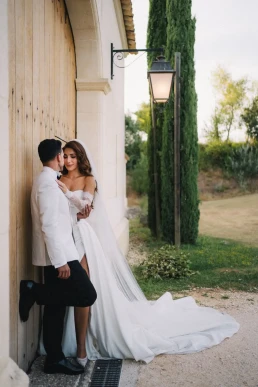
Why choose Provence for an elopement?
Provence offers several distinct experiences within one region: stone villages, working farmland, limestone hills, ochre, vineyards, Mediterranean water and open wetlands. The important question is not whether Provence has enough locations. It is which part of Provence fits the way you want to spend your time.
It is also a practical destination for international travel. Marseille Provence Airport works well for Aix-en-Provence, Cassis and the eastern side of inland Provence. Avignon TGV is useful for the Luberon and the Alpilles. Once you leave the main towns, a car or pre-booked driver is usually the most flexible option.
The region asks for restraint. A map can make Gordes, Valensole and Cassis appear close enough for one ambitious day. The actual experience includes local roads, summer traffic, parking and walks from the car. Choose a base, then let the places around it shape the day.
Elopement Wedding Film of Jessie & Keaton - Valensole, Provence
The best places to elope in Provence
There is no single best elopement location in Provence. These areas work for different reasons, and each comes with a different rhythm.
The Luberon:
Gordes, Roussillon, Bonnieux and Lourmarin bring together pale stone, narrow streets, vineyards, olive trees and hilltop views. The area works especially well when you stay in a mas or estate where preparation, the ceremony and dinner can happen without another transfer. Choose one village for a walk rather than collecting all four. Gordes is heavily visited from May to October, and Roussillon’s Sentier des Ocres has opening hours, ticketing and weather restrictions.
The Alpilles:
Saint-Rémy-de-Provence, Les Baux-de-Provence and the countryside around Eygalières combine low limestone ridges, olive groves, heritage and working villages. This is a strong choice when you want to keep the elopement within one small area. Public-space filming in Saint-Rémy requires permission, and managed sites such as Glanum have their own rules.
Aix-en-Provence and Sainte-Victoire:
Aix gives you cafés, markets, shaded streets and architecture, with vineyards and the landscape around Sainte-Victoire within reach. The centre is alive rather than silent. Market voices, bells and café tables can give a film texture, but they make private vows difficult. Use the town for movement and daily life, then choose a private or authorised place outside the centre for the ceremony.
Cassis and the Calanques:
Cassis brings a port, cliffs, boats and Mediterranean sound into the story. It should be planned as its own coastal experience. The Calanques are protected: professional or commercial image and sound work requires authorisation, drones are prohibited, and daily fire-risk decisions can close land access in summer.
Arles and the Camargue:
Arles can give the day an urban, historical beginning before the landscape opens into wetlands and long horizons. Permissions may involve the city, the regional park, the Conservatoire du littoral or a private owner. Wind, heat, insects and wildlife protection are part of the plan. If horses are involved, choose an established operator and place animal welfare ahead of the image.
Valensole and the Verdon
The Valensole plateau is the clearest choice if lavender is central to your plans. Its flowering period is usually from mid-June to mid-July, but weather and harvesting shift the dates every year. A field that is purple one week may be cut the next.
Lavender is a crop, not a public set. You need the landowner’s permission before entering a field, and you should never damage the plants for an image. Confirm the exact parcel close to your date and keep a plan that still works without flowers.
This is where I filmed Jessie and Keaton’s elopement. Their story is a useful reminder that the landscape works best when the schedule stays simple. Valensole can also be paired with Moustiers-Sainte-Marie or Lake Sainte-Croix, but only after realistic driving times have been checked.
When is the best time to elope in Provence?
Season, light and weather
For most couples, May, June, September and early October offer the strongest balance of comfortable temperatures, useful daylight and manageable crowds. Your best month still depends on whether you want lavender, the sea, quiet villages or a winter atmosphere.
Météo-France climate normals for Aix-en-Provence show average daytime maximums of 23.4°C in May, 27.9°C in June, 31°C in July, 30.8°C in August and 25.9°C in September. These are averages, not promises.
Spring: greener landscapes and fewer visitors than summer. April can be variable, while May is often a useful compromise. The mistral remains possible, so an exposed ceremony still needs shelter.
Early summer: mid-June to mid-July is the main lavender window around Valensole. It also brings long evenings, stronger demand, rising heat and more visitors. Confirm bloom and harvesting with the landowner.
High summer: late July and August can work if you genuinely enjoy heat and summer energy. Keep the middle of the day for preparation, lunch or rest. Fire restrictions can affect natural areas, and villages and the coast are at their busiest.
Autumn: September often brings warm days with lower sun. Early October can be calm, but Mediterranean rain can be intense, so keep an indoor or rescheduled option.
Winter: quieter, with brief daylight, cold inland mornings and possible mistral. A short schedule and a property with a good interior matter.
How many days should you plan?
Planning help, activities and realistic itineraries
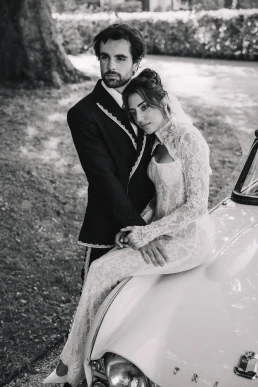
One day is enough when the ceremony, activity and dinner remain in a single area. Two days are often the most balanced choice: arrival, a meal, a walk or recorded letters on the first day, then preparation, vows and dinner on the second. Three days make sense when guests are joining you or a second landscape truly matters. The number of travel days and filmed days do not have to be identical.
How I help with the planning
My role is not to replace a wedding planner. Through the preparation process, I help shape the creative rhythm around light, sound, travel and the way you want the film to feel. We can discuss locations, the best time for your vows, activities that belong naturally in your story and the amount of space the day needs. When permits, design, transport, dinner, witnesses or guests make the production more complex, I recommend working with a planner who can own the logistics while I coordinate the film with them.
Build an experience, not a location list
An activity earns its place when you would enjoy it without a camera. A market breakfast, cooking session, vineyard visit, short walk, swim, boat trip, picnic on authorised land or dinner at the house can give the day movement and conversation. One or two are enough. Letters, a conversation about why you chose Provence or short family audio messages can add voices without changing the intimacy of the ceremony.
Three hypothetical itineraries
One day in the Luberon: prepare and exchange vows at the estate, have lunch and rest, visit one nearby village later, then return for dinner. Two days around Valensole: arrive and record letters on day one, then hold the ceremony on authorised land and add one Verdon location only if the route remains comfortable. Three days near Cassis: meet for dinner, hold the ceremony on private or authorised land the next day, then choose a boat or coastal sequence according to permissions and weather. These are starting points, not packages.
Legal, symbolic and religious ceremonies
Civil marriage: for two foreign nationals who do not live in France, a civil marriage at a Provence town hall is generally not available simply because they are travelling there. French official guidance says a civil marriage normally requires a durable connection to the commune through one partner’s domicile or residence, or in some cases through a parent’s domicile or residence. Residence normally needs at least one month of continuous occupation by the date the banns are published.
If both partners are foreign and neither lives in France, the official page points instead to the couple’s consulate or to certain French overseas territories, not to a tourist ceremony in Provence. There are individual exceptions. Contact the exact mairie and your consulate before booking around a civil date. Foreign documents can require sworn translations, apostilles or legalisation, certificates of custom and proof of capacity to marry.
Symbolic ceremony: many international couples complete the legal marriage at home and exchange personal vows in Provence. A symbolic ceremony has no French civil effect, but it can be the emotional centre of the experience. A celebrant, friend or the couple can lead it, provided the property or public site allows the gathering.
Religious ceremony: French law requires the civil marriage to take place first. The faith community may also require preparation, documents or a particular officiant. Ask about filming and sound separately.
Travel, accommodation and permits
Practical checks for international couples
Marseille Provence Airport is usually the most useful airport for Aix-en-Provence, Cassis and much of inland Provence. It connects by shuttle to Vitrolles-Aéroport station and regional trains. Avignon TGV is often the stronger rail arrival for the Luberon and western Alpilles.
Choose accommodation before building the itinerary. A house, mas or estate that can host preparation, the ceremony, dinner and a weather alternative removes several points of failure. Confirm minimum stays, air conditioning, guest capacity, accessibility, noise limits, candles, outside vendors and the rain plan. In rural Provence, do not assume an app-based car will be available late at night. Rent a car when the programme is simple and the driver will remain sober, or reserve transfers in advance.
For visas and entry requirements, use France-Visas and the official European Union pages. As of 17 September 2026, ETIAS is not yet operating and is expected in the final quarter of 2026, with the exact launch date still to be announced. Verify this again before publication and travel.
Permission depends on the exact place. Ask separately whether you may enter, hold a ceremony, film professionally, record sound and fly a drone. A private property’s approval does not remove airspace rules, and public access does not automatically permit professional filming. In the Calanques National Park, professional image and sound projects require authorisation and drones are prohibited. Saint-Rémy-de-Provence requires authorisation for filming on municipal public space. Elsewhere, check the official French drone guidance and current Géoportail map for the exact coordinates and date. From June through September, natural-area access can also change with the daily fire-risk level.
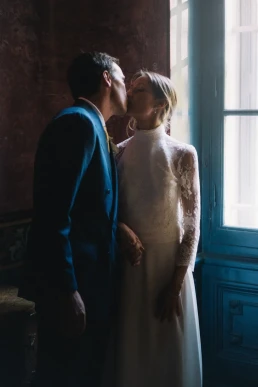
Film the experience, not a shoot
Sound, movement and a day you can actually enjoy
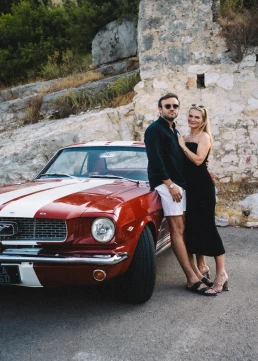
A film needs more than a sequence of attractive places. It needs relationships between moments: the sound of the room before you leave, the words you chose, the road between two places and the change in pace when the ceremony is over.
I work from a documentary base and give light guidance when it helps. Some couples prefer a visually led film. Others want a story-driven film built with conversations, archives, messages or moments recorded before the ceremony. A small elopement can support either approach.
Sound deserves the same preparation as light. Wind on Valensole’s plateau, waves near Cassis, bells in a village or voices at a market can alter where vows should happen. Sometimes the answer is better microphones. Sometimes it is changing the place or time.
Mistakes to avoid: planning the whole region in one day; treating lavender as guaranteed; assuming a public place will be quiet; building everything around sunset; leaving permissions until the final week; asking one person to perform every professional role; and filling every quiet space. Time to eat, change, drive, rest and talk is part of the experience.
The most cinematic schedule is usually the one that leaves you enough energy to be present. I would rather film one place becoming meaningful than make you rush through four places that never have time to become yours.
Choose the place where you can imagine spending time, not only standing for a photograph. Then choose the season, legal format and number of days that make it practical. If you are considering an elopement in Provence, tell me what draws you here and how you want the day to feel. I can help shape the light, sound and rhythm around your story, then work with your planner when the production needs one.
Share your wedding plans and let’s schedule a call
Provence elopement guide: your questions
May, June, September and early October are the most balanced choices for many couples. Choose mid-June to mid-July only if lavender is a priority and you accept variable bloom, harvesting, heat and higher demand. September is often a strong alternative for warm days without peak-summer intensity.
Usually not if neither partner has an eligible domicile or residence connection to a French commune. Many couples complete their civil marriage at home and hold a symbolic ceremony in Provence. Ask the exact mairie and your consulate about your own status before making legal or travel commitments.
Choose according to experience, not ranking. The Luberon suits villages and a private estate, the Alpilles suit a compact country itinerary, Valensole suits seasonal lavender, Aix combines city and countryside, Cassis gives access to the coast, and Arles with the Camargue offers architecture and open land.
Plan at least two nights, and preferably two full days, if you are arriving from abroad. A single-area ceremony can fit into one day. Add a third day for guests, a second landscape or a slow welcome and farewell.
Not always. Two people holding a simple symbolic ceremony on a booked private property may be able to coordinate directly. A planner becomes valuable when you add permits, design, transport, a meal, witnesses, multiple suppliers or guests. Your filmmaker can help with creative timing but should not silently become the event producer.
It depends on the exact site and the professional nature of the work. Private land needs owner approval. Some towns and protected spaces require formal authorisation. The Calanques National Park requires authorisation for professional or commercial image and sound work. Check every location rather than relying on a region-wide assumption.
Only when the current airspace rules, operating category, people nearby, site rules and landowner permissions all allow it. A drone is prohibited in the Calanques National Park. Elsewhere, the operator must check the official French guidance and restriction map for the exact coordinates and date. Build the film so it remains complete without aerial images.
Travel outside late July and August when possible, choose weekdays, stay close to the location and use one popular place for a short sequence. Early morning can help, but a private estate or authorised agricultural property often protects intimacy more effectively than trying to make a famous viewpoint empty.
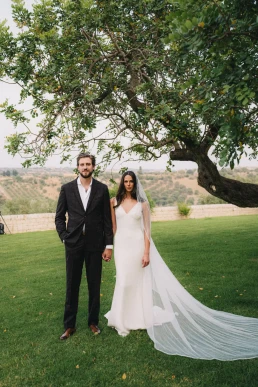
Being recognised among international wedding filmmakers is an honour, but I see it first as a responsibility: to keep making films that feel sincere, personal and attentive to every place. In Provence, that means understanding the light, wind, distances and quiet parts of a day without reducing a couple to a formula. The awards reflect years of work and trust. My purpose remains the same for every elopement: to preserve the voices, gestures and atmosphere that make the experience yours.

Featured in
Work featured in French and international wedding blogs and publications known for their carefully curated selections.