

How to Elope in Portugal
A practical guide for international couples planning an elopement in Portugal
By Meryll de Gordon, destination wedding filmmaker
Eloping in Portugal
Start with the kind of experience you want to live
Portugal gives an elopement room to be many things: an unhurried day in Lisbon, private vows in an Alentejo estate, a small dinner above the Algarve coast or two days shaped by Madeira’s changing weather. I am Meryll de Gordon, a destination wedding filmmaker, and I have already filmed a two-day wedding in the Lisbon region. We built that film around more than the celebration itself.
This Portugal elopement guide compares regions, seasons, ceremony options, travel and filming considerations. It is designed to help you make fewer, better decisions, with enough structure to protect the day and enough space for it to feel like your own.
A modern elopement is an intentionally small wedding centred on the couple rather than a shortened version of a large reception. It may involve only two people, or it may include parents, siblings and a few close friends. It can be legally binding or symbolic. It can last three hours, a full day or an entire weekend.
What defines it is not secrecy, a guest-number rule or a remote landscape. It is the freedom to decide what belongs in the day. You can exchange vows in a civil registry, invite six people to a private house, walk to a coastal viewpoint or spend the afternoon cooking and talking. The ceremony remains important, but it does not have to carry the whole experience.
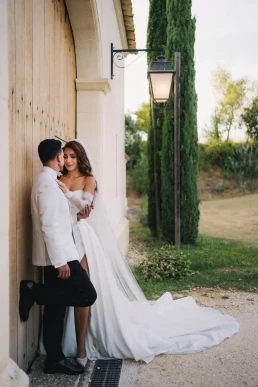
Why choose Portugal for an elopement?
Portugal is accessible from many European hubs, has several international airports and offers city, coast, countryside, vineyards and volcanic islands. English is widely used in the destination wedding industry, although official procedures may still require Portuguese or an interpreter. The country also works well for a longer trip, allowing an elopement to sit within a holiday rather than consume it.
The variety is valuable, but only when it is edited. Lisbon and Sintra can form one coherent chapter. Porto and the Douro can form another. The Algarve, Madeira and the Azores each deserve their own plan. Trying to collect them all in one day turns the experience into transport.
Portugal also allows a small wedding to move naturally between public and private space: a quiet preparation at your accommodation, a ceremony in an authorised location, a walk, then dinner at a restaurant or private property. That scale can feel intimate without feeling incomplete.
Where to elope in Portugal
There is no single best region for a Portugal elopement. Choose according to the landscape you want to inhabit, the travel you are comfortable with and the degree of privacy you need.
- Lisbon, Sintra and Cascais combine city, gardens and Atlantic coast.
- Porto and the Douro suit river, stone, vineyards and a slower two-part stay.
- Alentejo works well for privacy and a day held mainly on one property.
- The Algarve offers mainland coast, coves and practical bases near Faro.
- Madeira concentrates mountain, forest and ocean, with changing microclimates.
- The Azores reward couples who are comfortable building flexibility into the day.
The useful question is not, “What are the ten most beautiful places?” It is, “Which region gives us the pace, access and atmosphere we want?”
Lisbon, Sintra and Cascais
Eloping in Lisbon
Choose the Lisbon region if you want urban life and nature without changing your travel base every night. Lisbon brings tiled façades, narrow streets, viewpoints and the sound of a working city. It suits a couple who wants a civil ceremony, a short walk and an excellent dinner more than a long outdoor expedition.
Getting married in Sintra
Sintra changes the mood completely. Its forest, gardens and Romantic architecture can feel quiet in the right place, but its famous palaces are not empty backdrops. Tickets are timed, access takes planning and professional image-making may require prior permission. At the Palace of Pena, the date and entry time are fixed, late arrival may mean losing access, and the walk from the park entrance to the palace takes time. Parques de Sintra publishes current ticket and access information.
An elpement in Cascais
Cascais and the coast add beaches, dunes and open Atlantic weather. They can work well after Lisbon or Sintra, but wind and weekend traffic need to be part of the plan. A private transfer is often more comfortable than moving formal clothes, flowers and film equipment between trains and taxis.
Mainland Portugal, beyond Lisbon
Porto and the Douro Valley
Porto
Porto works for couples who prefer dense streets, river views and a more textured urban atmosphere. It is cooler and generally wetter than southern Portugal, so an interior with character matters as much as the outdoor plan.
The Douro Valley
The Douro Valley is not simply a portrait stop outside Porto. It is better treated as a destination in itself: stay at a quinta, allow time for the road or train, exchange vows overlooking the terraces, then share a long meal. A river journey, a winery visit or a quiet morning at the property can become part of the day without requiring another visual set piece. This region particularly suits a two-day format: Porto first, the valley second, or the reverse. Check live rail schedules with Comboios de Portugal and do not build a ceremony around a final connection with no margin.
Comporta
Comporta suits couples looking for a quieter coastal elopement within easy reach of Lisbon. The landscape combines long Atlantic beaches, dunes, pine forests and rice fields, creating a very different atmosphere from the city or the Algarve. Rather than filling the day with locations, stay nearby, plan a simple ceremony close to the coast, leave time for the beach or a slow afternoon together, then finish with a long dinner. It also works particularly well as the quieter second part of a multi-day celebration beginning in Lisbon or Sintra.
Eloping in Alentejo
The Alentejo is a strong choice if you want the celebration to stay mainly on one property. White towns, olive groves, cork oaks and broad landscapes create a quieter rhythm than the main coastal cities. Around Évora or Monsaraz, an intimate house or estate can hold the preparation, ceremony, dinner and accommodation together.
Summer heat is the central constraint. July and August in the interior can be intense, and an exposed midday ceremony may be uncomfortable for you and your guests. Late spring and early autumn usually give more room to work with the day rather than hide from it.
Ask any private property to confirm its event and filming terms in writing. Accommodation permission does not automatically include a ceremony, professional suppliers, amplified music, candles or a drone.
The Algarve suits couples who want an ocean-led day and are comfortable planning around public access. Lagos and Lagoa provide useful bases for several coastal areas, while Faro connects the region to international flights.
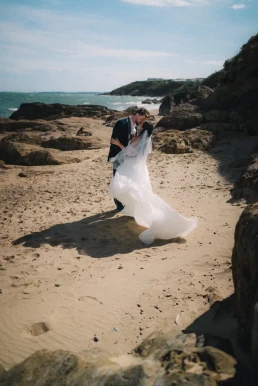
Ponta da Piedade, Praia da Marinha and Praia do Camilo are visually distinct, but none should be treated as a private venue. Praia do Camilo involves roughly two hundred steps. Praia da Marinha has a long stair access and limited parking. Cliff paths require distance from unstable edges, especially after rain or in strong wind. Tide, swell and heat can change what is safe and comfortable.
A better Algarve plan often uses a private villa or quinta for the morning and dinner, then one authorised coastal location for the ceremony or a short walk. This keeps the day grounded and provides a real alternative if the beach is crowded or the wind makes spoken vows difficult to hear.
An elopement in the Algarve
Elopement in Madeira and the Azores
Madeira is for couples who want a landscape-led experience and can accept that the island will influence the schedule. Mountains, Laurissilva forest, dry eastern ridges and ocean cliffs sit close together, but microclimates can make them feel like different days.
Pico do Areeiro is popular at sunrise, which means an early start does not guarantee solitude. Fanal may bring mist or dense rain and limited visibility. Ponta de São Lourenço is exposed, dry and often windy. These are reasons to make the backup plan as considered as the first one.
The Azores offer crater lakes, coast, thermal water and a quieter island rhythm. An elopement should not depend on one viewpoint being visible at one exact hour. Choose a base with several nearby possibilities, keep travel between islands outside the ceremony window and let the day move if the weather asks it to.
When is the best time to elope in Portugal?
For mainland Portugal, late April through June and September through early October usually offer the most balanced conditions. Days are long enough for an unhurried schedule, while the most intense heat and peak holiday crowds are less likely than in July and August.
- Lisbon, Sintra and Cascais: May, June, September and early October are strong starting points. Sintra can be cooler and mistier than Lisbon on the same day.
- Porto and the Douro: late spring and early autumn balance vineyard colour and outdoor comfort, but rain remains possible. Build an interior into the plan.
- Alentejo: avoid an exposed midday ceremony in peak summer. May, June, September and October are generally easier to shape.
- Algarve: late spring and early autumn can retain warmth with less pressure on roads and beaches. Wind still matters in every season.
Portugal’s meteorological institute publishes regional climate normals. These are useful for comparison, but they are not a forecast. Check heat, wind, rain, fire restrictions and sea conditions close to the date.
Madeira is viable year-round, but local weather matters more than a seasonal slogan. Choose flexible locations and check trail access. The Azores bring a greater chance of rain and cloud throughout the year, so flexibility is part of the decision rather than an emergency measure.
From a filming perspective, time of day matters as much as month. A coastal location may be calmer early, while an urban area may become easier after commuters leave. Sunset is not automatically the best ceremony time if the location faces away from the light or the wind rises in the evening. The schedule should respond to the actual site.
On either archipelago, arrive several days before the ceremony. A delayed flight or closed trail should not sit directly against your vows.
How many days should a Portugal elopement last?
A few hours, a full day or two days
Your elopement does not have to fit into a single day. Spending two or three days in the same region gives you time to experience Portugal together, rather than moving from one location to another simply for photographs or film. The wedding remains the centre of the trip, while the days around it become part of the memory.
A three-day experience could be as simple as:
- Day one: arrive, settle into your hotel or villa, explore the area and meet for a relaxed dinner, a sunset walk or drinks with the people travelling with you.
- Day two: keep the wedding day spacious, with slow preparations, your ceremony, time together afterwards and a long dinner without trying to fit another activity into every hour.
- Day three: experience the destination differently. Take a boat along the Algarve coast, visit a vineyard in the Douro Valley, spend the morning on a beach near Comporta, explore Sintra, or simply organise a relaxed brunch before everyone leaves.
These experiences also give your film more depth. Instead of documenting only the ceremony and portraits, I can capture the places you discovered, the people who travelled with you and the quieter moments in between. When we plan a multi-day elopement together, I can help you choose activities that are worth experiencing first and that naturally add another layer to the story of the film.
For Madeira, the Azores or the Douro Valley, I would particularly recommend allowing several nights. Weather, transfers and longer distances become much easier to manage when they are part of the trip rather than compressed around the ceremony.
Why planning support still matters
An intimate wedding has fewer guests, but it still involves permissions, transport, weather, ceremony choices, flowers, a meal and the people documenting it. A local planner or coordinator can confirm what is permitted, speak with venues and authorities, book reliable suppliers and build a workable backup. My own role as a filmmaker is different but connected: during the Lisbon project, the useful creative work began before the cameras arrived, through conversations, a narrative outline and pre-wedding interviews that clarified what the film needed to remember. The best support does not fill every minute. It removes uncertainty so that the couple can be present.
Four realistic Portugal elopement itineraries
1 day in Lisbon
Begin slowly at a hotel or apartment with good natural light. If you are marrying legally, allow a separate block for the civil ceremony and an interpreter if required. Eat lunch without rushing. Later, choose one compact neighbourhood for a walk, then move to a private terrace or quiet interior for personal vows. End with dinner rather than adding a final location simply because light remains.
2 days between Lisbon and Sintra
Use the first day for arrival, a conversation or letter exchange and dinner in Lisbon. On the second day, travel to one authorised Sintra property at the booked time, hold the ceremony in a permitted area, then pause before continuing to the coast or returning for dinner. Do not assume palace interiors, professional equipment or a drone are included.
1 day in the Algarve
Choose accommodation close to the part of the coast you actually want to use. Spend the morning together at the villa, then rest through the brightest and hottest part of the day. Hold the ceremony on private land or at a public location whose rules and conditions have been checked. Use one nearby coastal path or beach for a short period, then return for dinner. Keep a sheltered ceremony position available.
2 days in Madeira
On the first day, choose a forest, garden or low-elevation location, then share dinner. On the second day, consider an early mountain visit only if access and weather are suitable. Rest afterwards, then hold the ceremony somewhere close to the evening meal. Prepare two geographically sensible versions of both days.
Practical planning, meaningful experience
Choose activities because you would enjoy them without a photographer or filmmaker. That is usually the clearest test. In Lisbon, this might be coffee at a familiar table, an azulejo workshop, a short ferry journey or cooking together. In the Douro, it could be a train ride, a private boat, a tasting or lunch at the quinta where you are staying. In the Alentejo, a walk through an olive grove and a long dinner may be enough. The Algarve can include a responsibly operated boat trip or a safe coastal walk. Madeira offers gardens, open levadas and very different natural environments. São Miguel in the Azores brings thermal water, tea country and volcanic lakes.
Leave room for simple things too. Reading messages from family, calling a parent, listening to a piece of music or opening old photographs can create more emotional meaning than another transfer to another viewpoint. For a story-driven wedding film, those moments carry voices and relationships.
The best Portugal elopement locations for photo and film
The strongest location is not always the most famous one. It is a place where you can arrive safely, hear each other, remain long enough to settle and follow the rules without anxiety.
For colour and architecture, Lisbon and authorised parts of Sintra offer the richest combination. For coast and scale, the Algarve, Cascais, Madeira and the Azores all face the Atlantic differently. On any cliff or beach, safety, tide, public access and wind come before the frame. A private property overlooking the sea may provide a better ceremony than the public edge itself, with a coastal walk afterwards.
For privacy, a quinta in the Douro, an Alentejo estate or a private house near the coast can hold preparation, ceremony, dinner and accommodation together. Madeira offers the most concentrated contrast between high ridges, ancient forest and ocean, but locations must be selected by current access, walking ability and weather, not by a saved image alone.
Civil, symbolic or religious: how can you marry in Portugal?
Foreign nationals can marry civilly in Portugal, but requirements depend on nationality and personal circumstances. Treat this as orientation, not legal advice.
Portugal’s civil registry guidance lists identity documents, birth certificates issued according to the law of each person’s home country and a certificate of matrimonial capacity issued within the previous six months, or a declaration when the home country does not issue one. Documents outside Portuguese, English, French or Spanish generally require a certified Portuguese translation. An interpreter may be needed if you do not understand Portuguese.
The official guidance says the process should begin at least one month in advance, and an authorised marriage must take place within six months. For an international file, starting much earlier is more comfortable. A civil ceremony may take place at the registry or at another location and time agreed with the registrar. Witnesses are optional, with two to four permitted if you want them. Confirm current documents, fees and availability directly with your chosen conservatory. Start with the IRN marriage guidance and the Justice service page.
A symbolic ceremony can include personal vows and a celebrant, but it does not create a civil marriage on its own. For a religious wedding, contact the relevant church or community early because preparation and recognition vary by faith, parish and nationality.
Travel and practical logistics
Portugal’s main mainland gateways are Lisbon, Porto and Faro. Madeira and the Azores require separate flights, and island schedules deserve a buffer around the wedding date. ANA publishes information for Portugal’s airports.
On the mainland, trains connect major cities, but many wedding properties and natural locations need a car or transfer for the final part of the journey. Choose your ceremony region first, then book accommodation inside it.
Keep a small guest group in one property or a compact area.
Provide a written transport plan.
Check stairs, paths, heat and bathroom access.
Reserve dinner, even for a very small table.
Confirm supplier access and parking.
Carry water, practical shoes and a warm or waterproof layer.
Keep passports and original civil documents separate from checked luggage.
Filming a Portugal elopement: light, sound and story
Portugal’s light attracts many couples, but sound often determines whether a ceremony feels intimate on film. Atlantic wind, waves, bells, traffic and visitors can overwhelm unamplified vows. A sheltered position, protected microphones and a backup location protect the words you travelled to say.
I prefer to build the day around fewer places and allow transitions to have meaning. If every hour is assigned to a viewpoint, the elopement starts to feel like a production. A walk, a quiet car journey, a meal and a conversation can connect the visual chapters and make the final film recognisable as your life.
Personal voices can include people who are not in Portugal. You might read letters from family, record a conversation before travelling, include old photographs or call someone during the day. In the two-day wedding I filmed near Lisbon, interviews, speeches and archives gave context that landscapes alone could never provide. You can also explore my approach to elopement films, multi-day wedding videography and how I prepare and film a wedding.
Drone imagery is conditional. Aerial image capture requires AAN authorisation, while ANAC airspace rules, European operating rules, the land manager and protected-area authorities may also apply. Some sites do not permit drones. A filmmaker should never promise a flight before permissions, weather and safety are clear. See the AAN guidance, ANAC’s restricted-zone information and ICNF forms.
Mistakes to avoid
Planning too many regions: Lisbon, Sintra and the Algarve are not three stops in one elegant day.
Treating public places as private venues: a beach, palace garden or viewpoint may have visitors, opening hours and restrictions.
Building the ceremony around a drone: permissions, people, weather or a site prohibition may prevent flight.
Choosing a cliff without studying access: wind, heat, darkness, stairs and loose ground change the experience.
Using “symbolic” to mean “legally valid”: a symbolic ceremony does not replace the civil process.
Leaving weather planning until the final week: a backup must be genuinely available and somewhere you would be happy to use.
Turning the day into a photoshoot: fewer locations create more time for food, words, humour and the things you did not schedule.
Assuming a small wedding needs no local coordination: guest count does not remove permits, transport or supplier timing.
A final way to choose
If you want city life, start with Lisbon. For architecture and forest, consider Sintra with formal permissions. Choose the Douro or Alentejo for a private property and a slow meal. Choose the Algarve for accessible mainland coast, Madeira for concentrated mountain and forest landscapes, or the Azores for an island experience built around flexibility.
Then reduce the plan until each part has a reason to remain. Your Portugal elopement does not need to prove how much of the country you saw. It needs to give you enough time to notice where you were, who was with you and what was said.
Share your wedding plans and let’s schedule a call
Whether you are planning an intimate elopement in Sintra, a few days by the ocean in the Algarve or a multi-day experience across Portugal, tell me what you are imagining. We can schedule a call to discuss the places, experiences and pace that would make the celebration feel personal to you.
Portugal elopement guide: your questions
Yes, foreign nationals can marry civilly in Portugal, subject to the required identity, birth and matrimonial-capacity documents. Translation, interpretation or additional national documents may apply. Confirm your exact file with the chosen civil registry well in advance.
No. A symbolic ceremony can include personal vows and a celebrant, but it does not create a civil marriage by itself. Many couples complete the legal marriage at home and hold the symbolic ceremony in Portugal.
For much of mainland Portugal, May, June, September and early October offer a useful balance of daylight, temperature and visitor levels. Porto is wetter, the Alentejo is hotter in midsummer, and Madeira and the Azores need island-specific weather planning.
Choose by experience rather than rank. Lisbon suits a city day, Sintra architecture and gardens, the Douro or Alentejo a private estate, the Algarve mainland coast, Madeira mountain and forest, and the Azores a flexible volcanic-island plan.
It is not legally required, but local planning help is valuable when a day includes permits, a private property, transport, several suppliers or a weather backup. A small guest count does not remove those tasks.
Sometimes, but never automatically. AAN image-capture permission, ANAC airspace rules, European operating rules, the land manager and protected-area authorities may all apply. Weather, people and local prohibitions can still prevent flight on the day.
Allow at least several nights around the event, and more for an island or long-haul journey. The celebration itself may last a few hours or two days, but arrival, weather and recovery should not be pressed against the ceremony.
Yes. An elopement can include a small circle of family or friends. Choose accommodation, transport and a ceremony location that work for the least mobile guest, and keep the schedule as intentional as you would for two people.
International recognition is something I receive with gratitude, and it also asks me to keep the work honest. Every award reflects years of listening, travelling and being trusted with stories that matter deeply to the people living them. On each wedding, I return to the same essentials: a truthful gesture, a familiar voice, the character of the light and an edit that remains personal rather than following a formula.

Featured in
Work featured in French and international wedding blogs and publications known for their carefully curated selections.