

How to Elope in Koh Samui
A comprehensive guide for international couples planning an elopement in Koh Samui
By Meryll de Gordon, destination wedding filmmaker
What an elopement in Koh Samui can look like
An intentional celebration, with or without guests
I have travelled through Thailand for ten years and filmed weddings across Phuket, Krabi, Chiang Mai, Bangkok and Hua Hin. Those celebrations have ranged from a single resort wedding to several days of Muay Thai, scooter rides, boat trips, market food, family archives and long conversations. I’m Meryll, destination wedding videographer , I work in Thailand with a local team of videographers and drone operators, which allows me to personally guide the creative direction while relying on people who know the country, its locations and its logistics. Together, we can help couples shape the experience as well as the images.
Koh Samui rewards that kind of planning. It is compact enough to feel approachable, yet each coast has a different rhythm, orientation and level of activity. The key is not to collect as many locations as possible. It is to choose a part of the island that gives you the light, privacy and pace you actually want.
An elopement can be only the two of you, or a small celebration with the few people who matter most. It may include a legal marriage, a symbolic ceremony, a Buddhist blessing arranged respectfully, or a civil wedding completed at home before the trip. What defines it is intention. For couples travelling from Australia, the United States, the United Kingdom, Singapore, Hong Kong, Japan, Dubai or South Korea, a good plan also gives you time to arrive, recover and experience the island before the ceremony.
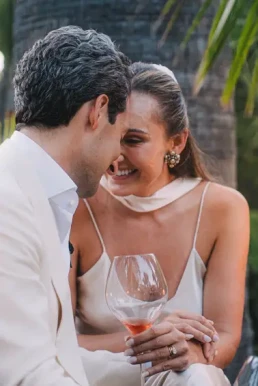
Why choose Koh Samui for an elopement?
Koh Samui is particularly well suited to an elopement because it combines the feeling of a tropical island with the comfort and infrastructure needed for a multi-day stay. The island has its own airport, a wide choice of hotels and private villas, beaches with very different atmospheres and enough experiences to build several days around the ceremony. Chaweng and Lamai offer easy access to restaurants and activities, while areas such as Taling Ngam provide a quieter side of the island. Bo Phut adds a different atmosphere around its historic Fisherman’s Village, and the surrounding Gulf of Thailand opens the possibility of diving, kayaking and boat trips to Mu Ko Ang Thong National Marine Park. The Tourism Authority of Thailand also highlights cooking, yoga, Muay Thai and diving among the activities available on Koh Samui.
What makes Koh Samui especially interesting for an elopement is the variety available within one island. You can choose a west-coast villa for sunset, stay directly beside the sea, spend a day exploring the island, or add a boat experience without changing destination. A hillside villa can provide wide views over the Gulf of Thailand, while a beachfront resort keeps the ceremony, accommodation and dinner close together. For a two or three-day elopement, this makes it possible to combine an intimate ceremony with a private dinner, an island activity, time on the water and genuine downtime together. Rather than organising everything around a single wedding day, Koh Samui gives you enough variety to create a complete experience around the two of you.
The best areas for a Koh Samui elopement
There is no single best beach or venue. Start with four questions: Do you want sunrise or sunset? How private must the ceremony feel? How far do you want to travel? What happens if it rains?
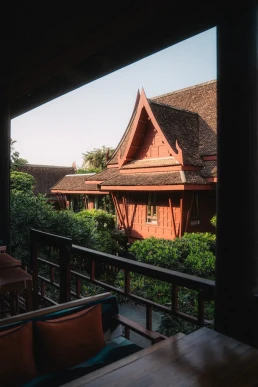
Lipa Noi and Taling Ngam
Choose the west and south-west coast if a sunset over the sea is central to the ceremony. These areas generally feel calmer and more secluded than the busier parts of Koh Samui. They are farther from the airport and many north-coast restaurants, so it usually makes sense to stay in the area and keep the ceremony, dinner and accommodation close together.
Bophut, Maenam, Choeng Mon and Plai Laem
The north and north-east are practical for restaurants, accommodation and airport access. Bophut works well for couples who want some evening life and easy access to Fisherman’s Village, while Maenam can feel quieter and more relaxed. Choeng Mon and Plai Laem are also convenient for villas and resorts. Check privacy and sound at the exact ceremony hour, and remember that proximity to Samui Airport can affect drone permissions.
Chaweng, Chaweng Noi and Lamai
The east coast has the greatest concentration of services and works particularly well for sunrise. Chaweng is the island’s busiest area, while Chaweng Noi and Lamai can offer a more relaxed balance between convenience and atmosphere. The exact stretch of beach matters, especially for privacy, sound and guest movement during the ceremony.
Hua Thanon, Laem Set and Natien
The south and south-east can feel more removed from the main tourist areas and suit couples looking for a quieter setting. Check the beach at both high and low tide, the access road used by suppliers, and whether dinner and a weather backup can happen nearby. These areas can work especially well for a more private multi-day elopement built around a villa or resort.
Resort or private villa for your elopement in Koh Samui?
A resort is often the simplest option for a Koh Samui elopement. Accommodation, ceremony, dinner, staff and a covered backup space can all be organised in the same place. This works particularly well if you are travelling with a small group of family or friends. Before booking, ask about outside-vendor fees, ceremony locations, music restrictions, privacy and the exact rain plan.
A private villa creates a more personal atmosphere and can make a multi-day elopement feel more intimate. You can get ready slowly in the morning, hold the ceremony on the property, have dinner without changing location and continue enjoying the villa the following day. In Koh Samui, hillside villas can offer wide views over the Gulf of Thailand, while beachfront villas keep you directly connected to the sea. Always confirm that weddings or private events are permitted, as well as access, parking, catering, noise restrictions and weather alternatives.
The best time to elope in Koh Samui
Weather, light and a real Plan B
- January to March: usually the easiest balance, with February and March often among the driest choices.
- April and May: hotter and more humid. Plan shade, water and less time in formal clothing before sunset.
- June to August: often a useful compromise, with green landscapes and passing showers still possible.
- September: a transition month. Give any boat plan more weather margin.
- October and November: higher rain risk, with November commonly the wettest month.
- December: often improving as the month progresses, while holiday demand increases.
Climate averages cannot promise a clear afternoon. Ask to see the covered ceremony and dinner spaces before booking. A convincing Plan B should be a place you would happily choose. For west-facing vows, 45 to 75 minutes before sunset is a useful starting point, then refine it for the coast, season, terrain and forecast.
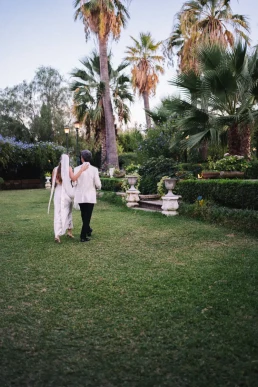
One day works when everything happens in a single area: slow preparations, a ceremony, portraits and dinner. Two days allow an arrival dinner or an activity before the ceremony. Three days give long-haul couples a better rhythm: arrive, experience something together, marry, then have a gentle final morning. Four or five days make sense if you want a full marine-park trip, a small group or more than one cultural event.
More days should not mean more content for its own sake. The benefit is breathing room. Our multi-day wedding approach is designed around that idea: the wedding becomes part of a journey rather than an isolated production.
How many days do you need?
One day or a multi-day story
My role as a destination wedding filmmaker specialized in elopements in Thailand, can begin before the camera comes out. Through planning calls and a clear exchange of ideas, I can help you compare areas, organise the timeline around light, reduce unnecessary travel, choose activities that feel natural and anticipate what will affect photography, film and sound.
For more complex stories, that preparation may include several video calls and a tailored set of activity ideas. I coordinate visual coverage with my Thailand-based team while your planner, venue and legal advisers retain responsibility for contracts, permissions and marriage formalities. Read more about the experience, my storytelling approach and my elopement films.
How I can help you plan the experience
Planning begins before the camera comes out
A sample three-day Koh Samui elopement
A slower rhythm for long-haul couples
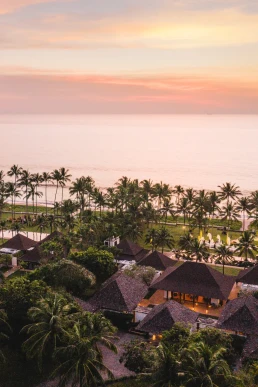
Day one: arrive, slow down and settle into Koh Samui
The first day of a multi-day Koh Samui elopement should feel deliberately light. Stay close to the area where the ceremony will take place, settle into your villa or resort and leave space for the pool, a walk, a massage or simply time to recover from the journey. Before sunset, meet your planner, photographer or videographer, confirm the next day’s timing and then have dinner somewhere quiet. This first chapter matters because it creates the transition from travelling to actually being present on the island together.
Day two: experience Koh Samui together
The second day is where a multi-day elopement in Koh Samui becomes a real shared experience rather than just a wedding trip. Choose an activity you would genuinely enjoy together, such as a Thai cooking class, Muay Thai training, a boat trip along the coast, snorkelling, a spa afternoon or exploring another part of the island. Keep the schedule loose enough for a swim, lunch, a nap and spontaneous moments. This day can also be a good time to exchange private letters or spend the evening somewhere completely different from the ceremony setting.
Day three: ceremony, portraits and private dinner
The ceremony day can then begin slowly because the main logistics are already behind you. Get ready in the same villa or resort, leave enough time for quiet moments together and plan the ceremony around softer light without making the whole afternoon depend on sunset. Afterwards, you can walk by the sea, swim, have a drink or simply stay together before dinner. Keeping the ceremony and dinner close to your accommodation makes the day feel much more intimate and avoids unnecessary transfers. If the weather changes, the covered alternative should already be part of the plan rather than an emergency solution.
This is only one example of how a three-day Koh Samui elopement can work. The advantage of a multi-day celebration is that the experience can be built around your own rhythm, with different places, activities and quiet moments spread naturally across the stay instead of trying to fit everything into a single wedding day.
Experiences that add something to the story
The most useful question is simple: would we still enjoy this if nobody filmed it?
A cooking class gives you hands, movement and conversation. Muay Thai can be playful or focused, even for beginners, when arranged with the right trainer. Both create a shared experience instead of a sequence of poses.
A private or small-group boat works especially well for a Krabi elopement because it lets you combine several islands, quiet stops, swimming and lunch in the same day while keeping the experience relaxed and personal. A morning in Bophut can feel relaxed, while an evening market offers more energy, people and sound.
Mu Ko Ang Thong is a full-day experience rather than a quick portrait stop. Place it on a separate day and confirm the park’s annual closure and sea conditions. Avoid involving captive elephants in wedding photographs. Research animal-welfare standards carefully and choose observation that does not require performances or forced contact.
Where the strongest photographs and films come from
Let the island feel lived in
The strongest images are not always made at the island’s most searched locations. They often come from the place where you are already living: the doorway of a villa, breakfast light, the walk to the ceremony, a voice breaking during the vows, wet sand after rain or the quiet after dinner.
For variety without turning the day into a tour, combine one home base with good window light and a credible rain plan, one ceremony setting chosen for privacy and sound, and one activity that is genuinely yours.
Big Buddha, Wat Plai Laem, Hin Ta and Hin Yai, waterfalls and viewpoints can be busy, hot and difficult to use respectfully. Temples are active religious places, not sets. Ask permission, dress appropriately and accept that a site may not allow a ceremony or commercial filming.
In my films, real voices and ambient sound matter as much as the view. Wind protection, backup microphones and a quiet place for vows are particularly important beside the sea.
Legal or symbolic ceremony in Thailand
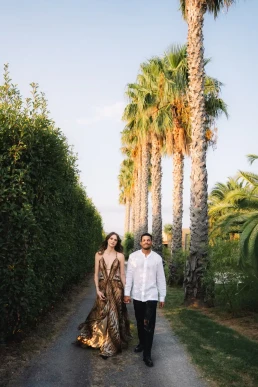
For many international couples, a symbolic ceremony in Koh Samui is the simplest option. You complete the legal marriage at home and exchange personal vows on the island. A celebrant can shape the ceremony around your relationship without presenting it as a Thai civil registration.
A legal marriage in Thailand is possible, but the process depends on both nationalities. It commonly involves proof that each person is free to marry, passport documents, Thai translations, legalisation and registration with a district office. A religious or symbolic ceremony alone is not a legal marriage.
Thailand has allowed same-sex couples to register marriages since 23 January 2025. The government’s Public Relations Department states that foreign applicants need passports and single-status documents from their home country or embassy. Contact your embassies, the Thai Ministry of Foreign Affairs and Ko Samui District Office. This is practical information, not legal advice.
Travel and accommodation planning
Flying into Samui Airport is the most direct option. Routes and frequencies change by season, so check the airline’s timetable before coordinating international tickets. Through the mainland, the journey usually continues by road to Donsak and then by ferry. Lomprayah and Raja Ferry publish current schedules.
Allow an arrival buffer. A missed connection, delayed bag or tired body is much easier to absorb two days before the vows than on the morning itself.
Keep accommodation in one part of the island, especially if parents or a small group are joining you. Reserve drivers rather than expecting everyone to use scooters. Before booking a hillside villa, ask whether a full-size van can reach it, where suppliers unload and how many stairs separate the rooms from the ceremony.
Common mistakes include choosing from sunset photographs without checking the real orientation, crossing the island several times, accepting a weak rain plan, calling a beach private without defining access, filling every hour and copying a Thai ritual without understanding its meaning. Ask practical questions before signing the contract.
Filming and drone considerations
Build a complete story without depending on aerials
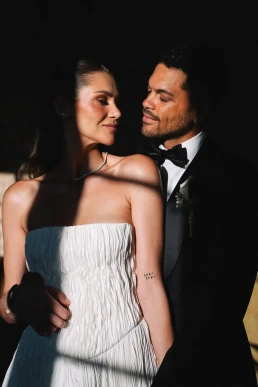
Drone flying in Thailand is strictly regulated, with registration, pilot certification, insurance and local permissions required. This is not an issue for my Thailand-based team, which has the necessary authorisations to operate legally and safely.
In Koh Samui, airspace around the airport and some protected areas still requires careful planning, but drone coverage can be integrated into the elopement whenever conditions and permissions allow.
Share your wedding plans and let’s schedule a call
Koh Samui elopement: your questions
It can be, but only if you complete Thailand’s civil registration process and meet the requirements for both nationalities. A symbolic, religious or celebrant-led ceremony is not legally valid on its own. Many international couples complete the civil marriage at home and hold personal vows in Koh Samui.
January to March is usually the easiest period, with February and March often among the driest months. June to August can also work with a flexible plan. October and November carry higher rain risk. No month removes the need for a covered alternative.
The west and south-west, including Lipa Noi and Taling Ngam, are the clearest choices for a sunset over the sea. The east coast is better suited to sunrise. Confirm the view from the exact ceremony space.
A venue can sometimes create a controlled and very quiet setting, but “private beach” should be questioned carefully. Ask whether the public, hotel guests or boats may pass, and inspect the beach at your intended ceremony time.
One day is enough for a geographically simple elopement. Two or three days give international couples a more relaxed experience and make space for an activity or welcome dinner. Add another day if Ang Thong or a substantial boat trip is important.
Only when the aircraft, pilot, insurance, airspace, land permission, weather and location comply with current rules. The 9-kilometre aerodrome restriction is particularly relevant around Samui Airport. Treat aerial coverage as a possibility, not a promise.
Not always, but local coordination is valuable for a legal marriage, villa event, boat, temple contact, several suppliers or a complex rain plan. For a simple resort ceremony, the hotel coordinator may cover much of the operational work.
Choose breathable fabrics, shoes suited to sand or uneven ground, and a second shirt or simple change if helpful. Plan shade, water and air-conditioned breaks. For temples, cover shoulders and knees and follow the site’s guidance.
A resort usually simplifies rooms, food, staffing and the weather backup. A villa can feel more personal and keep the whole story in one place. Compare event permission, outside-vendor rules, access, sound limits and the covered space.
Usually not. A boat is affected by wind, sea conditions and fixed departure times, so it is safer and more enjoyable on a separate day. If the boat is central to your vows, keep a complete land-based alternative.
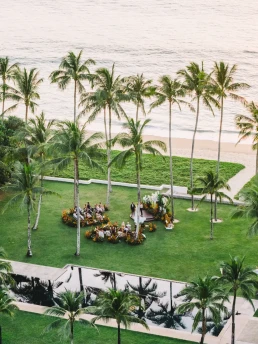
International recognition matters to me because it reflects years of work, travel, encounters and stories entrusted to me by couples. Awards are not the reason I make a film, but they reinforce the responsibility to keep each one sincere, personal and free from a standard formula. What I value most remains the work itself: the honesty of a look or a voice, natural light and an edit shaped around the people in it, so the film still feels true years later.

Featured in
Work featured in French and international wedding blogs and publications known for their carefully curated selections.