

How to Elope in Chiang Mai
A practical guide for international couples planning an elopement in Chiang Mai
By Meryll de Gordon, destination wedding filmmaker
How to think about a Chiang Mai elopement
What an elopement means here
I’m Meryll, destination wedding videographer, I have been travelling to Thailand for ten years and have filmed weddings across Chiang Mai, Phuket, Krabi and the Bangkok/Hua Hin region. In Chiang Mai, I filmed Val and Lyle’s celebrations from their welcome dinner at Terra to their ceremony and reception at Four Seasons. That experience is one reason I would never reduce the city to a list of pretty places. What matters is how its old streets, rice fields, gardens, food and mountains can become part of a few days that still feel like your own.
This Chiang Mai elopement guide is for international couples who want practical choices rather than a fixed package. It explains where the different landscapes actually are, when the air and weather are most suitable, how a symbolic ceremony differs from a legal Thai marriage, and how much time to leave for travel, light and each other. It also looks at the details that shape a film: real voices, changing weather, quiet transitions and a schedule that does not turn the experience into a shoot.
An elopement in Thailand can be two people exchanging vows in private, or a very small wedding with a few people who matter most. The defining quality is not secrecy and it is not a specific guest count. It is the freedom to make the ceremony, place and pace more personal than a conventional wedding format often allows.
In Chiang Mai, that might mean staying in the Old City, holding a symbolic ceremony in a private garden, and spending the following morning cooking with a local host. It might mean three quiet days at a resort in Mae Rim, with no need to leave the valley. Or it might mean a longer journey with one night near Chiang Dao or Doi Inthanon. Each version can work. Combining all three into one rushed day rarely does.
A small celebration still needs proper planning. You may need permission from a property, temple or protected area. A mountain journey needs a driver and realistic timing. A ceremony in smoke season needs an alternative that does not depend on a clear view. Intimacy makes the logistics lighter, but it does not make them disappear.
The destination works particularly well for couples who value:
- a sense of place without a large resort production;
- food, craft and daily life as part of the experience;
- cool-season mornings and evenings;
- a ceremony followed by several unhurried days;
- architecture, forest or mountain scenery rather than the coast;
- a film built from voices and lived moments, not only portraits.
It is also a practical regional city with an international airport, a broad range of accommodation and experienced event suppliers. But it asks for honest choices. Mountain locations are not just outside the hotel gate. Temples are active places of worship. November festivals bring energy and crowds. From late winter into spring, haze can hide the hills. The right Chiang Mai elopement plan accepts those realities from the beginning.
Why Chiang Mai works so well for an elopement
Chiang Mai feels distinct from Thailand’s island wedding destinations. There is no beach-led rhythm. Instead, the city sits between a historic urban centre, the Ping River, agricultural valleys and forested mountains. Within a few days, a couple can move from carved timber and temple walls to rice fields, gardens, mist and a long dinner outdoors.
The best places to elope in Chiang Mai
There is no single best location. The useful question is which area supports the kind of day you want, with the least unnecessary movement.
Old City and Wat Ket for texture and easy days
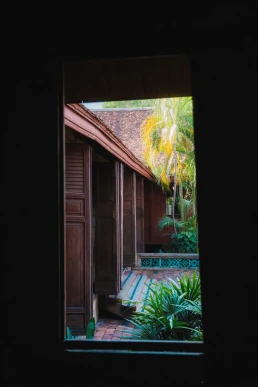
The Old City gives you lanes, gates, old walls, morning markets and a dense concentration of temples. Across the river, Wat Ket and the surrounding neighbourhoods add historic houses, gardens and boutique hotels. This is the easiest choice if you want to walk to dinner, stay close to cafés and build the experience around the city itself.
Early morning is usually the most comfortable time for a short walk and portraits. Later, traffic, heat and visitors change the atmosphere. I would keep the ceremony in a private courtyard, hotel or garden where permission, seating and sound can be controlled. A temple visit can be meaningful, but a temple is not a ready-made wedding set. Ask first, dress appropriately, keep the team small and follow the guidance you are given.
Places worth assessing include Tamarind Village for an Old City courtyard, 137 Pillars House for a historic garden setting near the river, and private properties that can confirm event and filming rights. Their current capacities, packages and outside-vendor rules need to be checked directly.
Mae Rim for rice fields, gardens and a simple base
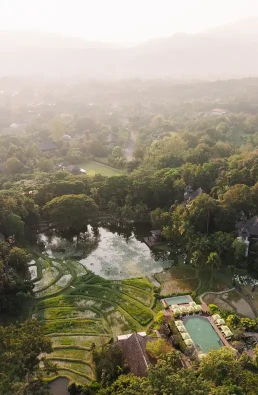
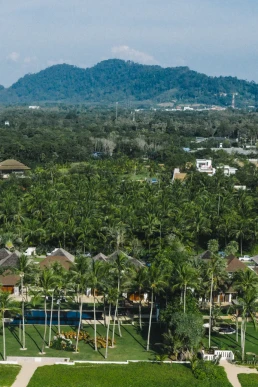
Mae Rim lies north-west of the centre and is one of the most coherent areas for an intimate multi-day celebration. The valley offers agricultural landscapes, gardens and mountain edges, with resorts that can hold accommodation, ceremony and dinner in one place.
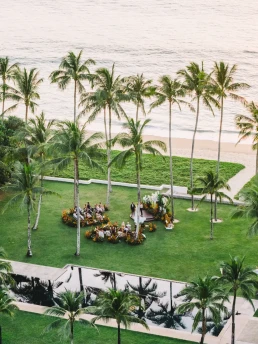
Four Seasons Resort Chiang Mai is the best-known example. I filmed Val and Lyle’s celebrations there, after their welcome dinner at Terra. Their event was larger than an elopement, but its structure is useful: each part had its own setting and the story was allowed to unfold over more than one moment. You can also watch their Chiang Mai wedding film.
Mae Rim is often around 30 to 50 minutes from the Old City, depending on the exact property and traffic. If you choose it, consider staying there for the ceremony night instead of treating it as a backdrop you visit between city appointments.
From city courtyards to full mountain days
Hang Dong for gardens and foothills
South-west of the city, Hang Dong offers gardens, wooded foothills and managed venues. It can give a greater sense of space without the longer journey to Doi Inthanon or Chiang Dao. Veranda High Resort, Royal Park Rajapruek and private garden properties show the range, but each has different hours, access rules and privacy.
This area suits couples who want a green setting and still intend to spend part of the trip in town. Check the actual orientation of the ceremony space. A venue may market a mountain view while losing direct light much earlier than the published sunset because of trees or the slope.
Doi Suthep and Wat Pha Lat for a respectful forest visit
Doi Suthep rises directly above Chiang Mai. The road gives access to forest, viewpoints and important temples, including Wat Pha Lat and Wat Phra That Doi Suthep. These places can add a quiet walk or a cultural visit, especially early in the day.
They are not automatically private and they are not appropriate for an unapproved ceremony. Visitor numbers, religious activity, road traffic and wet stone all affect the experience. I would use the mountain for a short, respectful part of the story and keep the vows somewhere with clear permission.
Mae Kampong and Mae On for a slower rural stay
Mae Kampong is a lived-in mountain village east of the city, not an open-air studio. Its wooden houses, stream, forest and changing weather can give a very different rhythm from central Chiang Mai. The road is narrow, day visitors arrive in numbers, and local consent matters.
The better approach is an overnight stay, a small team and an itinerary that supports local businesses. Allow roughly 60 to 90 minutes from central Chiang Mai, then confirm the journey close to the date. A ceremony should take place at a property that explicitly agrees to it, not in a public lane chosen on arrival.
Doi Inthanon for a full mountain day
Doi Inthanon National Park has cloud forest, waterfalls, trails and much cooler conditions at elevation. It can be an extraordinary extension to a Chiang Mai elopement, but it is not a convenient stop between hair and make-up and dinner in town.
Allow about 90 to 150 minutes each way, plus movement inside the park. Build a separate day or stay nearby. Commercial filming, organised activity and drone use may require permission from the Department of National Parks as well as other authorities. Sunrise viewpoints can be busy and mist may replace the long view. Both are reasons to choose the experience, not only the expected photograph.
Chiang Dao for an overnight mountain chapter
Chiang Dao’s limestone mountain gives a stronger sense of remoteness. Travel from Chiang Mai generally takes around 90 to 120 minutes before local access is added. The summit may be clear, wrapped in cloud or hidden altogether.
For an elopement, I would plan a private ceremony at an authorised lodge or property and stay overnight. That gives the landscape time to change and removes the pressure to return to Chiang Mai immediately after sunset.
For most outdoor elopements, late November through January offers the best balance of cooler temperatures and lower rainfall. Early February can still work, but air quality becomes less predictable as the dry season continues. No month guarantees clear mountains.
November to January
This is the most reliable window for comfortable outdoor plans. Mornings in the mountains can feel cold, while the city remains mild. It is also high season, so book important accommodation and suppliers early.
Loy Krathong and Yi Peng usually fall in November, with dates changing according to the lunar calendar. They create a powerful atmosphere, but they also bring crowds, restricted traffic, higher demand and tightly controlled lantern activity. If privacy is the priority, avoid the busiest festival dates. If the festival is part of the reason you are travelling, build the elopement around an authorised event and accept that it will not feel secluded.
February to April
This is the period to approach most carefully. Conditions become hotter, and smoke from agricultural and forest fires can produce severe PM2.5 pollution across northern Thailand. The exact timing and intensity vary each year, which makes a long-range promise impossible.
If you are considering these months, monitor the regional Pollution Control Department, keep a good indoor option, and make sure your ceremony still feels complete without a mountain view. March and April would not be my first recommendation for a couple whose health, comfort or images depend on clear outdoor air.
May to October
The wet season brings greener landscapes, humidity and showers that can be brief or sustained. It can be a good choice for couples who prefer softer light and are comfortable adapting the day. It is a poor choice if the entire plan depends on a dry lawn with no covered alternative.
A real rain plan includes an indoor space you already like, umbrellas that can be used without turning the ceremony into a production, suitable shoes, time for the ground to drain and protection for sound equipment. September and October can bring heavier rain or local flooding, so river level and road access need specific checks.
When is the best moment to elope in Chiang Mai?
Late November to January is the strongest window
How many days do you need?
Three days is sensible, four or five gives you space
Three days is a sensible minimum once you are already in Chiang Mai. Four or five days is better if you are arriving from another continent or adding a mountain area.
With two days, stay in one property or neighbourhood. Use the first day to settle, check the location and rest. Keep the second for preparation, vows, portraits and dinner. There is almost no weather margin.
With three days, you can add a welcome dinner or a calm activity before the ceremony and keep the following morning free. This is often enough for a couple travelling alone.
With four or five days, you can separate city and mountain experiences, move accommodation once, include a few guests, or allow rain to change the order of events. More days do not mean more hours of filming. They create contrast and space.
My involvement often begins before the camera comes out. For Sam and Zarah’s wedding in Phuket, the preparation included calls, ongoing messages and a document of activity ideas. For a Chiang Mai elopement, I apply the same principle by starting with who you are, how you want the days to feel and which moments matter, then helping shape locations, travel, activities and light around that. This is an important part of the experience I create with couples, especially for destination weddings and multi-day elopements. I also have a trusted team in Thailand, so coverage can be adapted when a story needs additional filmmakers, photography support or a properly authorised local drone specialist, while I remain involved in the creative direction and personally shape the final narrative.
My planning assistance for a Chiang Mai elopement
Planning begins before the camera comes out
Sample Chiang Mai elopement itineraries
Three flexible ways to structure the experience
A quiet three-day city and garden elopement
Day one: arrive earlier in the day, check in near the Old City or Ping River, meet the team and have dinner without a formal programme.
Day two: take a short early walk through the city, rest through the middle of the day, prepare in the afternoon, exchange vows in a private garden, make portraits within the same property and have dinner with your few guests.
Day three: share breakfast, record messages for family at home, take a cooking class or visit an artisan, then leave the evening unplanned.
Four days between the city and Mae Rim
Day one: arrive and stay in town.
Day two: explore the Old City early, have lunch, then transfer to Mae Rim before traffic and sunset.
Day three: slow morning, preparation, late-afternoon ceremony and dinner at the same property.
Day four: breakfast with guests, a short walk or spa, and no immediate flight.
A five-day Chiang Dao or Doi Inthanon journey
Day one: arrive in Chiang Mai.
Day two: city time, final checks and an informal dinner.
Day three: transfer to the mountain area and settle in.
Day four: ceremony and exploration close to the accommodation, with generous weather margin.
Day five: quiet morning and return to Chiang Mai. Fly no earlier than the following day if the international connection matters.

Activities and filmmaking that belong to the story
Choose an activity because you genuinely want to experience it, not because it fills a film. The camera can then observe rather than manufacture a sequence.
A northern Thai cooking class works well because it has movement, conversation, sound and a meal at the end. An artisan workshop can be equally personal when the host agrees to filming and the group is small. A forest walk, waterfall or garden visit can make sense in the wet season if footwear and access are realistic. A private dinner or carefully explained khantoke experience can introduce food and music without turning culture into decoration.
Some activities require more care. An elephant venue should be examined beyond the word “ethical”. Ask whether there is riding, performance, forced bathing, breeding for tourism or compulsory contact. A temple visit requires appropriate clothing and permission for professional images. Sky lanterns should only be part of an officially authorised event because fire and aviation rules apply.
The best moments may also be the least elaborate: breakfast after the vows, a voice message from someone who could not travel, rain beginning during dinner, or the silence of a drive into the hills. They matter because they happened, not because they were on a shot list.
Good images begin with a day that works. If the couple is tired, the ceremony is rushed or half the afternoon is spent in separate vans, no location can repair the feeling.
Protect the edges of the day
In the valley, hills and trees can remove direct light before the published sunset. I would normally protect the final 60 to 90 minutes of useful light for the couple, then adjust after seeing the actual venue. In the Old City, an early walk often offers softer light and less traffic. In forest, cloud and rain can make the light beautiful but reduce it quickly.
Never set the ceremony time from a weather app alone. Check the direction the space faces, how tall the surrounding trees are and whether a building shadows it. A visit at the same time of day is more valuable than a generic sunset chart.
Listen to the location
For film, sound changes the meaning of a place. Chiang Mai can give you temple bells, birds, water, markets, rain and the voices of people around you. It can also give you traffic, air-conditioning, lawn equipment, generators and music from another event.
Ask the venue what happens at the planned ceremony time. Find out whether a fountain, fan or speaker can be switched off. Keep the vows away from a road if possible. Record the voices with more than one source. A quiet-looking garden is not necessarily a quiet garden.
Make the rain plan part of the design
Do not accept an emergency room that you would dislike in every photograph. Choose a property with a covered terrace, room or pavilion that already feels connected to the day. Decide who makes the weather call, when it will be made and how quickly the setup can move.
Keep the team appropriate
Two people exchanging vows do not need a crowd of suppliers surrounding them. A compact team protects intimacy and makes access easier. A second filmmaker becomes useful when preparation happens in separate places, guests are present, several events overlap or the sound cannot be covered by one person alone.
Drone images can establish geography, but they are not essential to a good film. Thailand requires registration and pilot compliance, and the operation may also need permission from the property, the airspace authority and a national park. Chiang Mai’s airport and protected landscapes make assumptions particularly unwise. The official starting points are the CAAT UAS Portal and, for protected areas, the Thailand Film Office guidance.
Let the film have a point of view
A longer celebration does not require constant coverage. It creates room for a beginning, change and return. I look for the connection between your voices, the place you chose and the people who are part of it. That may include archive material, a letter, a call home, a welcome dinner or the morning after. It should never require repeating a real emotion for the camera.
You can read more about my storytelling approach, multi-day wedding films and wedding filmmaking across Thailand.
Legal or symbolic ceremony in Thailand
Symbolic simplicity or civil registration
For most international couples, a symbolic ceremony in Chiang Mai is the simplest route. You can shape the vows and setting freely, then complete the legal marriage in your home country before or after the trip. A symbolic ceremony, Buddhist blessing or hotel celebration is not by itself a Thai civil marriage.
A legal marriage in Thailand must be registered through a district office. Foreign nationals generally need identity and marital-status documents, certified Thai translations and legalisation through the relevant Thai authorities before registration. Requirements vary by nationality and personal history, and a district office may ask for an interpreter, witnesses, an appointment or additional documents.
Same-sex marriage has been legal in Thailand since 23 January 2025. The administrative steps for foreign couples still depend on their documents and district office.
Start with your own embassy or consulate and the amphur you intend to use. The UK Government guidance, Australian Embassy guidance and Thai Ministry of Foreign Affairs are reliable starting points. Do not book a non-refundable legal schedule until the office has confirmed the current process for both partners.
If you want a Buddhist blessing or Lanna element, ask who will explain its meaning, what participation is appropriate, what contribution is expected and whether photography and sound recording are allowed. Cultural respect is part of the ceremony, not an aesthetic note added afterwards.
Travel and accommodation
Chiang Mai International Airport is close to the city, but route availability changes. Confirm the exact flight for your date through the official airport site. Many long-haul travellers connect through Bangkok or another Asian hub.
Arrive at least two full days before the ceremony if you are flying long haul. This leaves room for delayed baggage, sleep, final document checks and a change in weather. Avoid booking an international departure the morning after a mountain ceremony.
All non-Thai nationals currently need a Thailand Digital Arrival Card, submitted within the three days before arrival. It is not a visa. Visa or exemption rules depend on passport and length of stay, so use the official TDAC guide and Thai e-Visa portal rather than an old travel blog.
For transport, arrange a driver or van if guests, formalwear or equipment are involved. From Chiang Mai Old City, allow around 30 to 50 minutes to Mae Rim or Hang Dong, 60 to 90 minutes to Mae Kampong, and roughly 90 minutes to two hours or more for Doi Inthanon and Chiang Dao.
These are planning ranges, not promises. Traffic, rain, road works and the exact property can change them substantially.
Choose accommodation around the ceremony. If you marry in Mae Rim, spending the key night there is usually calmer than moving everyone back to the Old City. If you have guests, provide one or two hotel choices and a shared transfer. For a mountain extension, pack and move once rather than commuting on the ceremony day.
A final way to think about Chiang Mai
Let the place have enough time
The strongest Chiang Mai elopement is not the one that visits the most places. It is the one that understands why the couple came, gives each chosen place enough time and leaves room for something unplanned to become part of the memory.
I would begin with three decisions: the season you can accept honestly, the one area where you want to exchange vows, and the people or voices you want close to you. From there, the film, photographs, food, travel and ceremony can support the experience instead of competing with it.
If you are considering a film, you can see how I approach elopement wedding videography and the full client experience. The useful first conversation is not about a package. It is about the few days you want to remember and what should be allowed to happen within them.
Share your wedding plans and let’s schedule a call
Chiang Mai elopement: your questions
December and January are usually the strongest choices for cooler, drier outdoor conditions. Late November can also work well. Early February is possible, but air quality becomes more variable. Check current weather and PM2.5 sources because no month guarantees rain-free days or clear mountains.
Yes, foreigners can register a marriage in Thailand if they satisfy the current document, translation, legalisation and district-office requirements. The process depends on nationality and personal circumstances. Confirm it with both partners’ embassies or consulates and the chosen amphur. A symbolic or religious ceremony alone is not a legal Thai marriage.
Possibly, but never by assumption. The temple must agree, and its religious practices, dress rules, filming limits and expected contribution must be respected. Many couples will find it simpler to hold vows in a private venue and arrange a separate blessing or visit with local guidance.
Allow at least three days in the destination, plus recovery time after a long-haul flight. Four or five days is better for a mountain extension, a small guest group or weather flexibility. Arrive two full days before the ceremony whenever possible.
Not always, but local help becomes valuable when the plan includes a temple or cultural ceremony, a public or protected location, legal registration, complex styling, several suppliers or a remote mountain area. For a simple resort elopement, a strong venue coordinator plus clearly defined independent suppliers may be enough. Confirm who handles permissions and transport rather than relying on job titles.
Only when the pilot, aircraft, airspace and location comply with current rules. Camera drones in Thailand require registration, and additional permission may be needed near controlled airspace, on private property or in a national park. Chiang Mai airport makes local airspace especially important. Plan the film so it works without a drone.
Use a venue with a covered setting you genuinely like, build time that can move and make the ceremony meaningful without a distant view. Rain can bring softer light and strong natural sound. Haze requires a health-aware decision and may mean moving indoors, changing location or postponing, depending on severity.
Stay close to the ceremony on the key night. Choose the Old City or Wat Ket for walking, restaurants and an urban experience; Mae Rim for rice fields, gardens and resort continuity; Hang Dong for foothills and garden venues; or an overnight property near Chiang Dao, Mae Kampong or Doi Inthanon for a separate mountain chapter.
TEXT
TEXT
Being recognised among international wedding videographers is a real honour, but above all I see it as a responsibility: to keep creating films that feel sincere, elegant and personal, without ever falling into a ready-made formula. These awards celebrate years of work, encounters, travel and stories entrusted to me by incredible couples. They remind me why, at every wedding, I look for the honesty of a glance, a voice, a light and an edit that will still feel alive long after the celebration is over.

Featured in
Work featured in French and international wedding blogs and publications known for their carefully curated selections.