

How to Elope in Tuscany
A practical guide for international couples planning an elopement in Tuscany
By Meryll de Gordon, destination wedding filmmaker
Why choose Tuscany for an elopement?
One region, a coherent experience
Having filmed intimate weddings in Tuscany over several years, I have learnt that the region makes more sense when you stop treating it as one location. I’m Meryll, the destination wedding videographer specialized in elopement videography behind Gordon Wedding Films, and my work focuses on destination weddings and elopements. A quiet morning in Florence, a ceremony at a Chianti estate and two days in Val d’Orcia are different experiences, with different travel, light and sound. Tuscany works well when the ceremony belongs to a longer stay: breakfast in a village, personal vows, a slow dinner, then perhaps a walk or wine tasting the following day. The key is restraint. Choose one area, allow enough time and let the place become part of what you live rather than a checklist of backdrops. You can also see the weddings I have filmed in Tuscany.
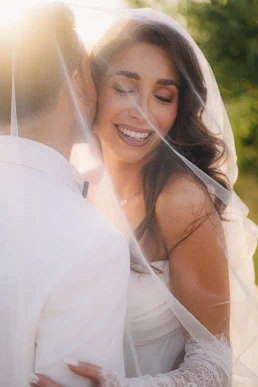
A modern elopement is an intentionally small wedding. It may involve only the couple, or a handful of close family and friends. It does not have to be secret, spontaneous or stripped of meaningful details. A traditional wedding is usually organised around a larger guest experience, while a destination wedding simply takes place away from home and can still be large. An elopement puts the ceremony and the couple’s time together at the centre, whether that happens in a city hall, at a private villa or during a multi-day journey. See how I approach elopement films built around the experience.
What is an elopement?
The Elopement wedding film of Nicoletta & Connor in Sicily
My favorite places to elope in Tuscany
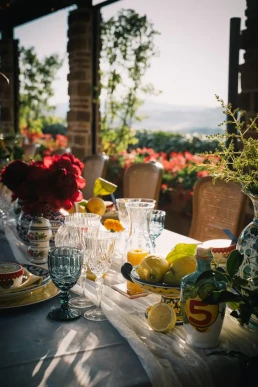
In Italy, Florence is the urban choice: architecture, movement and a day that can largely be lived on foot, with early hours offering more space before traffic and tour groups build. Chianti often gives the simplest countryside rhythm, with a villa or agriturismo holding the preparations, ceremony and dinner. Siena and the Crete Senesi combine medieval streets with open clay hills, provided the route remains compact. Val d’Orcia, including Pienza, Montalcino, San Quirico d’Orcia and Monticchiello, offers broad agricultural landscapes, but fields, farm roads and cypress lanes may be private or actively worked. Stay locally rather than commuting from Florence on the ceremony day. Lucca and north-west Tuscany bring walls, gardens and greener countryside, while Maremma suits couples who want the coast or thermal water to be central to the trip. Rural Tuscany usually needs a car or driver, and one town plus one countryside setting is often enough for a coherent day.
Choose Florence for a walkable city experience, Chianti for a property-based stay with simpler transfers, and Val d’Orcia for open rural landscapes and small hill towns. The strongest option is the one that fits how you want to spend the day. Food, wine, walking, cycling and thermal bathing can give the ceremony a wider context, but summer heat, crowds, driving time and private access need to be planned honestly.
What about Florence, Chianti or Val d’Orcia?
When should you plan an elopement in Tuscany?
Spring, summer, autumn and winter
Spring brings greener fields and softer temperatures, with rain still possible. May is particularly useful for walking and countryside plans. June gives longer days, although heat and demand rise through the month. In July and August, keep the central hours for lunch, rest or indoor preparations, then use the later afternoon and evening for the ceremony and time outside. September remains warm and popular. Late September and early October can feel more comfortable, with harvest activity and a greater risk of unsettled weather as autumn advances. Winter is quieter, but shorter days, rain and seasonal closures call for a genuine indoor plan. Flowering, harvest and field colour vary by year and altitude, so they should never be promised. The best period is where temperature, daylight, visitor numbers and the atmosphere you want can coexist.
How to build the right timeline for your Tuscany elopement
Planning enough time to truly experience Tuscany
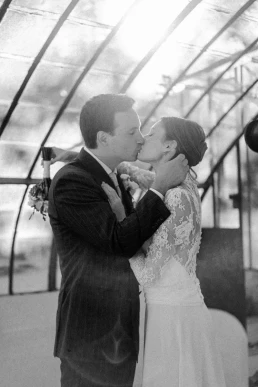
Two days allow an arrival dinner or easy activity followed by the ceremony day, especially when everything is based at one property.
Three days add room for a slow breakfast, cooking class, vineyard visit or walk after the wedding. While filming Laura and Miles at Castello di Casole, I saw how a pool party and welcome cocktails, the wedding day and a farewell brunch each revealed a different kind of connection. Their event was a wedding rather than an elopement, but the value of a connected multi-day rhythm applies at a smaller scale too.
Four or five days make sense when travel recovery, guests, a civil appointment or two genuinely distinct experiences need more room. Extra time should make the trip calmer, not justify more distant locations.
Building a timeline that leaves room to enjoy Tuscany
When a couple is organising from abroad, I can help shape the timeline from a filmmaker’s perspective: when the ceremony light is likely to be more comfortable, how much room to leave between places, whether the number of locations is realistic, and which activities belong on the same day or deserve their own. We can discuss these choices on planning calls and coordinate the useful points with the wedding planner. My role is not to replace the planner or the comune. It is to reduce avoidable pressure and make sure the schedule works first as an experience, then as a natural foundation for the film. This preparation is part of the experience we build together.
What activities can you include in a Tuscany elopement?
Food, wine, walking and time together
A useful activity changes the pace of the stay. Coffee at a bar, a market visit and cooking lunch can feel more personal than another portrait session. A vineyard visit works best when the producer is chosen for genuine interest and transport is settled in advance. An e-bike ride, an easy section of the Via Francigena or a village walk adds movement without requiring a difficult hike. In Maremma, thermal bathing or time by the coast may deserve a separate day. Harvest activity, private gardens, workshops and boat trips depend on season, access and reservation. If you tell me what you actually enjoy doing together, I can help identify which ideas fit the area and create continuity in the film. I would rather film one experience you care about than three staged activities selected only for their appearance.
Legal, symbolic and religious ceremonies in Tuscany
What international couples should confirm
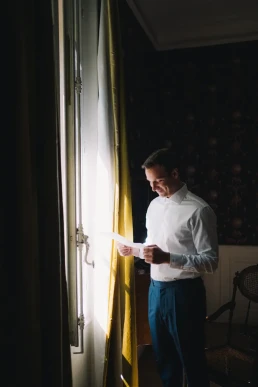
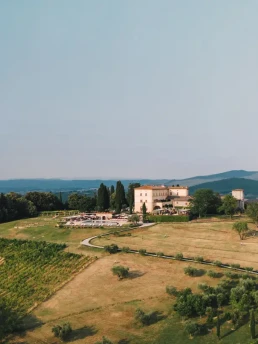
Foreign nationals can legally marry in Tuscany, but the required evidence of no legal impediment, translations and legalisation depend on nationality and the chosen comune. Confirm the current list with the comune and the relevant embassy or consulate; civil ceremonies require two witnesses. A symbolic ceremony has no legal effect but allows more freedom in wording, place and timing, while religious ceremonies follow the church or faith community’s own requirements. Florence Amerigo Vespucci Airport and Pisa Galileo Galilei Airport are the main air gateways. Trains connect major towns, but rural Chianti, the Crete Senesi, Val d’Orcia and Maremma generally need a car, driver or coordinated transfers. Light, sound and access should be checked for the exact location: traffic affects vows in Florence, wind can dominate an exposed ridge, and private land or municipal rules may limit filming. Drone footage is never guaranteed; the operator must check current ENAC and D-Flight requirements, airspace, weather and property permission.
Share your wedding plans and let’s schedule a call
Tuscany elopement: your questions
Choose Florence for a walkable urban experience, Chianti for a villa-based stay with simpler logistics, and Val d’Orcia for broad rural landscapes and small hill towns. The best choice is the one that fits how you want to spend the day, not just the photographs you want.
Usually, yes, if the elopement is based in Chianti, Val d’Orcia, the Crete Senesi or Maremma. Trains connect major towns, while rural properties and viewpoints often require a car or driver. Florence itself is easier without a car.
Yes. Foreign nationals can legally marry in Tuscany, but the required certificate of no impediment, translations, legalisation and other documents depend on nationality and the chosen comune. Confirm the list directly with the comune and the relevant embassy or consulate before booking around a civil date.
May, June, late September and early October are often the most balanced periods for temperature, daylight and outdoor time. There is no guaranteed month: May can be wet, June becomes hotter, September is busy and October brings a greater rain risk.
Two days allow an arrival experience and a ceremony day. Three days add room for a relaxed activity or brunch after the wedding. Four or five days are useful when guests, travel recovery, a civil appointment or two distinct experiences genuinely need more time.
Not every two-person symbolic ceremony needs full planning, but local help is valuable for a civil wedding, private-property permission, suppliers, guests, transfers or a rain plan. A filmmaker can advise on light, pace and story, but does not replace the planner or the comune.
Sometimes, but never automatically. The operator must check D-Flight geographical zones, ENAC requirements, airspace restrictions, protected areas, weather and property permission for the exact place and date.
Yes. An elopement can involve only the couple or a small group of people who matter to them. Once guests, transport, seating, meals and accommodation become more complex, a planner and a property designed for intimate events become increasingly helpful.
International recognition is an honour, but what matters most to me is the work behind it: years of films, travel, encounters and stories couples have trusted me to tell. It asks me to keep making films that are sincere and personal, never built from a standard formula. At every wedding, I return to the same essential elements: the truth of a glance, the character of a voice, the way light shapes a moment and an edit that can still feel alive many years later.

Featured in
Work featured in French and international wedding blogs and publications known for their carefully curated selections.