

How to Elope in Italy
A practical guide for international couples planning an elopement in Italy
By Meryll de Gordon, destination wedding filmmaker
What I’ve learned filming elopements across Italy
A filmmaker’s practical perspective
I work as a destination wedding filmmaker, with a particular focus on intimate weddings and elopements, and have filmed in Italy over several years, from Rome and Florence to Tuscany, the Amalfi Coast and Sicily, including elopements in Taormina and Noto. The clearest lesson is that Italy should not be planned as one destination. A ceremony in a Roman courtyard, two days beside the Sicilian sea and a slow stay at a Tuscan estate ask for different timings. Italy is a strong choice when the wedding in Italy belongs to a wider trip, perhaps a meal, a boat, a village walk or a few quiet days in one landscape. The difficult part is rarely finding somewhere beautiful. It is choosing one region, leaving enough time there and resisting the temptation to turn the day into a tour of famous viewpoints. That is also how I approach my work as a wedding filmmaker in Italy.
I created these elopement guides because each region of Italy offers a very different experience, and choosing the right destination has a direct impact on the season, pace, logistics and activities around the ceremony. The aim is to help couples understand those differences before planning a multi-day experience around the place that suits them best. You can explore my dedicated guides for Tuscany, Sicily, Lake Como and the Amalfi Coast.
“`
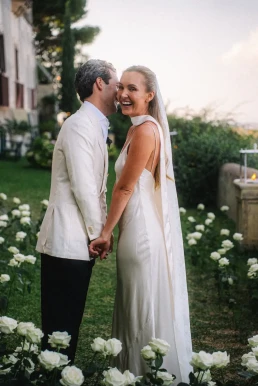
What is an elopement ?
A modern elopement is an intentionally small wedding. It may involve only the couple, or parents, children and a few close friends. It can be legal or symbolic, last a few hours or form part of a longer trip, and it does not have to be secret or arranged at the last minute. The difference from a traditional destination wedding is mainly the scale and freedom of the experience. An elopement places more weight on the couple’s time together, with fewer formal expectations and more room to choose which rituals actually matter. My elopement wedding films are built around that intimacy rather than around making a small celebration look larger than it is.
The Elopement wedding film of Nicoletta & Connor in Sicily
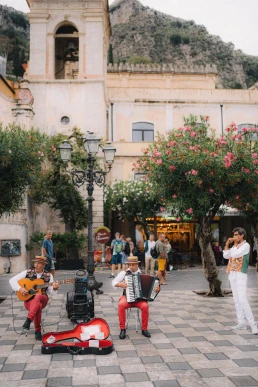
Why elope in Italy?
Italy gives a couple unusually different choices inside one country: Baroque streets in Noto, a private estate in Tuscany, early city life in Rome, a boat below the cliffs of the Amalfi Coast, a villa on Lake Como or a mountain day in the Dolomites. That variety is also the main planning trap. High-speed trains connect major cities efficiently, but an elopement does not benefit from spending its best hours in stations, cars and hotel check-ins. Choose the landscape that feels most relevant, then stay close to it. Breakfast at the accommodation, a short boat trip, a long lunch, a market visit or a walk after dinner can become part of the memory without being arranged only for the camera. Famous towns can be crowded, summer can be hot, public vows may compete with traffic or bells, and legal paperwork varies by nationality and municipality. These are manageable questions when they are addressed before the venue and itinerary are fixed.
Sicily: Taormina and Noto
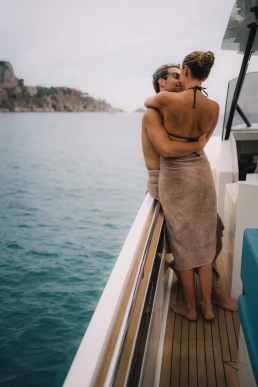
Taormina works when you want sea, height and a historic town within one compact area. The centre becomes busy later in the day, so an early walk or a private setting gives you more freedom. I filmed Nicoletta and Connor’s elopement in Taormina. Their experience began before the wedding itself, with a boat trip along the coast, restaurant time and walks. Those moments gave the film movement and context. The lesson is not that every Taormina elopement needs a boat. It is that the ceremony can belong to a journey rather than stand alone as an appointment. You can also watch their Sicily elopement film.
Noto has a different rhythm. Its Baroque centre is built from warm limestone, with long street perspectives and a clear architectural identity. I have also filmed an elopement there. The city is most comfortable when the day works around strong midday heat and light, with a compact route rather than repeated journeys in and out of town. A private courtyard, accommodation nearby and dinner within walking distance can make the experience feel settled.
For eastern Sicily, Catania Fontanarossa Airport is the practical entry point. A private transfer can be simpler with wedding clothing and equipment. Taormina and Noto should normally be treated as separate chapters across several days, not as two stops on the same ceremony day.
The Elopement of Ally & Parker in Noto, Sicily
The best places to elope in Italy
From Sicily and Tuscany to Rome, Amalfi, Lake Como and the Dolomites
Tuscany suits couples who want to slow down. A private estate or borgo can hold preparation, vows, dinner and accommodation in one place; I have filmed in Florence and across Tuscany, including a three-day wedding at Castello di Casole. Rome suits couples who want a lived city around them, with stone, fountains, scooters, bells and neighbourhood sound. Use one carefully chosen route instead of collecting landmarks. The Amalfi Coast is vertical, so stairs, cliff roads, terraces and sea travel shape the timeline. Choose one base, such as Ravello, Amalfi or nearby Atrani, and give a boat enough time and a weather alternative. Lake Como combines water, villa gardens and mountains, but nearby-looking places can be slow to connect. Confirm each villa’s ceremony and professional-filming rules, and choose an indoor alternative you would genuinely enjoy. The Dolomites suit couples who want the mountain experience itself. Plan one base, a route appropriate to your ability and a lower-altitude or indoor backup; roads, lifts and trails operate seasonally, and mountain weather can change quickly. Across every region, the strongest choice is not the most famous view but the place that supports how you want to spend the day.
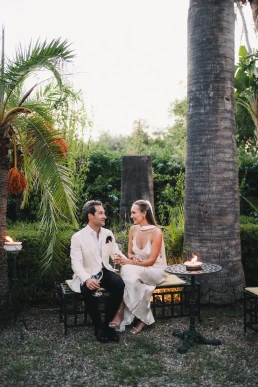
When is the best time to elope in Italy?
Useful months are only a starting point
For many regions, May to mid-June and mid-September to early October are useful starting points. The days can support a relaxed schedule, while heat and visitor pressure are often more manageable than in peak summer. April can work in Rome, Tuscany, Sicily and parts of the coast with a proper rain and cool-evening plan, although mountain access may remain limited. July and August are possible when the schedule changes: begin early, pause through midday and return later. A shaded lunch or several hours at the accommodation is useful time, not a gap to fill. Late October can be quieter in cities and southern Italy, but rain, shorter days, boat schedules and seasonal hospitality need closer checking. Winter may suit a city elopement, yet coastal closures and limited daylight reduce flexibility. Decide on the region first, then verify local conditions for the event year.
How many days should you plan?
Two days.
This is enough for most couples who stay in one area. The first can include arrival, a walk, a boat or dinner. The second holds preparation, the ceremony and a meal without asking the couple to perform all day.
Three days.
This works when travel is part of the experience: a separate Sicilian chapter, a Tuscan estate with a village or food experience, or an Amalfi ceremony followed by a weather-dependent boat.
Four or five days.
This becomes useful when you genuinely want a longer holiday rhythm, a mountain hike, a second regional base or time with a small group. Filming can remain selective. Multi-day wedding coverage should preserve the progression of the experience, not turn every hour into material.
Building a timeline that lets you enjoy Italy
Planning support from a filmmaker’s perspective
When a couple wants my input, I make time for calls and help them think through ceremony light, the general rhythm, realistic travel between places and activities that could add meaning to the trip. For Nicoletta and Connor in Taormina, the boat, restaurant and walks before the wedding gave their film a beginning without making the ceremony day busier. My role is not to replace a local wedding planner or manage legal paperwork. It is to bring a filmmaker’s experience into the decisions that affect how the day feels, so the plan serves the couple first and gives the film a natural structure afterwards. You can read more about how I prepare each wedding film and my approach to story-driven wedding films.
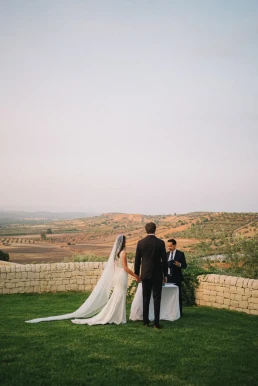
Legal, travel and filmmaking essentials
What international couples should confirm before booking
Foreign nationals can legally marry in Italy, but the process depends on citizenship, residence, previous marital status and the chosen Comune. Official Italian guidance requires proof that there is no legal impediment to the marriage. Confirm the exact documents, translations, legalisation or apostille, appointments, witnesses, interpreter and validity periods with the Italian Ministry of Foreign Affairs, the relevant consulate or embassy and the Comune before paying non-refundable costs. A symbolic ceremony has no Italian civil-status effect but offers more flexibility over words, time and setting; public-space or professional-filming permission may still apply. For travel, use rail between major cities, then allow for the final transfer to rural estates, lake villages, coastal towns and mountain valleys. Stay close to the ceremony and confirm stairs, vehicle access, preparation spaces and a weather alternative. Film adds its own practical questions: protect vows from wind, water, traffic and bells; avoid exhausting midday walks in hot months; and reduce the number of disconnected viewpoints. Drone footage is never automatic. The operator must check current ENAC geographical zones, the D-Flight map, EU requirements, site consent, temporary restrictions, insurance and weather before every flight.
Planning an elopement in Italy?
Tell me which part of Italy you are considering and what you would like the experience to feel like. From a quiet ceremony to a two or three-day journey, we can think about how the destination, timing and activities could naturally become part of your film.
Italy elopement guide: your questions
Yes. Foreign nationals can legally marry in Italy, but the documents and process depend on citizenship, residence, previous marital status and the chosen Comune. Official Italian guidance requires proof that there is no legal impediment to the marriage. Confirm the exact process with the relevant consulate or embassy and Comune.
Usually, yes. A symbolic ceremony does not create an Italian legal marriage, but it removes much of the civil documentation and gives more flexibility over words, time and setting. Location or professional-filming permission may still be required.
May, early June, late September and early October are useful starting points for many regions because they can balance daylight, temperature and crowd levels. The final choice should reflect the region: mountain access, coastal services, heat and rain vary across Italy.
Choose by experience. Sicily combines historic towns and sea; Tuscany offers estates and countryside; Rome is a lived historic city; the Amalfi Coast is vertical and coastal; Lake Como combines villas, water and mountains; the Dolomites suit couples who want genuine mountain time.
Two or three days in one region work well for most couples. Four or five days are useful when you want a longer holiday rhythm, a weather-dependent activity, a second base or time with a small group. Filming can remain selective.
A local planner is valuable when the project involves legal paperwork, a private venue, public-site permission, several suppliers, transport or a small group of guests. A filmmaker can help with light, pacing and activity ideas, but should not be presented as a replacement for full local planning.
Only when current EU and Italian requirements, the D-Flight geographical zone, local or site rules, operator registration and competence, insurance, landowner permission and weather all allow it. Drone footage cannot be guaranteed before those checks.
Yes, as a longer trip. For the elopement itself, choose one main region and move to the next after the wedding experience. Even fast trains do not remove check-outs, luggage, local transfers and the fatigue of changing bases.
International recognition is meaningful to me, but the work behind it matters more than the trophies themselves. It reflects years of filming, travelling, meeting people and being trusted with stories that could never be made from a template. That trust keeps me focused on films that remain sincere, elegant and personal, shaped by the honesty of a glance, the character of a voice, the quality of the light and the choices made in the edit.

Featured in
Work featured in French and international wedding blogs and publications known for their carefully curated selections.